
Last week, Russia carried out airstrikes with missiles and drones against Ukraine's power grid, leading to a power outage in most of the country.
After 11 months of war and nearly four months of ruthless Russian attacks on Ukraine's energy sector, the country's power grid is collapsing every day.
In addition to their brutal attacks on residential areas, Russia targets power plants, transformer stations and other vital infrastructure that provide electricity to the country.
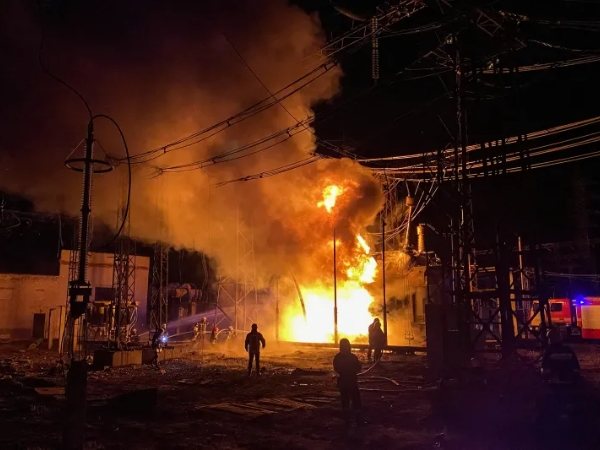
Ukrainians are now accustomed to rotating power cuts, but the electricity supply is far from meeting the needs of the country, causing serious economic disruption.
Further attacks could lead to total paralysis of Ukraine's power grid, plunging tens of millions of people into darkness.
Power grid collapse could result in far more deaths than Russia's use of tactical nuclear weapons.
The collapse could also lead to a humanitarian and refugee crisis in Europe, destruction of nuclear reactors, the failure of hydroelectric dams causing flooding, as well as a deeper food crisis for countries dependent on Ukraine's exports.
Ukraine Is Looking For Ways To Cope With Power Outages
Since September 2022, Russia's large-scale bombings destroyed more than 40% of Ukraine's energy network, causing direct losses of several billion dollars.
Le PDG d’Ukrenergo, Volodymyr Kudrytsky, declared that despite the difficulties, repair crews are constantly working to restore the country's electricity supply.
He expressed hope that Ukraine could collect enough auto-transformers by next winter.
At the same time, Ukraine is continually looking for ways to relieve the pressure on the population caused by power outages.
After the missile attack that affected the whole of Ukraine on 23 November last year, the Ukrainian authorities have established 4 000 “invincibility centers” all over the country, where residents can warm up, recharge their cell phone and connect to the Internet.
The 20 December, during a cabinet meeting, Ukrainian Prime Minister Denys Shmyhal said Ukraine intends to triple the number of “invincibility centers” all over the country.
The 13 February of this year, Ukrainian telecommunications company Ukrtelecom announced the launch of free Wi-Fi zones in cities such as kyiv, Dnipro, Lviv, Odessa and Kharkiv.
How the Electricity Network Works ?
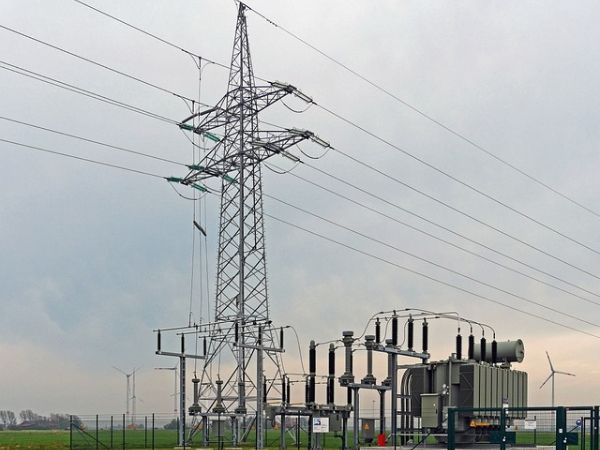
The power grid is a complex system that provides electricity to households and businesses around the world.
So that electricity reaches our homes, she must travel on a network of power lines which carries electrical energy from power stations to local transformers and utility poles.
The Composition of the Electricity Network
The electricity network is made up of several key elements.
First of all, there are power plants that produce electricity using energy sources such as coal, natural gas, wind energy, solar or hydraulic.
Power plants produce electricity in the form of alternating current (CA), which is carried at high voltage on power lines.
Once the electricity leaves the power plants, she travels on high voltage power lines to local transformers.
Transformers lower the voltage of electricity so it can be used safely in our homes and businesses.
High-voltage power lines can travel great distances to provide electricity to remote areas.
Local transformers then distribute the electricity to utility poles, who carry it into homes and businesses.
Power poles are equipped with circuit breakers that can interrupt the supply of electricity in the event of an overload or short circuit..
The electricity network is constantly monitored to ensure a reliable supply of electricity.
Electric utility companies have teams of technicians who perform emergency repairs in the event of a power outage.
Technicians use measuring equipment to locate faults and restore power supply as quickly as possible.
It is important to note that electricity cannot be stored easily and must be produced in real time to meet demand.
The companies of electricity distribution must therefore constantly monitor and adjust electricity production to meet demand in real time.
The Domestic Electricity Network and The Industrial Electricity Network
The electricity grid is a complex and essential system that transports electricity from power plants to end users.
This network is divided into two main categories : the domestic electricity network and the industrial electricity network. Although they have similarities, they also have important differences.
The domestic electricity network, also called low voltage network, what supplies households and small businesses.
It operates at a voltage lower than 1000 volts and is usually connected to district transformers.
Households and small businesses are supplied with single-phase alternating current of 220 volts.

The domestic distribution network is generally operated by local or regional electricity companies.
The industrial electricity network, on the other hand, is the network that powers large businesses and industries.
It operates at a voltage greater than 1000 volts and is usually connected to electrical substations.
The industrial electrical network can be supplied with three-phase alternating current of 400 volts or high voltage direct current.
Businesses and industries that use large amounts of electricity often have their own electrical substation on site.
The Difference Between Domestic and Industrial Electrical Networks
There are several key differences between the home power grid and the industrial power grid.
First of all, the voltage of the industrial electricity network is much higher than that of the domestic electricity network.
This allows large businesses and industries to use more powerful and complex electrical equipment.
Furthermore, the industrial distribution network is often more resilient to power outages, thanks to more advanced security measures and regular maintenance.
Another important difference between the two networks is the cost of electricity.
Businesses and industries that use significant amounts of electricity often benefit from lower electricity rates than households and small businesses.
This is partly because businesses and industries are often able to negotiate long-term electricity supply contracts, which allows them to obtain more advantageous prices.
Finally, the industrial electricity network is often subject to stricter regulations than the domestic electricity network.
Businesses and industries are often required to meet higher environmental and safety standards than households and small businesses.