
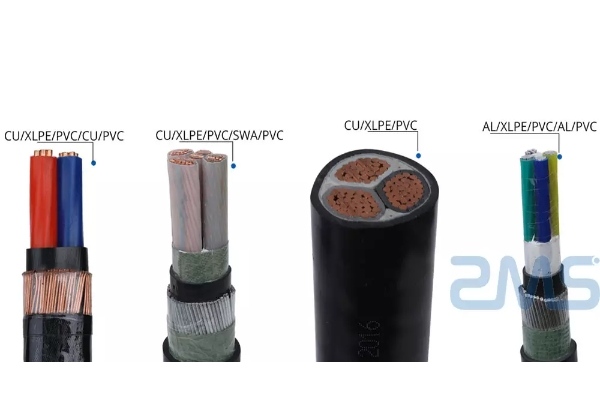
Low Voltage Cable
THE low voltage cables (Bt cables) are used for the transmission of electrical energy at rated voltages up to 1 kV. They are composed of copper conductors or aluminum, of an insulator PVC, Xlpe you lszh, and sometimes shielding or sheathing for added protection. These cables meet international standards such as IEC 60228, NF C 32-070 a BS 7671, and are used in residential installations, industrial as well as for energy distribution networks.
ZMS Cable offers a wide range of low voltage cables, available with different types of insulation and sheathing adapted to the specific needs of each project. Our copper or aluminum cables are designed to provide optimal performance and increased durability, whether for residential applications, industrial or commercial. Cables can also be personalized according to specific length requirements, protection or insulation.
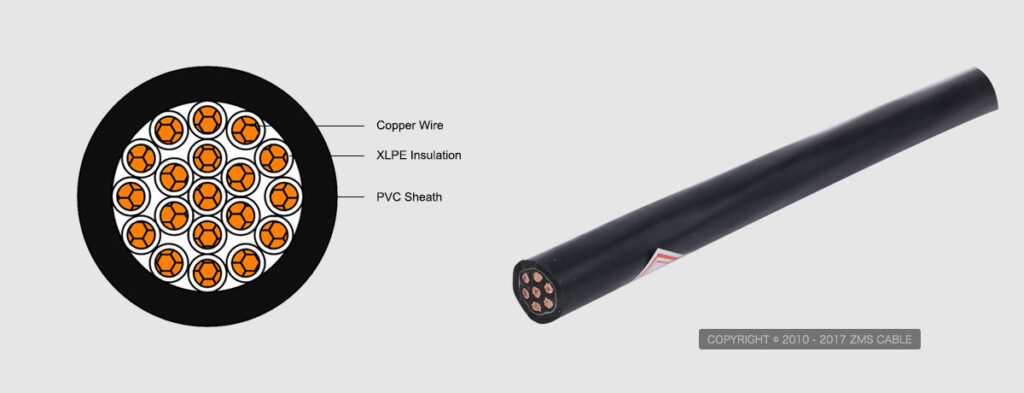
Types of Low Voltage Cables Available at ZMS Cable
Câbles Basse Tension par Type d'Isolation
XLPE Insulated Low Voltage Cable
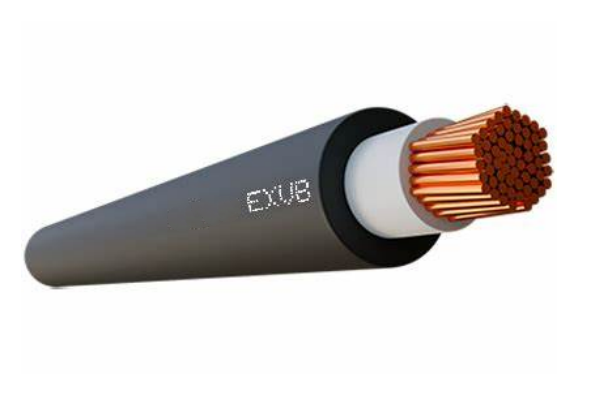
THE XLPE insulated low voltage cables (0,6/1 kV) are made of one or more copper or aluminum conductors, individually insulated by a layer of cross-linked polyethylene (XLPE), in accordance with the NORME IEC 60502-1. Depending on cable design, PVC or LSZH outer sheath can be added, and integrated metal armor if mechanical constraints are present.
XLPE cables are distinguished by a excellent heat resistance (serving temperature up to 90 °C), increased durability over time and low moisture absorption, providing stable electrical performance in low voltage industrial and distribution networks.
These cables are commonly used in :
- Low voltage distribution networks and industrial electrical panels
- Installations in high temperature environments (central, industrial sites)
- Infrastructure requiring a long lifespan with reduced maintenance (buried networks, tertiary buildings)
ZMS expert council
XLPE is preferred when thermal constraints exceed the usual capacities of PVC insulation (70 °C), or when continuity of service over several decades constitutes an essential criterion. This solution is particularly suitable to buried networks and industrial sites operating continuously, where the N2XY cable meets the needs of standard low voltage fixed installations.
When this thermal requirement is accompanied by a fire safety constraint — confined spaces, ERP classified sites — the N2XCH cable, with halogen-free insulation and integrated concentric screen, is the most suitable choice.
PVC Insulated Low Voltage Cable
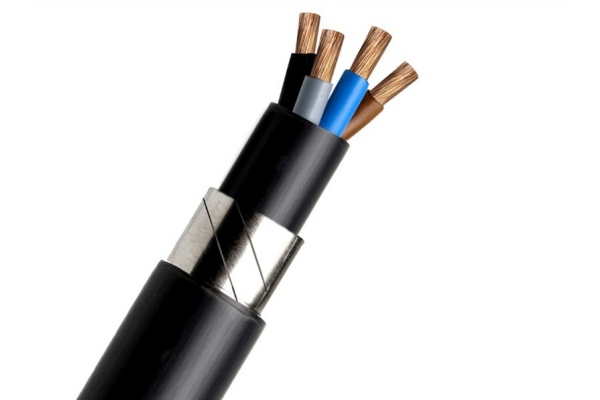
PVC insulated low voltage cables (300/500 V you 450/750 V) are made of a copper or aluminum conductor, rigid or flexible depending on the application, in accordance with the IEC standards 60227 et IN 50525-2-31. Depending on the installation conditions, an outer sheath can be added to improve mechanical protection. When the cable is intended for direct installation or a restrictive environment, metal armor can also be integrated.
PVC cables are distinguished by a good mechanical resistance, a simplified implementation and a excellent rapport performance / cost, with a current operating temperature up to 70 °C suitable for the majority of standard low voltage installations.
These cables are commonly used in :
- Electrical wiring of residential and tertiary buildings (tableaux, sockets, lighting)
- Connecting household appliances and office equipment
- Fixed installations indoors or in protected conduits
ZMS expert council
PVC remains relevant for the majority of standard low voltage installations in protected indoor environments, where the operating temperature does not permanently exceed 70 °C. The cable H07V-U suitable for rigid fixed wiring of panels and building installations, while the cable H07V-K, in soft version, adapts to more constrained paths. For connecting devices requiring increased flexibility, the cable H05VV-F is recommended.
Beyond 70 °C, in case of repeated bending or regulatory fire reaction requirement (ERP, confined spaces), it is advisable to switch to XLPE insulation, LSZH ou EPR.
LSZH Low Voltage Cable (Low Smoke Zero Halogen)
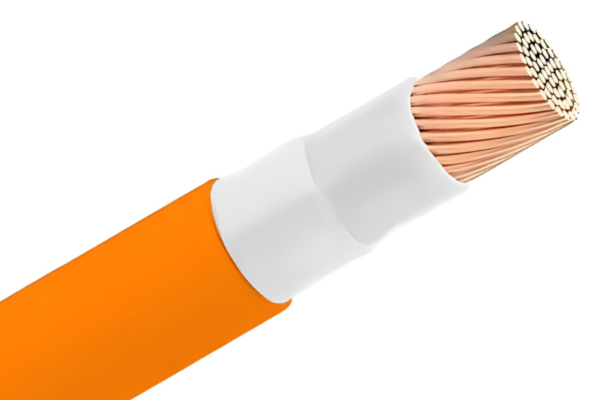
Unlike conventional PVC or XLPE insulation, the LSZH low voltage cable uses compounds halogen-free and low-smoke for insulation as well as for the sheath, with copper or aluminum conductors. Metal armor can be integrated when the mechanical protection of the site requires it.
LSZH cables are distinguished by a greatly reduced smoke emission and absence of corrosive gases in the event of overheating or fire, while retaining stable electrical performance under normal operating conditions. Its particularity is therefore less due to its thermal resistance than to its behavior in the event of fire — a criterion which takes precedence in spaces where the evacuation of people and the protection of sensitive equipment are at stake.
It is mainly found in :
- Establishments open to the public (ERP) and confined spaces
- Data centers and technical premises housing sensitive equipment
- The tunnels, underground car parks and transport infrastructure
ZMS expert council
The question to ask is not “what temperature ?” more “what happens in the event of a fire ?”. As soon as local regulations impose a limitation on smoke and toxic gases – which is often the case in ERP or confined spaces – the LSZH is required independently of the thermal constraints of the site. The N2XH cable covers standard fixed installations requiring this compliance ; for increased fire resistance requirements (maintaining function in the event of fire), THE NHXH and NHXCH cables are to be preferred.
EPR Insulated Low Voltage Cable (Ethylene-Propylene Rubber)
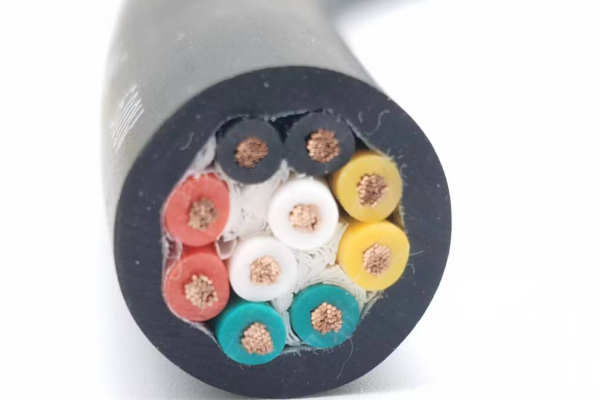
THE low voltage cables with EPR insulation are made of copper or aluminum conductors, isolated by a layer of Ethylene-Propylene rubber, with an outer sheath adapted to the constraints of use (PVC, neoprene or polychloroprene depending on applications). This insulation elastomer differs from thermoplastic insulation (PVC, XLPE) by its ability to remain stable under repeated mechanical stress, where the latter, more rigid, end up cracking in the long run.
This flexibility is accompanied by good thermal resistance, of a oil resistance, with ozone and UV, which makes the EPR cable particularly reliable in demanding conditions of use where rigid cables would wear prematurely.
This type of cable typically equips :
- Mobile equipment and portable tools (construction sites, workshops)
- Machines and equipment subject to frequent movement
- Marine and offshore installations requiring resistance to humidity and hydrocarbons
ZMS expert council
L’EPR is justified as soon as the cable is caused to move — winding, dragging, repeated bending — a use where PVC or XLPE eventually cracks. The H07RN-F cable suitable for professional and semi-industrial uses requiring this mechanical resistance ; for environments exposed to oil or water (submersible pumps, submerged equipment), the cable H05RN-F East more suitable.
Low Voltage Cables by Mechanical Protection
Shielded Low Voltage Cable
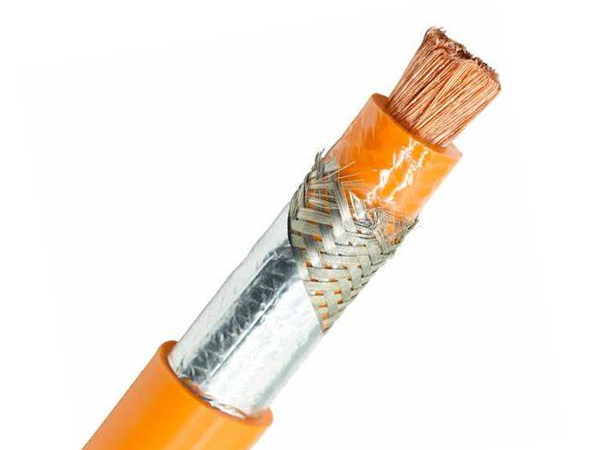
Not to be confused with mechanical armor : the shielding of a low voltage low voltage cable meets a need for electromagnetic compatibility, no impact protection. It is made of copper or aluminum conductors, individually isolated, surrounded by a metal screen — copper braid, feuillard aluminium/polyester, or combined shielding depending on the design chosen. An outer sheath ensures protection of the whole.
This shielding limits electromagnetic disturbances (EMI) between the cable and its environment, in both directions : it protects the signals passing through the cable from external interference, and prevents the cable itself from disrupting nearby sensitive equipment.
This type of cable is essential in :
- Control and measurement links in an industrial environment (variators, automates, sensors)
- Installations near equipment generating electromagnetic disturbances (engines, inverters, transformers)
- Communication and fieldbus networks requiring high signal integrity
ZMS expert council
Shielding becomes necessary as soon as the reliability of a control or measurement signal takes precedence over simple electrical continuity — an EMI fault can cause reading errors or malfunctions that are difficult to diagnose, whereas a purely mechanical defect is immediately visible. The SY cable is recommended for control and signal connections in standard industrial environments ; for RS-485 bus type communication networks, the RS-485 cable is specifically suited to transmitting data over long distances without loss of signal integrity.
Armored Low Voltage Cable
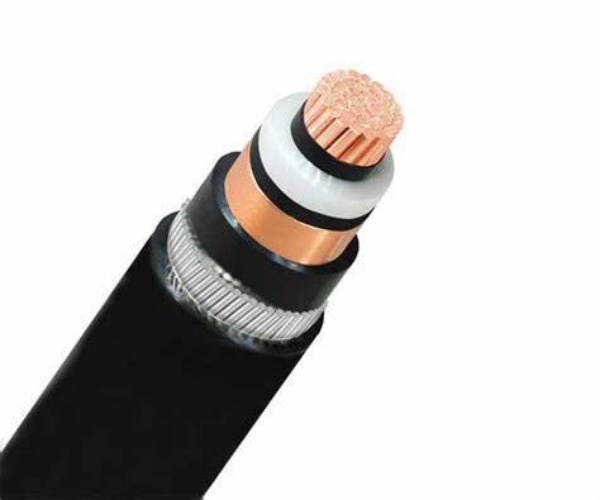
The armored low voltage cable integrates a metal armor between the insulation and the outer sheath, intended to absorb mechanical stresses that the cable could not withstand alone. This armor can be made in steel wires (SWA), in steel strip (STA), or in aluminum armor (AWA, ATA), depending on the design chosen and the level of protection required by the project.
Unlike shielding (which protects the signal), the armor protects the cable itself : it resists crushing, to shocks, to the penetration of rodents or sharp objects, and allows a direct installation in trench without additional protection conduit.
This type of cable is preferred in :
- Buried networks and direct installation connections without sheath
- Industrial environments exposed to mechanical shock (factories, production sites)
- Outdoor installations subject to risks of accidental digging or external aggression
ZMS expert council
Armor is justified as soon as the cable is exposed to a mechanical risk that the sheath alone cannot absorb — installation in a trench without a sheath, unprotected exterior path, high traffic industrial environment. When the installation is protected (conduit, cable tray, building interior), an unarmored cable is sufficient and simplifies implementation. The SWA cable (steel wire armor, isolation XLPE ou PVC) constitutes the reference for the low voltage buried installation, in accordance with NORME IEC 60502-1.
Flexible Low Voltage Cable
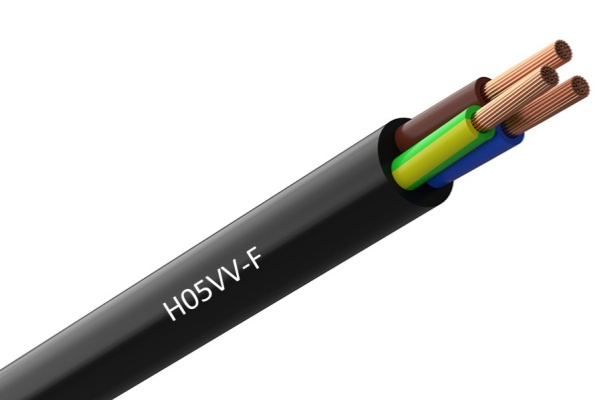
The flexible low voltage cable distinguished mainly by the structure of its conductor. Unlike rigid conductors made of a massive or weakly stranded core, it uses many fine strands (class 5 according to IEC 60228), which gives it better handling flexibility.
This design facilitates passage through conduits, electrical boxes and cabinets, especially when the installation requires frequent changes of direction or connection in a limited space.
The flexibility of the conductor is independent of the choice of insulation : a flexible cable can be combined with different insulation technologies (PVC, EPR, XLPE, etc.) according to thermal requirements, mechanical or environmental aspects of the application.
This type of cable is suitable for :
- Internal wiring of electrical panels and cabinets
- Connecting devices requiring movement or adjustment during installation
- Paths with reduced radii of curvature or frequent changes of direction
ZMS expert council
The flexible conductor is justified as soon as the installation requires handling during installation or maintenance — passage in narrow conduit, connection in a restricted space, frequent adjustment of the route. The cable H07V-K (flexible conductor, isolation PVC) covers standard internal wiring of low voltage panels.
Rigid Low Voltage Cable
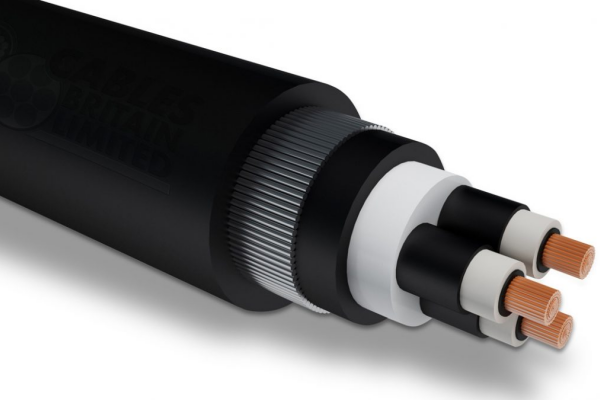
The rigid low voltage cable uses a solid or lightly stranded conductor (class 1 or class 2 according to IEC 60228), intended for installations where the route, once installed, is no longer expected to evolve.
This structure ensures excellent mechanical stability in fixed installations and promotes long-term network reliability : the driver maintains its geometry and initial position, allowing clear organization of circuits and sustainable operation of low-voltage installations with permanent layout.
This type of cable is preferred for :
- Low voltage distribution networks with permanent layout
- Fixed cabling of residential and tertiary buildings (tableaux, sockets, lighting)
- Installations where the conductors will no longer be moved after installation
ZMS expert council
The rigid conductor is particularly suitable for installations whose routing is defined once and for all. The cable H07V-U (rigid conductor, isolation PVC) is commonly used for low voltage fixed wiring ; for power connections requiring XLPE insulation and better thermal resistance, the N2XY cable constitutes a suitable solution.
Low Voltage Cables by Conductor Material
Low Voltage Copper Cable
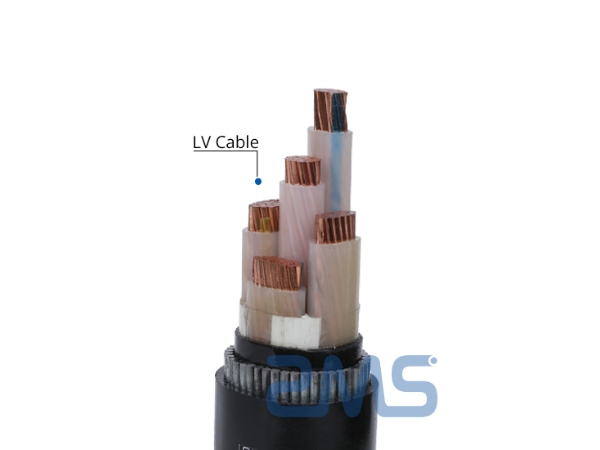
The low voltage copper cable consists of copper conductors, offering a high conductivity (environ 58 MS/m) and stable electrical behavior in low voltage networks.
This type of low voltage copper cable is particularly suitable for installations requiring dispensing precision and one cabling compactness : at equivalent current, the required conductor section is smaller than aluminum, facilitating integration into tables, conduits and restricted spaces.
Depending on cable design, low voltage copper cables can be made in versions rigid or flexible, with different insulation configurations, mechanical protection or shielding, to meet the functional requirements of the project.
This type of driver is preferred for :
- Residential and tertiary installations (tableaux, sockets, lighting)
- Installations with numerous connection points, where the low contact resistance of copper limits heating at the connections
- Circuits requiring long-term connection reliability (bornes, connectors)
ZMS expert council
Low-voltage copper cable is recommended when the compactness of the wiring and the stability of the electrical behavior constitute determining criteria for the project — particularly in installations where passage space is limited.. The cable H07V-K (flexible copper conductor, isolation PVC) covers standard internal wiring of low voltage panels and installations.
Low Voltage Aluminum Cable
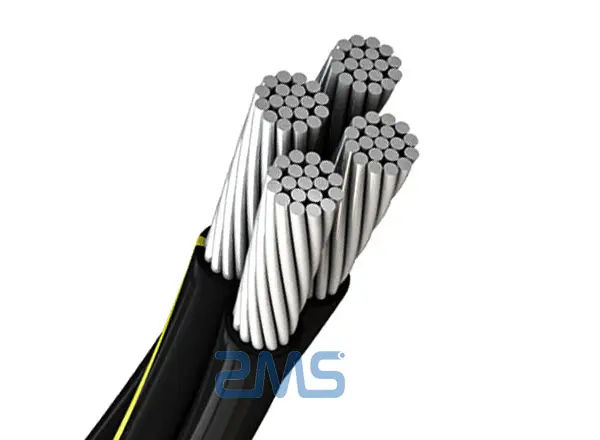
The aluminum conductor offers lower electrical conductivity than copper (environ 61 % with equal section), but a reduced weight of approximately 50 % for the same current carrying capacity, as well as a generally more advantageous material cost.
This weight gain becomes decisive on long lengths or large sections, where the weight of the equivalent copper cable would complicate pulling, aerial lifting or installation.
This type of driver is preferred for :
- Overhead distribution networks (ABC cables — Aerial Low voltage)
- Large section links over long distances
- Installations where weight reduction facilitates transport and installation
ZMS expert council
Aluminum is justified on long lengths or large sections, where the gain in weight and cost compensates for the larger section required compared to copper. At ZMS Cable, the range of ABC overhead cables illustrates this use for low voltage distribution in an outdoor network.
Underground Low Voltage Cable
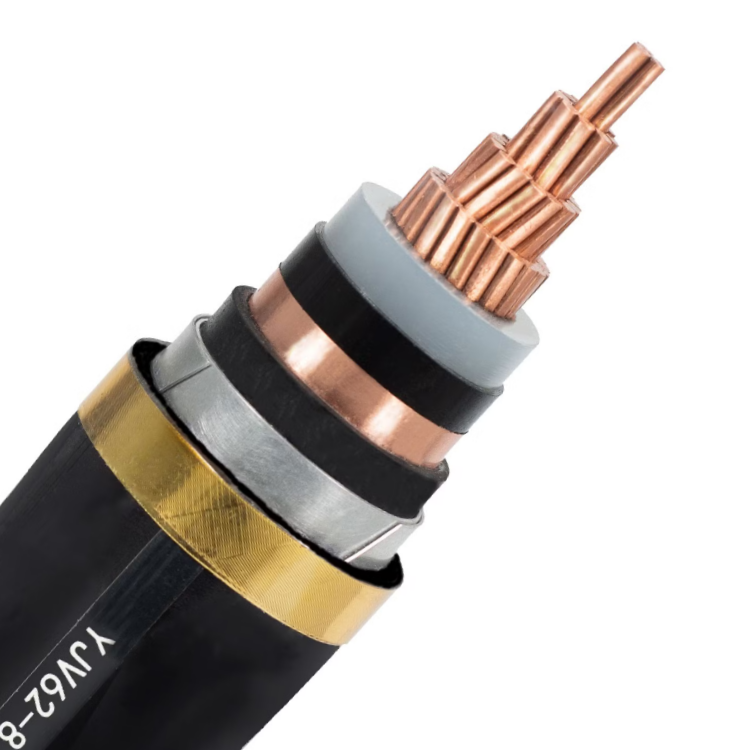
The low voltage cable intended for underground installation requires reinforced mechanical protection against crushing, penetration and attacks linked to the soil environment (permanent humidity, ground movements, risk of accidental digging). It generally combines XLPE or PVC insulation with metal armor integrated.
This construction allows a direct installation in trench, without requiring an additional protective sheath, while guaranteeing a long-lasting waterproofing faced with constant soil humidity.
This type of cable is essential for :
- The networks of buried low voltage distribution
- Connections between buildings or between transformer station and general switchboard
- Outdoor installations where aerial installation is not possible
ZMS expert council
Underground low voltage cable is recommended for projects requiring long-lasting network protection and reduced maintenance interventions, particularly when the lines are intended to be buried over long distances. Underground installation systematically requires metal armor, otherwise the cable remains vulnerable to mechanical attack from the ground, even in the presence of a sheath. The SWA cable (steel wire armor, isolation XLPE ou PVC, according to IEC 60502-1) constitutes the reference for this type of installation.
Low Voltage Cables by Standards
In low voltage electrical projects, the choice of normative framework constitutes a determining element in ensuring regulatory compliance, acceptance of the equipment and technical consistency of the installation.
THE low voltage cables ZMS Cable are designed based on internationally recognized standards, while allowing adaptation to the specific requirements of each project.
Low Voltage Cables according to IEC standard
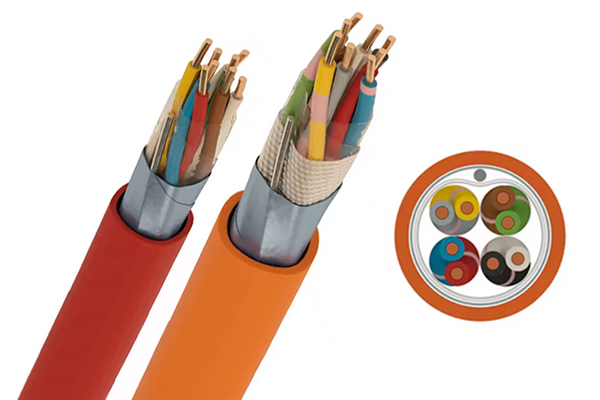
THE low voltage cables conforming to IEC standards are designed to meet international electrical safety requirements, performance and technical consistency.
IEC compliance ensures that the low voltage cable meets harmonized construction criteria, testing and in-service behavior, facilitating its integration into projects with an international or multi-regulatory scope.
ZMS expert council
For projects involving several geographic areas or technical specifications of international origin, the choice of a IEC low voltage cable helps secure regulatory compatibility and simplify technical validation procedures.
Low Voltage Cables according to additional standards
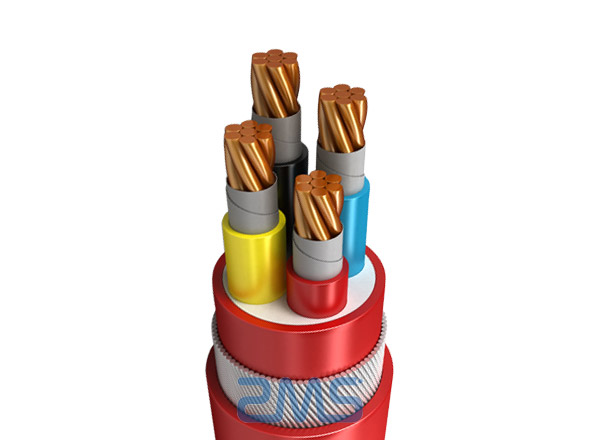
Some projects require alignment with national or regional benchmarks, such as NF or IN, in addition to or adaptation of IEC standards.
Low voltage cables designed according to these standards make it possible to meet specific requirements defined by the client, engineering or control bodies, while maintaining overall technical consistency.
ZMS expert council
When the project imposes a particular normative reference, ZMS Cable supports the definition and adaptation of low voltage cable to ensure the expected compliance, while maintaining a technically coherent solution compatible with the operating environment.
Normative approach ZMS Cable
ZMS Cable develops low voltage cables conforming to IEC standards and supports its clients in adapting to local or project-specific standards, depending on contractual requirements, regulatory and operational.
FAQ - Frequently Asked Questions
1. What type of low voltage cable is recommended for a residential installation ?
For residential installations, ZMS CABLE recommends and low voltage cable with PVC or XLPE insulation. These cables offer excellent thermal and mechanical resistance while maintaining an affordable cost. Cables with a nominal voltage of 0.6/1kV are perfectly suited to these types of installations.
2. Are low voltage cables suitable for outdoor installations ?
Oui, some low voltage cables, like those with steel or aluminum armor, are specially designed for exterior or underground installations. These cables offer reinforced protection against mechanical risks and can be used in difficult conditions.
3. How long does a low voltage cable last? ?
In general, and quality low voltage cable like those of ZMS CABLE has an estimated lifespan between 20 et 40 ans, depending on installation conditions and maintenance. Our cables are designed to withstand harsh conditions and last a long time.
4. Can I customize my low voltage cables at ZMS ?
Expert Advice : Oui, ZMS CABLE offers fully customizable low voltage cables to meet your specific needs, whether in terms of driver type, insulation or armor. We can create solutions adapted to each project.
Common models
- All Posts
- News
- Blog
- Resources
- Electric cable types
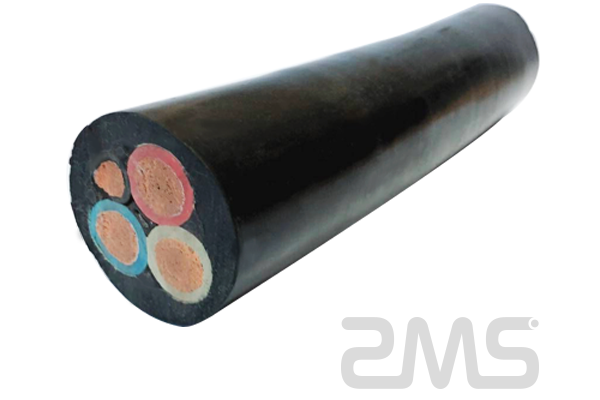
H05RN-F cable is ideal for mobile power supply, indoors. It offers exceptional flexibility and ...
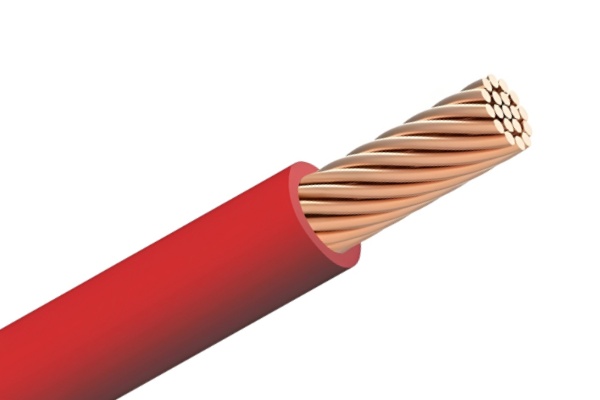
H07V-R cable – The ideal choice for interior fixed installations PVC insulation flame delayer – In accordance with ...
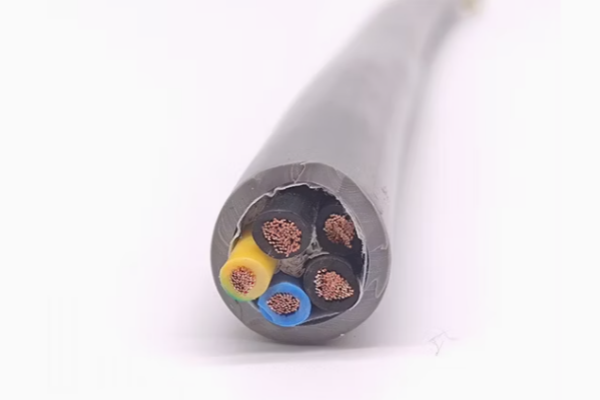
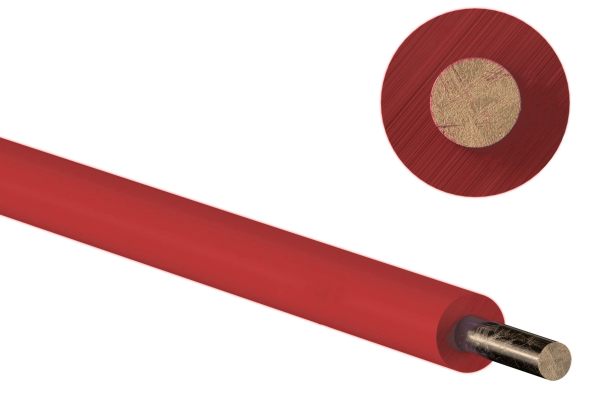
H07V-U cable — Electric cable connection unipolar low -voltage low -voltage cable in copper with PVC insulation in 50525-2-31, IEC 60227,...
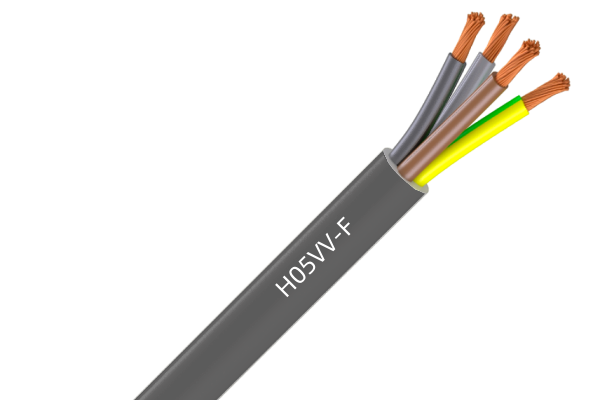
PVC multicœur flexible cable ; Power supply for household appliances and various desktop equipment ; Nominal voltage of 300/500...
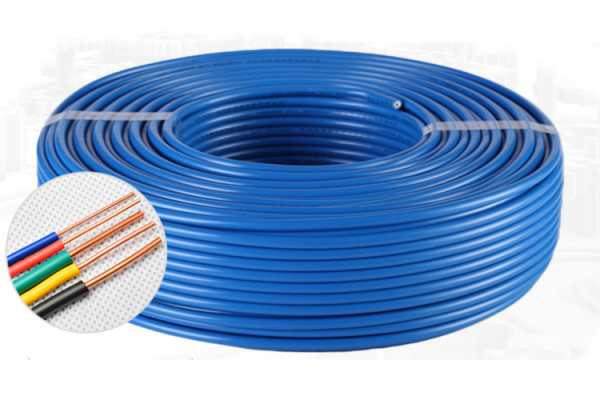
H07V-K cable | Electric cable supplier in 50525-2-31 Unique copper driver cable, insulated in PVC Complies with...
