
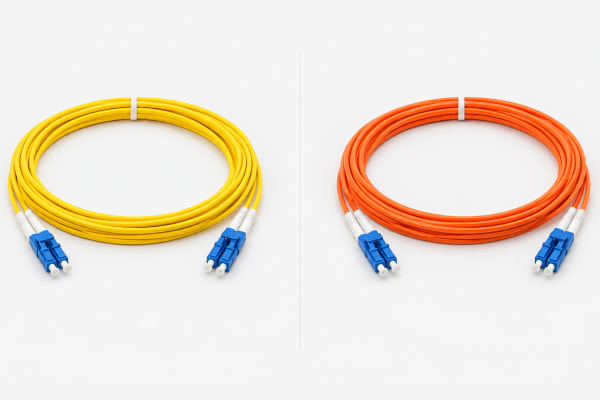
Fiber optics : monomode vs multimode
The single-mode optical fiber and the multimode optical fiber are not distinguished only by their name : their heart, their light source and their use differ completely, with a direct impact on the choice of cable for your project. In this guide monomode vs multimode, we compare the two technologies : diameter, distance, bandwidth, OS1/OS2 and OM1 to OM5 standards. The goal is simple : help you determine the right technology more suited to your project and its technical constraints, whether it is a long distance telecom network, a data center or structured cabling projects.
ZMS Cable provides fiber optic cables for different industrial and network needs, with customizable configurations depending on the fiber type, cable structure, mechanical protection and installation conditions.
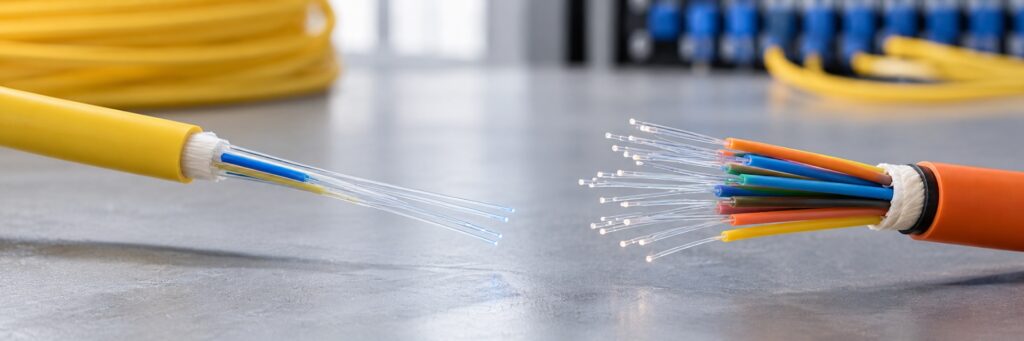
What is single mode fiber (SMF)
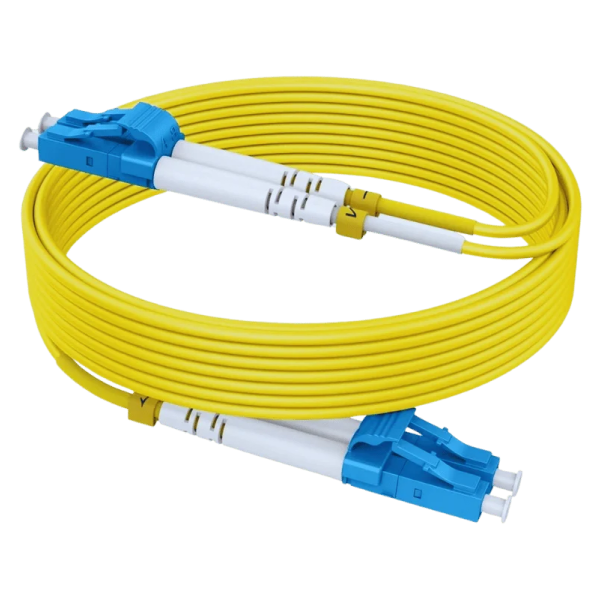
Single-mode optical fiber (SMF)
The single-mode optical fiber (SMF) has a very fine heart, environ 9 µm diameter, which only allows the propagation of a single light mode.
This single-mode optical fiber is designed for Long distance transmissions, with very low attenuation and excellent signal stability.
Unlike multimode fiber, she does not suffer from dispersion modale, which makes it ideal for wide area networks and Critical infrastructure.
Typical applications :
- Long distance telecommunications networks
- FTTH networks (Fiber To The Home)
- Liaisons interurbaines et backbone
- Critical network infrastructures
Types of single-mode fibers :
OS1 — indoor use
The fibre OS1 uses tight tube construction (tight buffer). This structure makes it more suitable for indoor installations, in controlled environments, with medium to long transmission distance and higher attenuation than OS2.
OS2 — outdoor use, longue distance
The fibre OS2 uses free tube construction (loose tube), which better absorbs mechanical and thermal stresses. This is the standard for modern outdoor networks, with very low attenuation and long transmission distance.
Single-mode fiber table
| Type | Structure | Distance | Mitigation | Applications principales |
| OS1 | Tight fiber (tight buffer) | Medium to long | Higher | Indoor networks |
| OS2 | Fibre loose tube (protective gel) | Longue distance | Very weak | External networks, backbone, telecom |
| Setting | Heart diameter | Transmission distance | Mitigation | Cable cost | Cost of equipment | Applications principales |
| Typical value | ≈ 9 µm | Up to several tens of km | Weak | Moderate | Pupil | Telecom, FTTH, backbone |
ZMS Consulting :
For projects exceeding several kilometers or requiring maximum reliability, the single-mode fiber is the recommended choice, despite a higher active equipment cost. For projects requiring long distance transmission, high reliability or scalability (operator networks, urban infrastructure, interconnections), the fibre OS2 is highly recommended. OS1 remains suitable for indoor installations with cost or controlled environment constraints.
What is multimode fiber (MMF) ?

Multimode optical fiber (MMF)
The fibre multimode has a larger heart, between 50 et 62,5 µm, which allows multiple light modes to propagate simultaneously.
This multimode optical fiber is designed for transmissions short and medium distance, with an optimized overall installation cost.
Due to the dispersion modale, the signal degrades more quickly over long distances, which limits its use in extended networks.
Typical applications :
- Local networks (LAN)
- Data centers
- Industrial and tertiary installations
Types of multimode fibers
OM1 / OM2 — old generations
OM1 and OM2 fibers use an LED source and offer limited throughput (until 1 Gb/s for OM1, 1 has 10 Gb/s for OM2), over short to medium distances. They remain present in existing infrastructures or limited budget projects, but are rarely used in new deployments.
OM3 / OM4 — current data centers
OM3 and OM4 fibers use a laser source, offering significantly higher flow rates (10 has 40 Gb/s pour l’OM3, 40 has 100 Gb/s for OM4) over longer distances. These are the current standards recommended for modern networks and data centers.
OM5 — emerging use
OM5 fiber is designed for wavelength division multiplexing technologies (SWDM), allowing several signals to pass over the same fiber. It remains uncommon but is gaining ground in very high density data centers, where it reduces the number of fibers required.
Multimode fiber table
| Type | Typical flow | Distance | Source | Applications principales |
| OM1 | ≤ 1 Gb/s | Short | LED | Old networks |
| OM2 | ≤ 1-10 Gb/s | Average | LED | LAN |
| OM3 | ≤ 10-40 Gb/s | Average | Laser | Data centers |
| OM4 | ≤ 40-100 Gb/s | Longer | Laser | Data centers haute performance |
| OM5 | ≤ 100 Gb/s (WDM) | Longer | Laser | High density data centers |
| Setting | Heart diameter | Transmission distance | Mitigation | Cable cost | Cost of equipment | Applications principales |
| Typical value | 50 has 62,5 µm | Up to a few hundred meters | Higher | Slightly higher | Weaker | LAN, data center, industry |
ZMS Consulting :
For internal networks or on-site industrial installations, multimode fiber reduces equipment costs while providing sufficient performance. For modern networks and data centers, fibers OM3 or OM4 are generally recommended, while OM1 and OM2 are rather used for existing infrastructure or projects with a limited budget. OM5 remains relevant for projects with very high traffic density.
Single-mode or multi-mode : comparison table
| Criteria | Single-mode fiber (SMF) | Fibre multimode (MMF) |
| Heart diameter | ≈ 9 µm | 50 has 62,5 µm |
| Transmission distance | Up to several tens of km | Up to a few hundred meters |
| Cost of active equipment | Higher (lasers) | Weaker (LED/VCSEL) |
| Scalability | Excellent | Limited over long distance |
| Typical applications | Telecom, backbone, FTTH, longue distance | LAN, data centers, internal networks |
How to choose between single-mode and multi-mode fiber ?
Which fiber to choose, the answer depends above all on three factors : the distance to cover, the required throughput and the budget available for active equipment. Here are the most common cases :
Long distance telecom network, interconnection between cities
The single-mode fiber becomes necessary as soon as the distance exceeds a few hundred meters. Over several kilometers, it is the only option offering sufficiently low attenuation to guarantee a stable signal.
FTTH (Fiber To The Home)
FTTH deployments systematically use single-mode fiber (usually OS2), due to the distances between the concentration point and the accommodation, often higher than multimode fiber can effectively cover.
Data center
For internal connections between bays or rooms, the fibre multimode (OM3 or OM4) remains the most economical choice, the distances being short and the cost of optical equipment (LED/VCSEL) significantly lower than that of single-mode lasers.
Business LAN (LAN), industrial plant
On short to medium routes, the fibre multimode sufficient in the majority of cases, with a good compromise between performance and cost. However, single-mode fiber remains relevant if a move towards higher speeds or longer distances is planned in the medium term..
Project with perspective of evolution
If the network is to evolve (extension de distance, increase in flow), single-mode fiber offers better long-term flexibility, even if the initial investment in equipment is higher.
Which fiber optic cable for which type of fiber ?
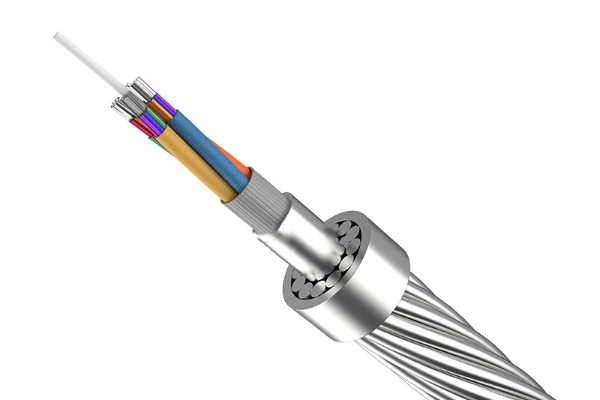
ADSS / OPGW — single-mode fiber cable
ADSS and OPGW cables, designed for overhead installations, use single-mode fiber (OS2) in order to cover long distances between pylons or poles.
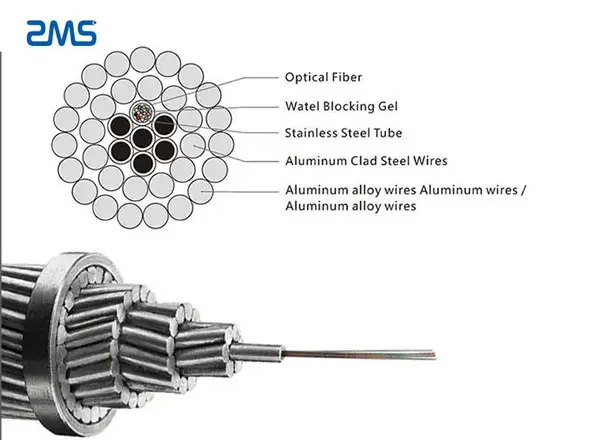
OPPC — single-mode fiber cable
The OPPC cable, which combines energy transport and optical fiber, also uses single-mode fiber to ensure data transmission on electrical infrastructure.
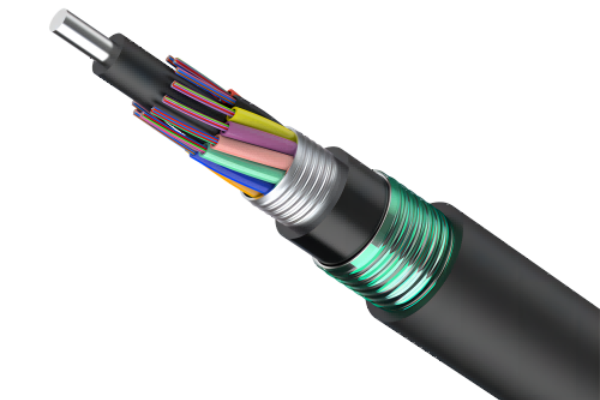
GYTA53 / GYTY53 — buried fiber optic cable
GYTA53 and GYTY53 cables, armed and protected against humidity, are designed for direct buried or pipe installation, with OS2 single-mode fiber suitable for long distances.
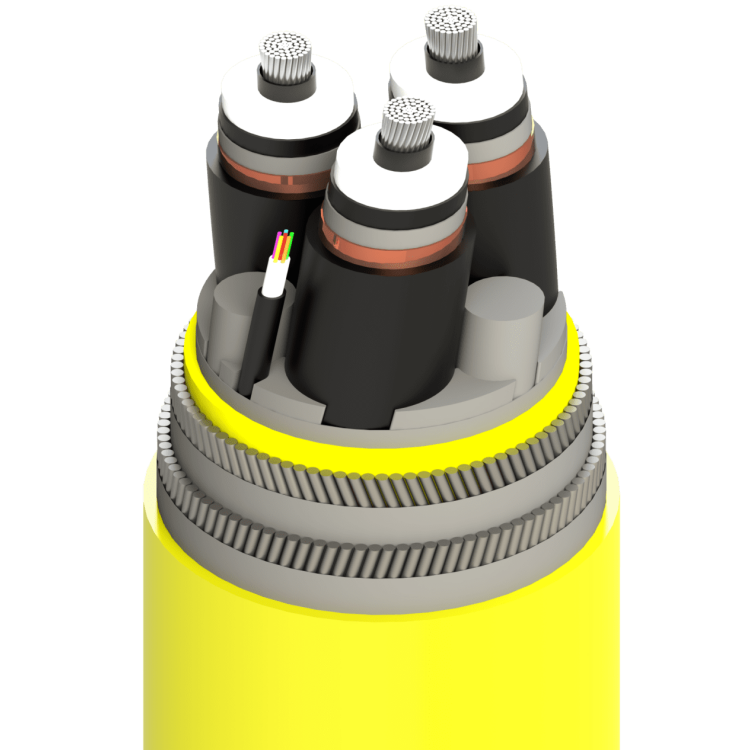
Submarine fiber optic cable
For underwater connections or in a submerged environment, ZMS Cable offers reinforced fiber optic cables, armed to withstand pressure and mechanical stress.
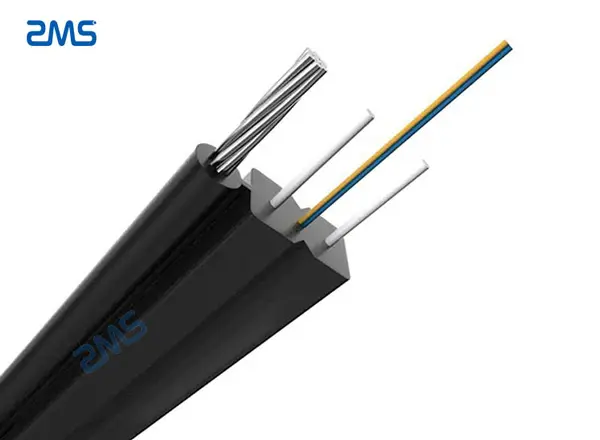
FTTH optical fiber cable
For connecting homes and buildings, FTTH cables use single-mode fiber (OS2), optimized for reduced installation costs over distances of a few hundred meters to a few kilometers.
ZMS Consulting :
The type of fiber is only one of the parameters of the final choice. Cable structure (armor, sheath, mechanical resistance) must be adapted to the actual installation conditions of the project. Contact our team to determine the configuration best suited to your specifications.
FAQ : Fibre monomode vs multimode
Can we mix single-mode and multi-mode fiber on the same link? ?
Non, It is not recommended. The two fibers have different core diameters (9 µm versus 50-62,5 µm), which causes significant signal losses at the connection point. A media converter is necessary if the two technologies must coexist on the same network.
What is the maximum distance of a single mode fiber ?
Single-mode fiber can cover several tens of kilometers without a repeater, depending on the quality of the cable and active equipment used. It is the reference technology for long distance networks.
What is the maximum distance of a multimode fiber ?
Multimode fiber typically covers a few hundred meters, until approximately 550 m in OM4 on connections 10 Gb/s. Beyond, modal dispersion degrades the signal.
Fibre OS2 : for what application ?
OS2 fiber is used for long distance outdoor networks : telecom, backbone, interconnection between sites, urban infrastructure. Its free tube construction protects it from environmental constraints.
OM3 or OM4 for a data center ?
OM4 is recommended for high-speed data centers or longer links within the facility, while the OM3 remains sufficient for the majority of standard installations at 10 Gb/s.
Single-mode or multi-mode fiber for FTTH ?
FTTH deployments use exclusively single-mode fiber (OS2), due to the distances between the concentration point and the accommodation, generally incompatible with the limits of multimode fiber.
What is the minimum quantity for an order of fiber optic cable? ?
Minimum quantities vary depending on cable type (standard reels, submarine cables, custom configurations). Contact our team with the details of your project for a tailored quote.
Our professional services
By choosing high quality overhead cables, you offer your teams and facilities a higher level of security — and this is precisely what ZMS services aim to guarantee.
ZMS designs and produces tailor-made cables according to your technical specifications, with customization of the marking, Colors and packaging. Our products can be adapted to meet international standards (GB, IEC, BS, NFC, ASTM, FROM, etc.) and the specific requirements of each project.
All cables are tested before shipment and comply with CE certifications, IEC and ISO. Detailed test reports can be provided upon request to ensure the reliability and safety of your installations.
ZMS cables are carefully packaged on wooden spools, corrugated cardboard boxes or metal drums. Ends are tightly sealed with plastic wrap or BOPP to prevent moisture. Exterior marking can be personalized with waterproof materials.
We offer flexible and fast logistics solutions to more than 130 pays :
- Maritime : 20ft or 40ft containers depending on volume.
- Land : Local or regional delivery.
- Air : Option available for rush orders.
We also provide all necessary export documents : commercial invoice, packing list, certificate of origin and customs documents.
Our engineers and advisors support you in choosing the cables best suited to your installations. We offer comprehensive consulting services, including technical assistance and project management, to ensure every step of your order is covered professionally.
ZMS offers two options for your electrical projects :
- Option A (led by ZMS) : Sending engineers and a supervision team to site to provide technical advice, installers and final tests. Travel expenses, accommodation, per diem and translation are to be expected.
- Option B (local subcontracting) : Collaboration with qualified local companies for installation, with technical training, On-site supervision and compliance verification provided by ZMS.
