
Mining Cable
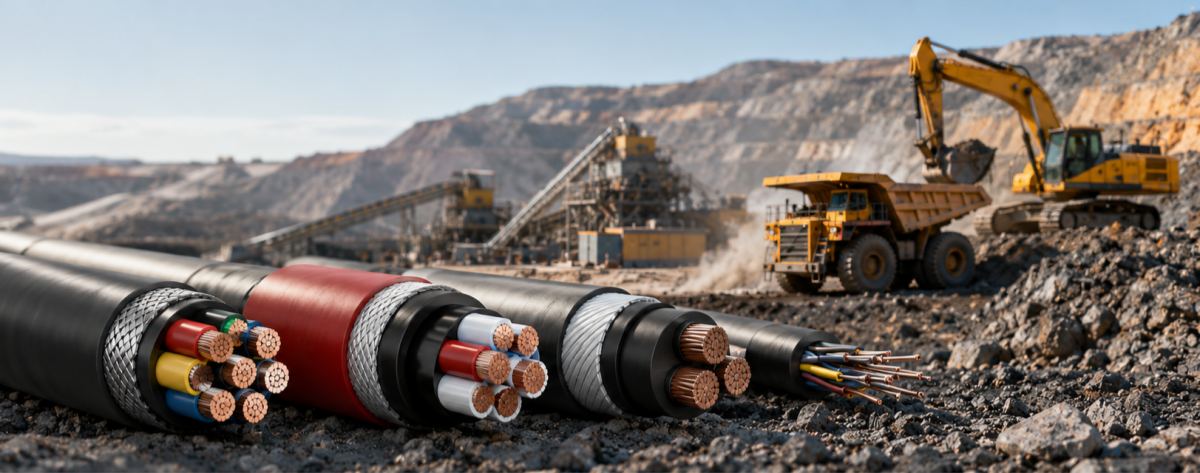
The mining cable — commonly referred to mining cable in industry — is an electrical cable designed to withstand the most severe operating conditions : extreme mechanical stress, permanent exposure to humidity, to oils and dust, fire risks and repetitive movements of mobile equipment. Unlike standard industrial cables, the mining cable incorporates reinforced protection — neoprene rubber or polyurethane sheath, metal armor, armor or dragable construction — tailored to the specific requirements of each mining environment.
ZMS Cable supplies a complete range of mining cables compliant with IEC standards, VDE, BS EN and SANS, covering power applications, order, instrumentation and communication for underground mines, open-cast mines and ore processing plants in French-speaking areas and internationally.
Looking for the right cable for your mining application ? Consult our quick selection guide at the bottom of the page.
Câbles miniers selon le type d'exploitation
Underground mine
lThe underground mine constitutes the most demanding environment for mining cables. In the underground galleries, permanent humidity, seepage water and ore dust quickly degrade unsuitable cables. Mobile equipment — drills and shuttle loaders — submits trailable cables to intensive bending cycles and severe abrasion on the gallery floor. In areas at risk of explosive atmosphere, THE mining cables must meet the requirements ATEX (2014/34/UE) and to IEC standards 60332-1 and IEC 61034, to prevent any risk of fire in confined spaces.
ZMS Cable advises :
For powering underground mobile equipment, ZMS recommends dragable cables with reinforced neoprene rubber jackets — including NSHTÖU and the NSHOU — whose construction guarantees maximum resistance to bending, to abrasion and permanent humidity. For fixed gallery distribution installations, an armored cable with XLPE insulation provides the necessary mechanical protection against crushing. In ATEX zones and in confined galleries, versions LSZH without halogens conform to IEC 60754 are available on request.
Open pit mine
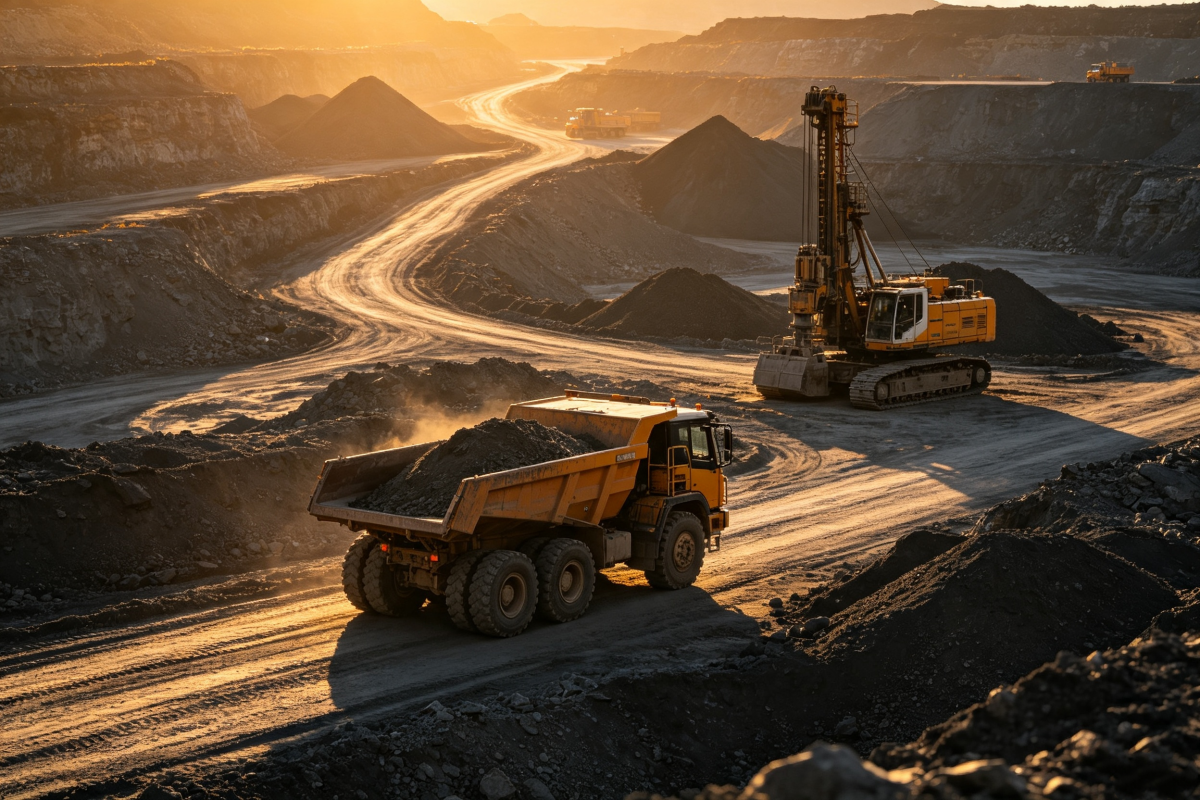
The open pit mine exposes the mining cables to environmental constraints radically different from those of underground mines. UV radiation, extreme temperature variations and rock projections quickly degrade unsuitable ducts. Heavy machinery – large tonnage trucks, hydraulic excavators and rotary drills — subject cables to permanent crushing hazards. Long distances between transformer stations and extraction equipment require higher voltage levels to limit line losses.
ZMS Cable advises :
For fixed on-site electrical distribution, THE XLPE insulated cables are suitable for open-cast mining installations. An armed version is recommended when the project requires reinforced mechanical protection against crushing. For mobile equipment such as excavators and rotary drills, of the reinforced sheath trailing cables offering high UV resistance, abrasion and repeated flexing cycles are recommended. The nominal voltage and section must be defined according to the power of the equipment and the distance between the transformer station and the machines..
Ore processing plant
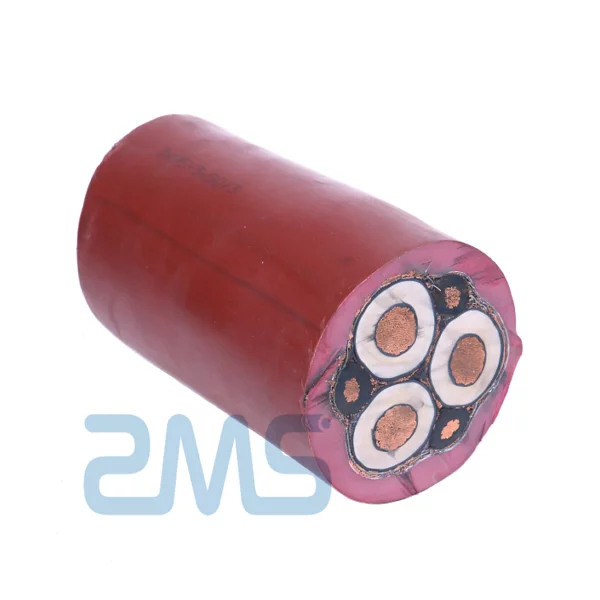
Ore processing plants — crushing, grinding, flotation and leaching — expose the mining cables to multiple and simultaneous constraints. Permanent humidity in washing circuits, acids and chemical reagents of treatment processes, and the intense vibrations of grinders and crushers quickly degrade unsuitable cables. The high electromagnetic density generated by high-power motors and drives disrupts control and instrumentation signals if the mining cables used are not properly shielded and chemically protected.
ZMS Cable advises :
For power cables of grinder and pump motors, of the mining power cables in important sections to isolation XLPE are recommended, in LSZH version for areas requiring reinforced fire safety. For control and instrumentation cables, shielded cables with tinned copper braid ≥85% effectively protect signals against electromagnetic interference. For environments in direct contact with acids or process chemicals, a polyurethane sheath (PUR) or rubber chemical resistant is available upon request.
Câbles miniers selon l'application
Trailable cables for mobile equipment
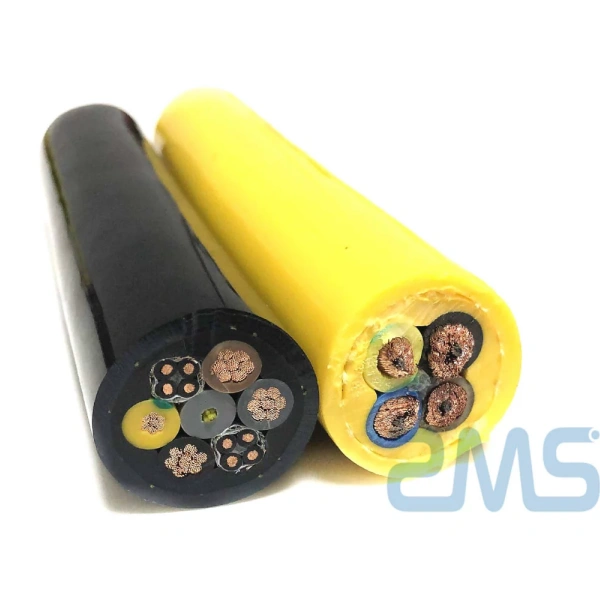
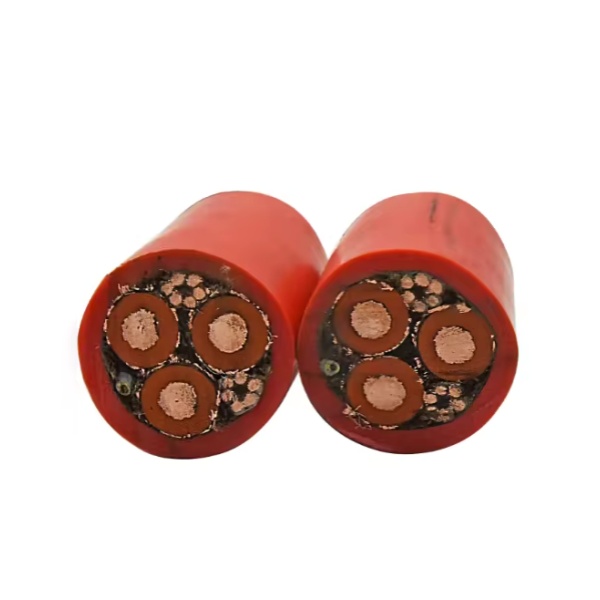
The mining dragable cable is designed for powering mobile equipment in mining environments : drilling machines, shuttle loaders, continuous minors, scrapers, mobile conveyors, drainage pumps and underground loading machines. In underground mines as well as in open pit mines, it must withstand millions of bending cycles, traction and twisting while maintaining stable, uninterrupted power.
ZMS Cable advises :
For trailerable applications in mining environments, ZMS recommends NSHTÖU and NSHOU cables, whose construction is specifically adapted to the constraints of underground galleries and mobile construction sites.
- Driver : stranded copper Class 5 or 6 (IEC 60228), twisting optimized for repeated bending
- Isolation : Ethylene-Propylene rubber (EPR)
- Outer sheath : reinforced neoprene (CR) or polyurethane (PUR) depending on exposure to oils
- Tension nominale : 0,6/1kV to 3.6/6kV depending on application
- Service temperature : -40°C to +60°C
- Minimum bend radius : 6 × outside diameter
- Résistance : abrasion, permanent humidity, mineral oils
- Options available : LSZH version without halogens for ATEX zones
The section and nominal voltage must be defined according to the power of the equipment supplied — contact our technical team.

Cables for conveyors
In a mine, the mining conveyor is the main artery of ore transport. An unplanned shutdown — caused by a mining cable failure — blocks the entire production chain and generates immediate losses that are difficult to recover. The mining cables supplying the conveyors must withstand frequent start-ups with high current draw, permanent vibrations and, depending on the environment, exposure to ore dust, moisture and processing chemicals.
ZMS Cable advises :
For powering conveyors in mining environments, ZMS recommends XLPE insulated power cables in armored version, offering mechanical resistance and dielectric strength suitable for repeated starts and long distribution distances.
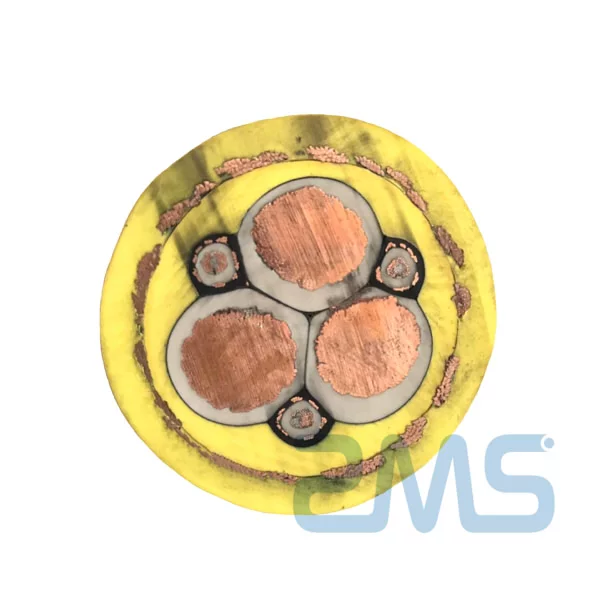
- Driver : stranded copper Class 2 or 5 (IEC 60228)
Isolation : XLPE (cross-linked polyethylene) - Armor : galvanized steel wire or steel strip
- Outer sheath : PVC or LSZH according to fire requirements
- Tension nominale : 0,6/1kV to 6/10kV depending on power and distance
- Service temperature : -30°C to +90°C
- Résistance : vibrations, dust, permanent humidity
- Options available : LSZH version for fire risk areas, shielded version for EMI environment
The section and nominal voltage must be defined according to the power of the motors and the length of the circuit — contact our technical team.
Câbles d'alimentation pour ventilation
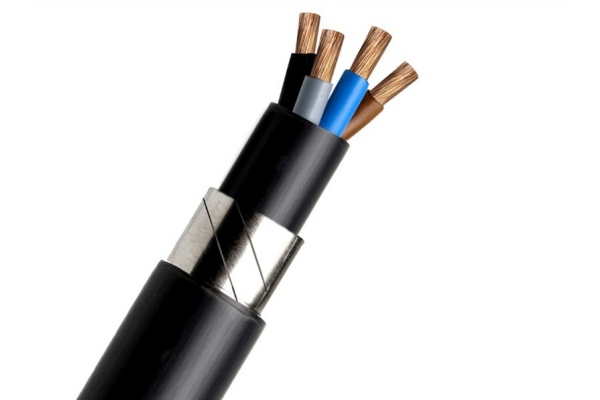
In an underground mine, ventilation is not one piece of equipment among others. It is a critical system whose failure directly endangers the lives of miners.. Main and auxiliary fans run continuously, 24h/24, exposing their electrical cables power supply to permanent thermal constraints and environments loaded with dust and humidity. In an area at risk of firedamp, THE mining cables supplying the ventilation systems must imperatively meet the requirements ATEX and fire resistance standards IEC 60332.
ZMS Cable advises :
For powering ventilation systems in mining environments, ZMS recommends XLPE insulated electrical cables in version LSZH without halogens - notably the N2XH and the U-1000 RVFV — ensuring optimal thermal resistance in continuous operation and limiting toxic emissions in the event of fire in confined galleries.
- Driver : stranded copper Class 2 or 5 (IEC 60228)
- Isolation : XLPE (cross-linked polyethylene)
- Outer sheath : LSZH without halogens
- Tension nominale : 0,6/1kV to 6/10kV depending on fan power
- Service temperature : -30°C to +90°C
- Fire resistance : IEC 60332-1, IEC 61034
- Compliance : ATEX for areas with explosive atmospheres
- Options available : armed version for mechanical protection in galleries
The section must be defined according to the power of the fans and the supply distance — contact our technical team.
Cables for winches and lifting equipment
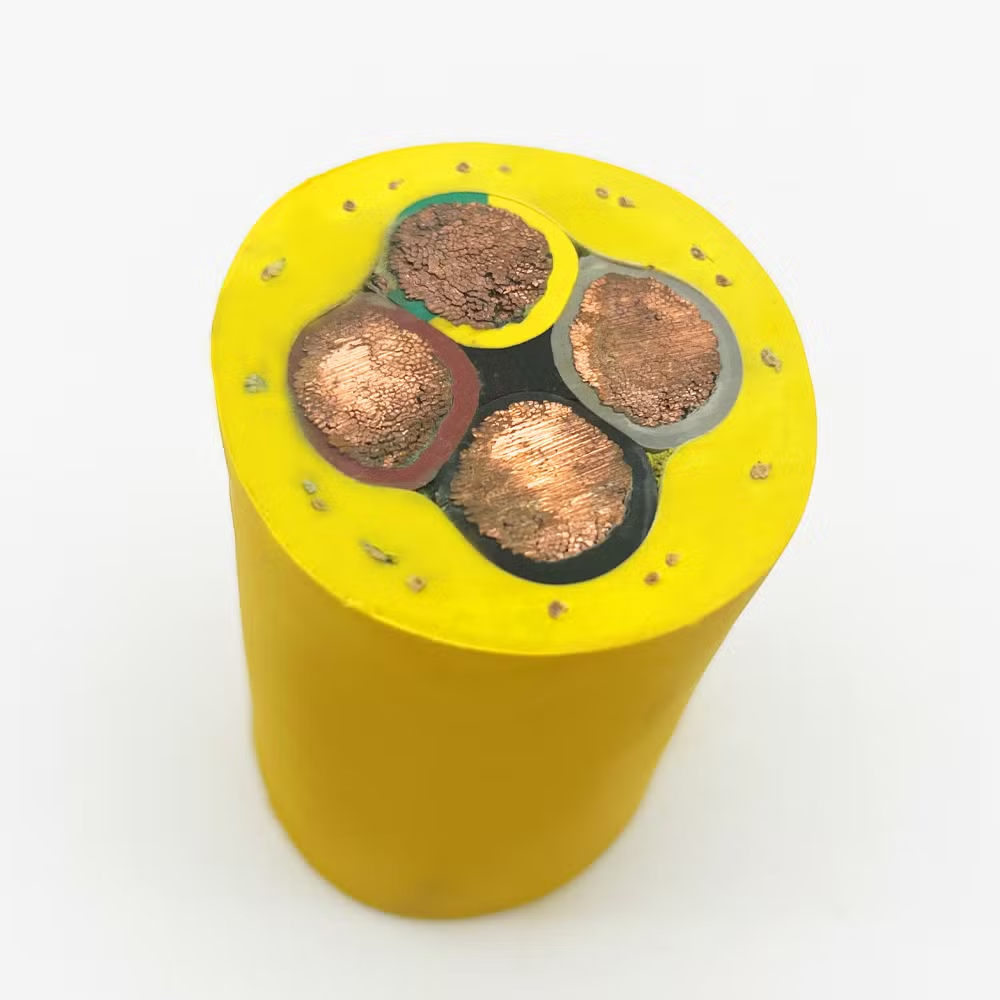
Winches, Underground extraction skips and cages impose unique mechanical constraints on their mining electrical cables : repeated vertical traction, axial torsion and bending combined over long strokes. Unlike the trailable cables horizontal, an incorrectly sized lifting cable risks mechanical rupture under load — with potentially catastrophic consequences for the safety of operations. Traction resistance, dimensional stability and mechanical fatigue life are the determining criteria in the choice of a mining cable for lifting equipment.
ZMS Cable advises :
For winches and lifting equipment in mining environments, ZMS recommends stranded copper conductor cables Class 5 or 6 (IEC 60228) with optimized twisting for tensile and torsion resistance, notably the NSHTÖU in reinforced version and XLPE insulated armored cables for fixed installations of extraction wells.
- Driver : stranded copper Class 5 or 6 (IEC 60228), optimized twisting traction/torsion
- Isolation : EPR or XLPE rubber depending on application
- Armor : galvanized steel wires for fixed well installations
- Outer sheath : reinforced neoprene (CR) or LSZH depending on zone
- Tension nominale : 0,6/1kV to 6/10kV depending on power
- Service temperature : -40°C to +60°C
- Résistance : mechanical traction, axial torsion, permanent humidity
- Compliance : ATEX available for areas with explosive atmospheres
Mechanical and electrical specifications are to be defined according to the load, the stroke and power of the winch — contact our technical team.
Câbles de commande et d'instrumentation
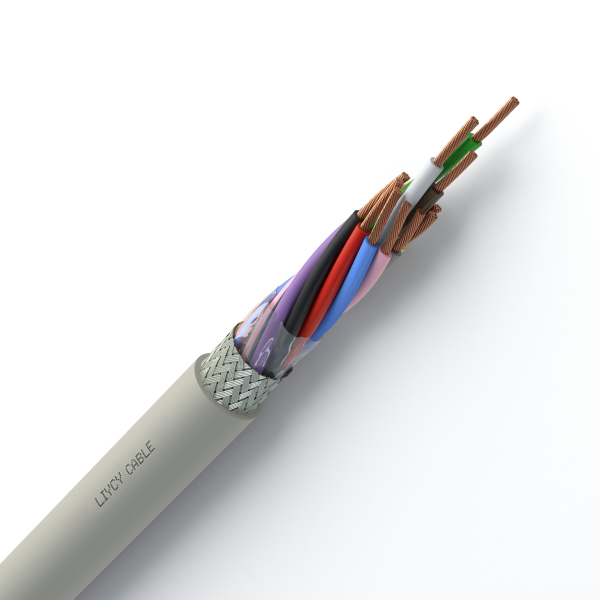
In a modern mine, safety and productivity rely on supervision systems, reliable control and measurement — gas sensors, personnel tracking systems, controllers for controlling SCADA equipment and networks. The slightest disturbance of the control or measurement signal can lead to an incorrect decision, an untimely stop or, in the most serious cases, an accident. In mining environment, THE control and instrumentation cables are exposed to high levels of electromagnetic interference — generated by motors, drives and power cables — which degrade signal quality if cables are not properly shielded.
ZMS Cable advises :
For environmental control and instrumentation systems mining, ZMS recommends shielded cables with low inter-conductor capacitance — including LIYCY for sensitive analog signals and YSLYCY for general control wiring — providing effective EMI protection and reliable signal transmission over long distances in gallery.
- Driver : stranded copper Class 5 (IEC 60228), fine twist
- Isolation : Low dielectric constant PVC
- Shielding : tinned copper braid ≥85% or aluminum foil + drain
- Outer sheath : PVC or LSZH according to fire requirements
- Tension nominale : 300/500V
- Service temperature : -20° C to +70 ° C
- Inter-conductor capacitance : weak, suitable for long distance analog signals
- Options available : version LSZH pour zones ATEX, individual pair shielding for very sensitive signals
Mining cable references available from ZMS
Flexible and dragable mining cables
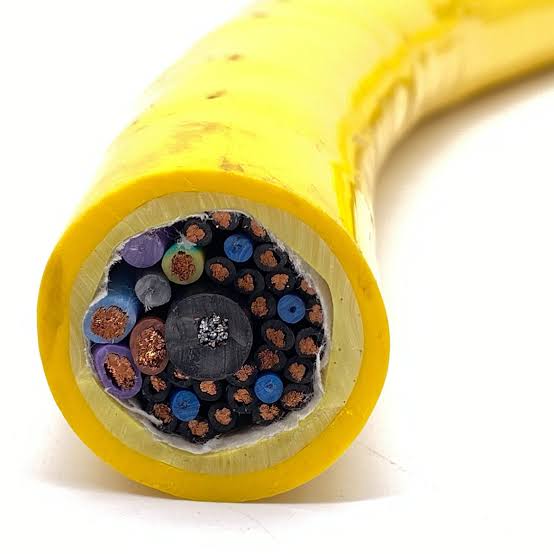
NSHTOU — 0,6/1kV
The NSHTÖU mining cable 0,6/1 kV is designed for powering mobile mining equipment, such as mining machines, drilling machines, pumps and other machines requiring flexible power cable.
NSHÖU — 0.6/1kV
The NSHOU mining cable 0,6/1 kV is suitable for powering mobile machines and equipment used in mines and underground operations.
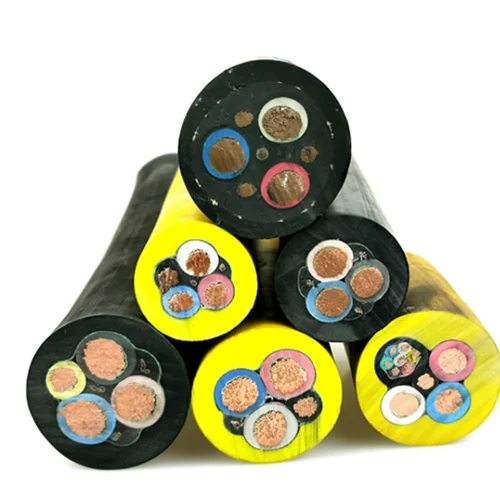
NSSHÖU — 0,6/1 kV
The NSSHÖU mining cable 0,6/1 kV is designed to power mobile mining equipment subject to high mechanical stresses, such as mining machines, drills and other heavy equipment.
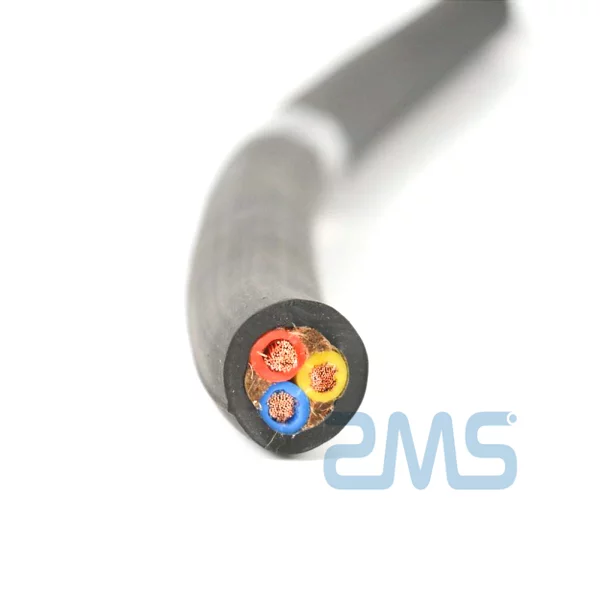
Type W mining cable — 2 kV
Type W mining cable 2 kV is designed for mining locomotives, mobile reel equipment and other machines requiring a flexible power cable capable of withstanding repeated bending and winding.
Type G mining cable — 2 kV
Type G mining cable 2 kV is suitable for heavy and mobile or portable mining equipment, such as loaders, drilling machines, pumps, conveyors and extraction machines.
SHD-GC — 2–25 kV
The SHD-GC 2–25 kV mining cable is designed for longwall shearers, haveuses continues, loaders, drilling machines, conveyors, pumps and other mobile mining equipment requiring grounding conductors, an earth detection system and a metal screen.
Medium voltage cables for mines
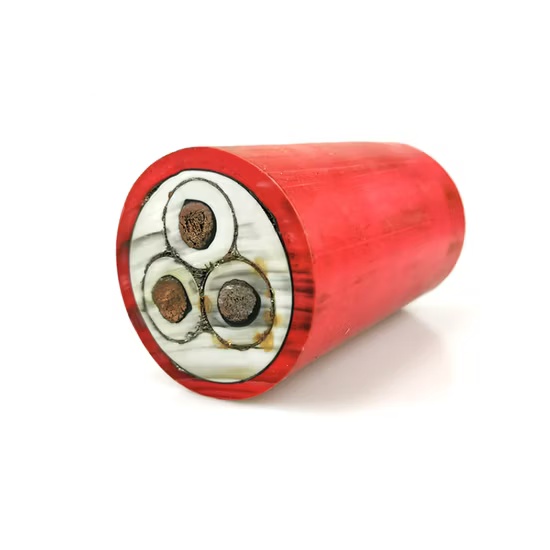
(N)3GHSSHCH — 3,6/6 has 12/20 kV
Medium voltage mining cable (N)3GHSSHCH 3,6/6 has 12/20 kV is intended for powering fixed mining equipment and installations, such as transformers, sous-stations, underground motors and electrical distribution systems.

(N)3GHSSYCY — 3,6/6 has 12/20 kV
Medium voltage mining cable (N)3GHSSYCY 3,6/6 has 12/20 kV is designed for powering mobile and semi-mobile mining equipment, notably extraction machines, pumps, conveyors and electrical distribution systems requiring reinforced mechanical protection.
Câbles de commande et d'instrumentation pour installations minières
The LIYCY cable is used for transmitting control signals, measurement and control between sensors, automates, electrical panels and mining equipment.
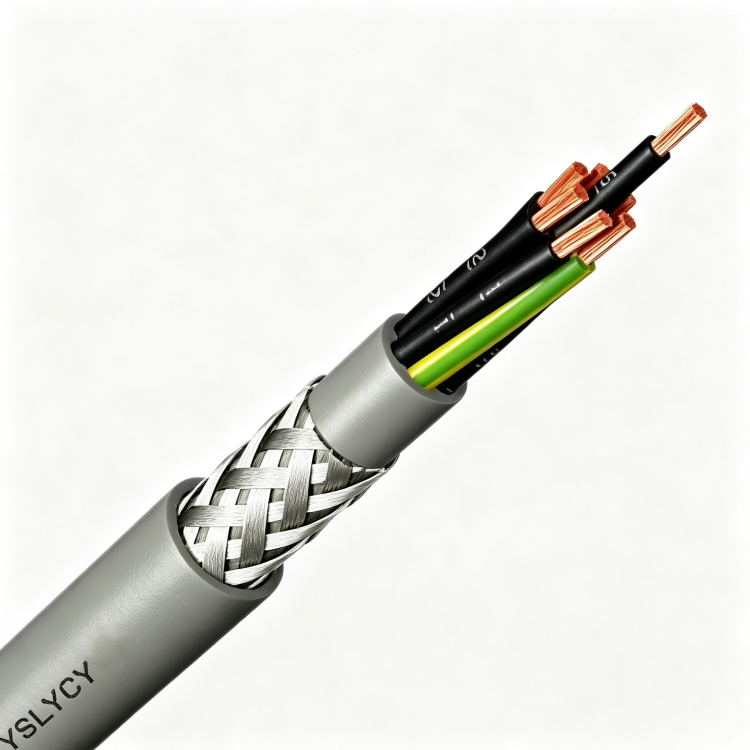
YSLYCY cable is designed for mining machinery command and control circuits, especially for connecting motors, sensors, electrical cabinets and automation systems.
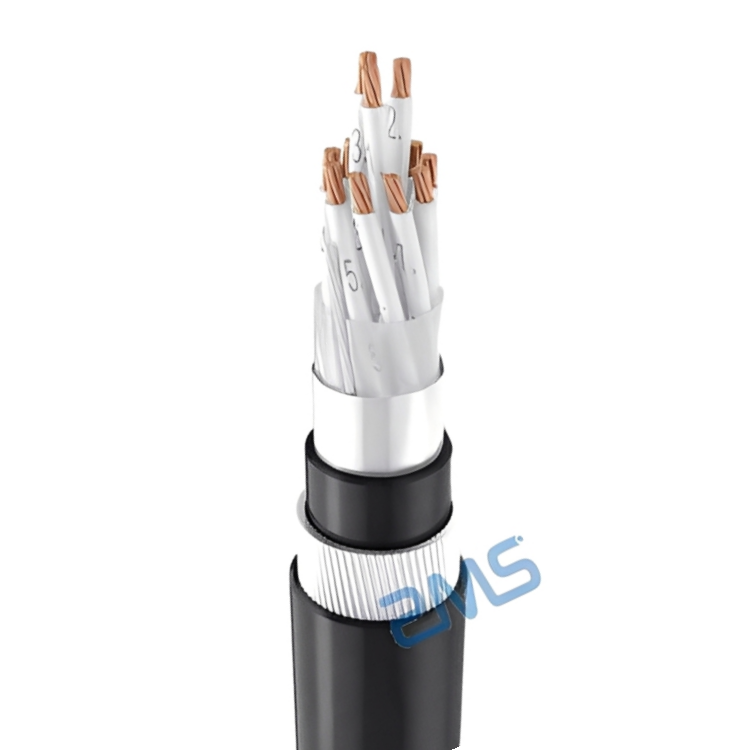
THE instrumentation cables shielded are intended for the transmission of analog signals, digital and measurement between sensors, instruments, control systems and automation equipment for mining installations.
Câbles d'alimentation basse tension pour mines
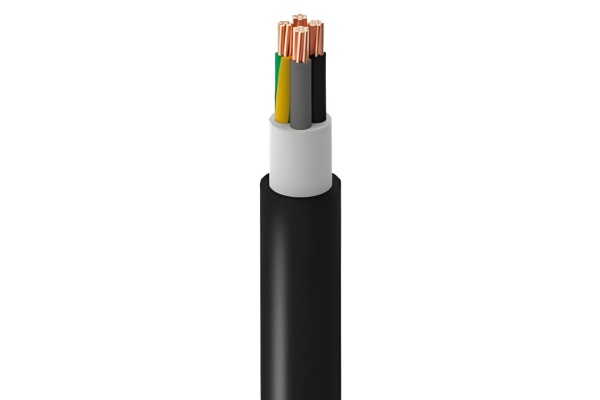
N2XH — XLPE/LSZH
The N2XH XLPE/LSZH cable is suitable for powering buildings, workshops, substations and mining electrical installations where low smoke emissions and the absence of halogens are required.

U-1000 RVFV — XLPE/PVC, armed
U-1000 RVFV XLPE/PVC armored cable is designed for powering fixed mining installations, particularly buried networks, sous-stations, industrial buildings and outdoor equipment exposed to mechanical stress.
Specific constraints of mining environments
The mining environment places far greater demands on electrical cables than standard industrial installations. Three categories of constraints determine the choice of a suitable mining cable.
Mechanical constraints
Underground mines and extraction sites expose cables to repeated shocks, crushes, severe abrasion and significant traction — particularly for trailing cables connected to mobile equipment such as drills, loaders and shuttles. A reinforced neoprene rubber or polyurethane sheath is essential to absorb these stresses without premature degradation. In open pit mines, UV exposure, extreme temperature variations and flying rocks add additional demands to the outer sheath.
Fire risks and ATEX requirements
In underground mines — particularly coal mines and mines at risk of firedamp — cables must meet the requirements of the ATEX directive (2014/34/UE) and be classified for areas with explosive atmospheres. Cables must be inherently flame retardant, low smoke and halogen free (LSZH) to limit the risks of poisoning in the event of fire in confined galleries. Compliance with IEC standards 60332 and IEC 61034 is generally required.
Repetitive movements and dragable applications
Mobile mining equipment — drills, shuttle loaders, Cutters and underground haul trucks — require cables capable of withstanding millions of bending cycles without conductor breakage or sheath cracking. These so-called trailable cables (trailing cables) are constructed with Grade stranded copper conductors 5 or 6 (IEC 60228), optimized twisting and an elastomeric sheath with high mechanical resistance. The choice of the minimum bending radius and the number of guaranteed bending cycles is decisive for the lifespan of the cable in service.
Our professional services
By choosing high quality overhead cables, you offer your teams and facilities a higher level of security — and this is precisely what ZMS services aim to guarantee.
ZMS designs and produces tailor-made cables according to your technical specifications, with customization of the marking, Colors and packaging. Our products can be adapted to meet international standards (GB, IEC, BS, NFC, ASTM, FROM, etc.) and the specific requirements of each project.
All cables are tested before shipment and comply with CE certifications, IEC and ISO. Detailed test reports can be provided upon request to ensure the reliability and safety of your installations.
ZMS cables are carefully packaged on wooden spools, corrugated cardboard boxes or metal drums. Ends are tightly sealed with plastic wrap or BOPP to prevent moisture. Exterior marking can be personalized with waterproof materials.
We offer flexible and fast logistics solutions to more than 130 pays :
- Maritime : 20ft or 40ft containers depending on volume.
- Land : Local or regional delivery.
- Air : Option available for rush orders.
We also provide all necessary export documents : commercial invoice, packing list, certificate of origin and customs documents.
Our engineers and advisors support you in choosing the cables best suited to your installations. We offer comprehensive consulting services, including technical assistance and project management, to ensure every step of your order is covered professionally.
ZMS offers two options for your electrical projects :
- Option A (led by ZMS) : Sending engineers and a supervision team to site to provide technical advice, installers and final tests. Travel expenses, accommodation, per diem and translation are to be expected.
- Option B (local subcontracting) : Collaboration with qualified local companies for installation, with technical training, On-site supervision and compliance verification provided by ZMS.