
Ethernet cable
THE ethernet cables are used for data transmission in computer networks and communications infrastructures. They are available in different categories, notably Cat5e, Cat6 and Cat6A, offering performance levels adapted to throughput and bandwidth needs. Depending on the installation environment, they can be offered in versions UTP, FTP or STP, with or without shielding, to ensure stable transmission in the face of electromagnetic interference.
As a specialist manufacturer, ZMS CABLE offers a complete range of Ethernet cables, available with different conductor types, shielding and sheathing (PVC, LSZH). Our solutions are designed to meet the requirements of professional networks, industrial facilities and outdoor environments.
Available Ethernet Cable Types
Cat5e cable
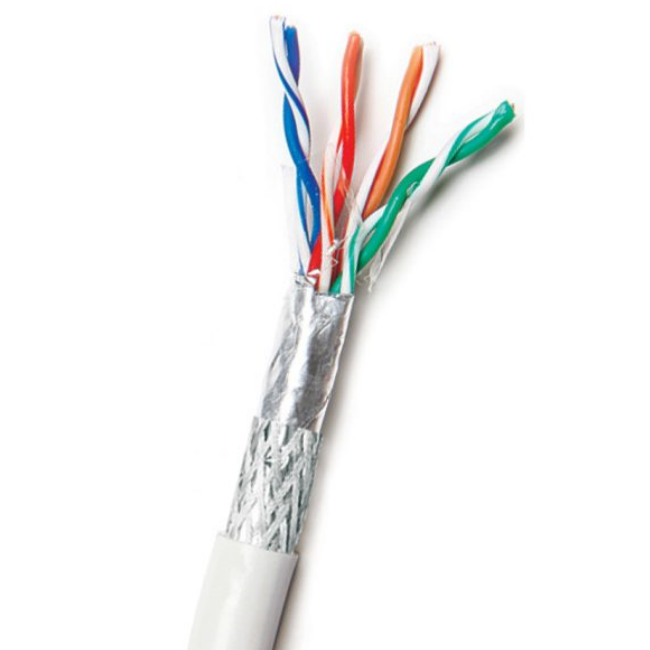
The Cat5e cable (Category 5 enhanced) is an improved version of Cat5, designed to limit interference and ensure data transmission stable until 1 Gbit/s. This Cat5e Ethernet cable, thanks to its twisted pair structure, available in version UTP or FTP, is widely used in networks for residential installations, offices and small computer networks, where flow requirements remain moderate.
ZMS CABLE – Expert advice : Cat5e cable provides a reliable and economical solution for standard applications. However, for new installations or evolving networks requiring higher performance or better sustainability, it is recommended to opt for higher categories like Cat6 or Cat6A, providing higher throughput and better resistance to interference.
| Setting | Maximum flow | Bandwidth | Distance maximale | Shield type | Number of pairs | Typical applications |
| Cat5e cable | 1 Gbit/s | 100 MHz | 100 m | UTP / FTP | 4 pairs | Home networks, offices |
Cat6 cable
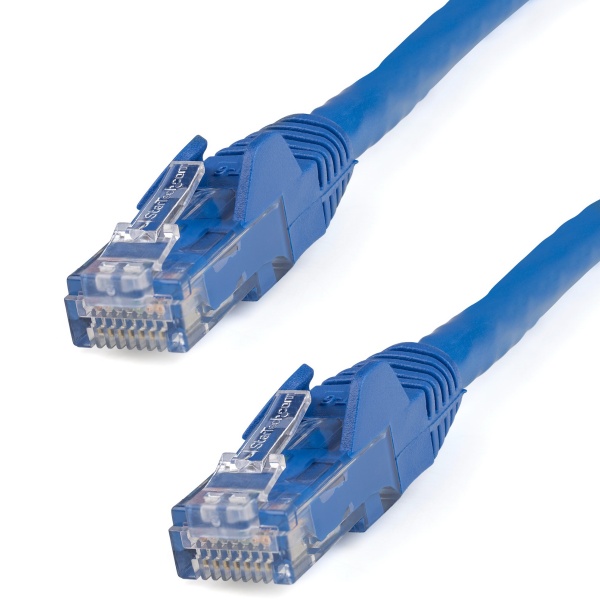
The Cat6 cable (Category 6) is designed to deliver superior performance to Cat5e, with more stable data transmission and better resistance to interference. This Cat6 Ethernet cable supports speeds up to 1 Gbit/s on 100 m and can reach 10 Gbps over short distances, with a bandwidth of up to 250 MHz. Available in version UTP, FTP or STP, it is widely used in professional networks modern, tertiary environments and certain industrial installations.
ZMS CABLE – Expert advice : Cat6 cable is now a standard for new network installations, offering a good balance between performance, reliability and cost. Compared to Cat5e, it allows better management of interference and greater capacity for evolution. For very high speed needs or critical infrastructures, the use of Cat6A can be considered.
| Setting | Maximum flow | Bandwidth | Distance maximale | Shield type | Number of pairs | Typical applications |
| Cat6 cable | 1 Gbit/s (until 10 Gbps over short distance) | 250 MHz | 100 m (1 Gbit/s) / ~55 m (10 Gbit/s) | UTP, FTP, STP | 4 pairs | Professional networks, offices, small industrial infrastructures |
Cat6A cable
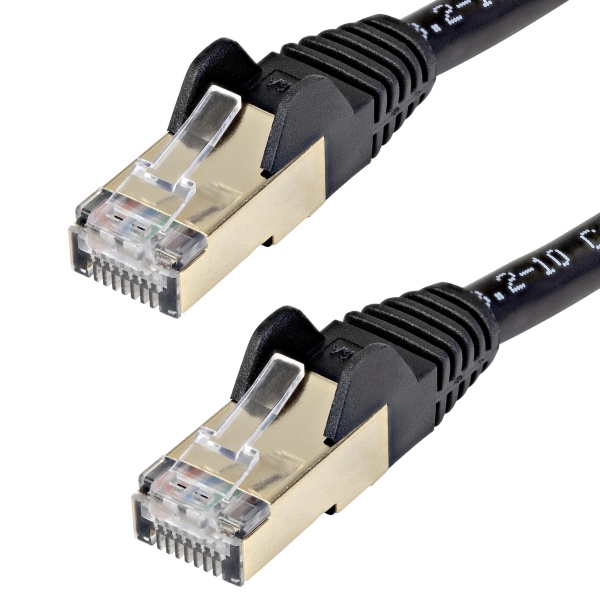
Cat6A cable (Category 6 Augmented) is designed to meet the requirements of very high speed networks, with stable data transmission up to 10 Gbit/s over a maximum distance of 100 meters and a bandwidth of up to 500 MHz. This Cat6A Ethernet cable offers enhanced protection against interference, thanks to often shielded configurations (FTP, STP), and is particularly suitable for environments requiring high and consistent performance.
It is widely used in data centers, THE Critical infrastructure and demanding industrial networks, where reliability, stability and capacity to evolve are essential.
ZMS CABLE – Expert advice : Cat6A cable is recommended for projects requiring a very high speed and great long-term stability. Compared to Cat6, it allows maintaining high performance over full distances of 100 m, while providing better immunity to electromagnetic disturbances. It therefore constitutes a relevant choice for scalable infrastructures and environments with high cabling density..
| Setting | Maximum flow | Bandwidth | Distance maximale | Shield type | Number of pairs | Typical applications |
| Cat6A cable | 10 Gbit/s | 500 MHz | 100 m | UTP, FTP, STP | 4 pairs | Data centers, industrial networks, Critical infrastructure |
Difference between Cat5e, Cat6, Cat6a
| Category | Speed | Distance | Usage |
| Cat5e | 1 Gbps | 100 m | office automation |
| Cat6 | 10 Gbps (55m) | AVERAGE | business |
| Cat6a | 10 Gbps (100m) | pupil | industrial |
| Category | Performance level | Recommended environment | Main advantage | Limitation |
| Cat5e | Standard | Home networks, offices | Economic | Limited flow |
| Cat6 | Pupil | Professional networks | Good balance of performance / cost | Limited distance in 10 Gbit/s |
| Cat6A | Very high | Data centers, demanding environments | High throughput over long distance | Higher cost and diameter |
In practice, Cat5e is suitable for basic needs on a budget, Cat6 is the most common choice for professional networks today, while Cat6A is recommended for high performance or scalable infrastructure.
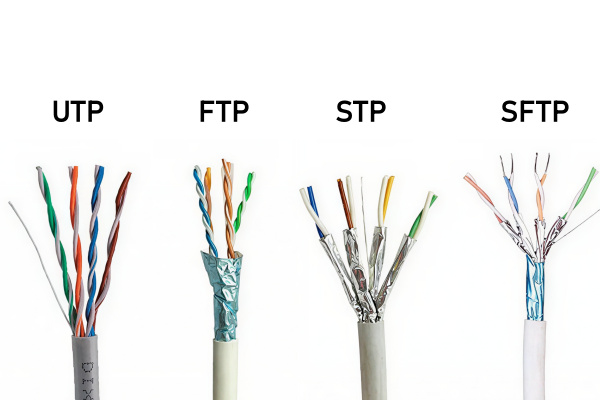
Types of Ethernet Cable Shielding : UTP, FTP, STP
The type of shielding of an Ethernet cable plays a vital role in protecting against Electromagnetic interference (EMI) and stability of data transmission. Common names such as UTP, FTP et STP allow you to quickly distinguish the level of protection, while the standardized designations (U/UTP, F/UTP, F/FTP, S/FTP) describe the structure of the shielding more precisely.
UTP cable (U/UTP) (Unshielded Twisted Pair)
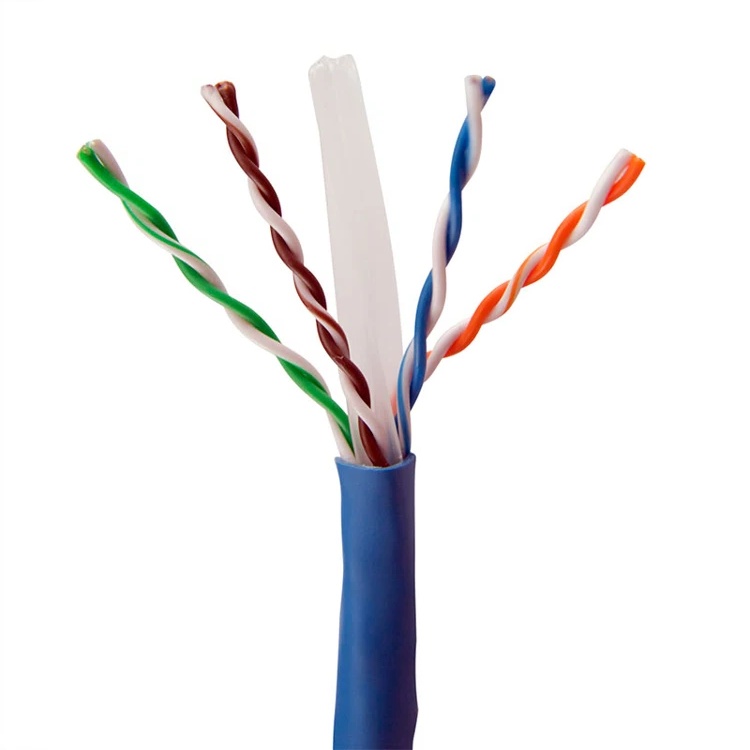
The UTP cable (U/UTP) is an Ethernet cable without shielding, composed only of twisted pairs. It is mainly used in environments with little disturbance, such as residential installations or standard offices.
ZMS CABLE – Expert advice : UTP cable is recommended for simple and economical networks, where sources of electromagnetic interference are limited. It reduces costs while ensuring sufficient performance for typical uses..
FTP cable (F/UTP) (Foiled Twisted Pair)
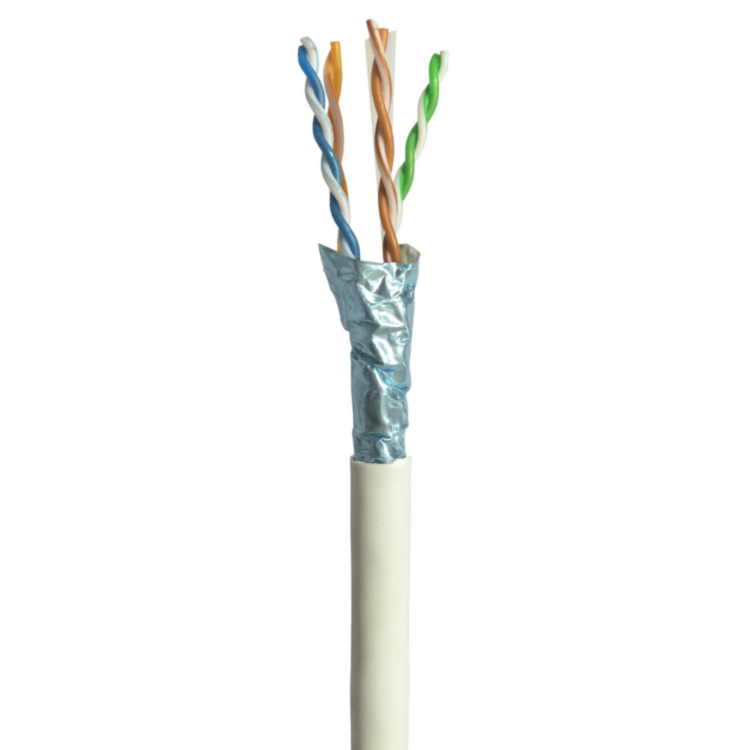
The FTP cable (often referred to as F/UTP) is equipped with a overall aluminum foil shielding surrounding all the twisted pairs, which effectively limits electromagnetic interference.
ZMS CABLE – Expert advice : The FTP cable represents a good compromise between protection and cost. It is suitable for professional environments or slightly disturbed, where better protection against interference is needed without increasing significantly the cost of installation.
STP cable (F/FTP, S/FTP) (Shielded Twisted Pair)
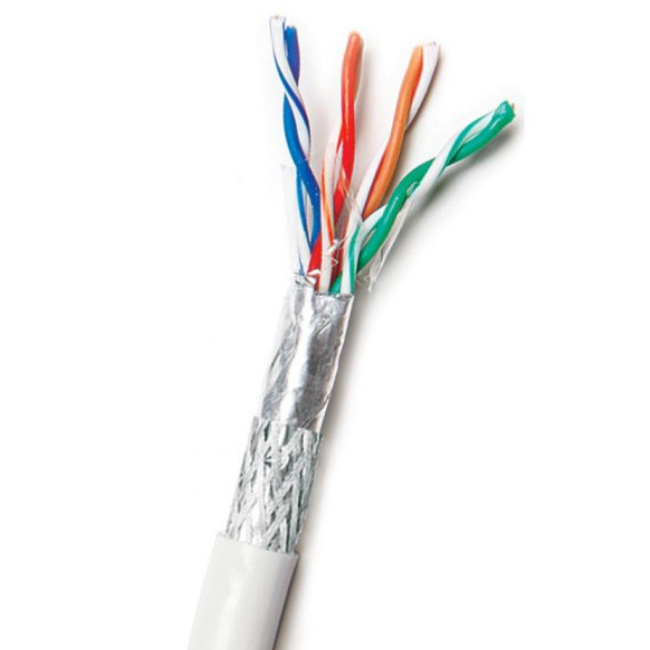
The STP cable brings together advanced armor configurations, such as F/FTP or S/FTP, combining a overall and/or individual shielding of pairs. It thus offers reinforced protection against electromagnetic interference and guarantees stable transmission in the most demanding environments..
ZMS CABLE – Expert advice : STP cable is recommended for industrial installations, data centers or environments with a high density of electrical equipment. It ensures optimal performance in conditions of high disturbances.
Comparison table — UTP vs FTP vs STP
| Type courant | Standardized designation | Shield Level | Recommended environment | Main advantage | Limitation |
| UTP | U/UTP | None | Residential, offices | Economical and simple | Susceptible to interference |
| FTP | F/UTP | Overall shielding | Professional networks | Good cost compromise / protection | Limited protection |
| STP | F/FTP, S/FTP | Reinforced armor | Industrial, data centers | Protection maximale | Higher cost and installation |
Customizing Ethernet Cables
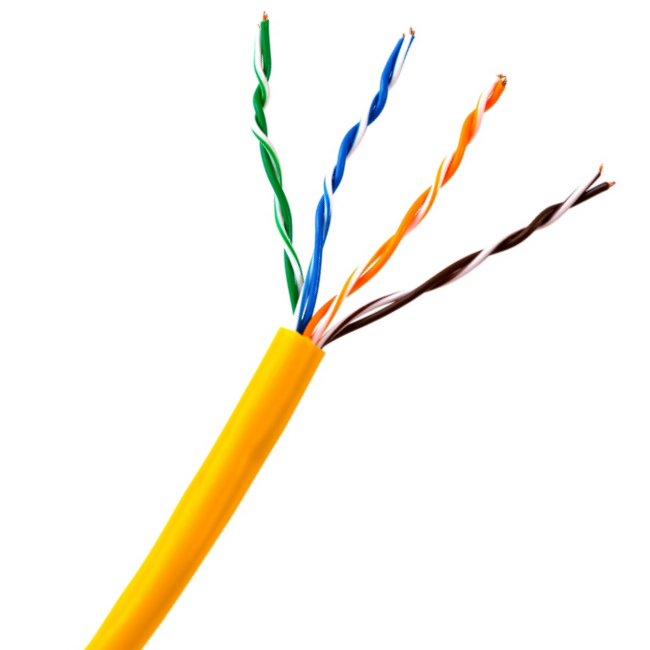
At ZMS Cable, We offer custom ethernet cables in order to meet the specific requirements of each project, whether for industrial applications, tertiary or exterior.
We can adapt different parameters according to your needs :
- Cable length
- Shield type (UTP, FTP, S/FTP)
- Category (Cat5e, Cat6, Cat6a)
- Sheath type (PVC, LSZH, PE for exterior)
- Custom color and marking
Our solutions are adapted to projects requiring specific constraints, such as the industrial networks, THE exterior installations or the complex IT infrastructures. We also support our customers in optimizing the technical choice according to the budget and installation conditions..
For any specific request or project custom made, do not hesitate to send us your technical specifications. Our team supports you in the choice and configuration of the suitable Ethernet cable.
Ethernet Cable Applications
Ethernet cables are used in many applications, depending on performance requirements and installation environment :
- Residential and tertiary networks : connecting computer equipment and local networks with Cat5e or Cat6 Ethernet cables.
- Business Networks : high-speed data transmission in offices and IT infrastructures with Cat6 or Cat6a FTP cables.
- Industrial networks : high interference environments requiring Cat6a S/FTP industrial network cables.
- Exterior installations : Inter-building connections and surveillance systems with UV- and moisture-resistant outdoor Ethernet cables.
- IP video surveillance : stable transmission for HD cameras with Cat6 or Cat6a Ethernet cables.
Ethernet or fiber optic cable : how to choose ?
The choice between Ethernet cable and optical fiber mainly depends on the distance, expected performance and installation environment.
Pour local networks and short links (≤100 m), the ethernet cable remains a reliable solution, economical and easy to deploy. On the other hand, pour long distances, disrupted environments or very high speed needs, the fiber optics offers better performance.
In most projects, a combined architecture is recommended : optical fiber for the backbone, Ethernet cable for connecting equipment.
Need a detailed guide ?
Check out our full comparison : Ethernet cable vs fiber optic
ZMS CABLE – Expert advice for choosing an Ethernet cable
Quick choice
- Residential use / office → Cat5e UTP Ethernet cable
- Professional networks → Cat6 FTP Ethernet cable
- Industrial environments → Cat6a S/FTP Ethernet cable
- Outdoor installation → outdoor Ethernet cable with PE sheath
Category
The choice of category determines network performance :
- Cat5e : standard use up to 1 Gbps
- Cat6 : best performance compromise / cost
- Cat6a : high performance for demanding networks
Shielding
Shielding depends on the level of interference :
- UTP : minimally disturbed environments
- FTP : standard business protection
- S/FTP : strong protection for industrial environments
Conditions d’installation
- Interior → PVC or LSZH sheath
- Exterior → UV and humidity resistant PE sheath
- Industry → reinforced cable with mechanical protection
Mistakes to avoid
- Avoid aluminum cables (CCA) : lower conductivity
- Neglecting shielding in an industrial environment
- Poor grounding of shielded cables
- Choosing a Category Insufficient for Future Needs
Need technical advice or a custom Ethernet cable ? Contact ZMS CABLE for a solution tailored to your project.
Services & Delivery at ZMS Cable
- Personalized manufacturing service (OEM / ODM) : Custom cable design and production according to your technical specifications, with customization of the marking, Colors and packaging.
- Rapid global logistics : Shipping shipping, terrestrial or air to more than 130 pays ; Flexible delivery according to your deadlines.
- Certified quality : All products are tested before shipping ; conformity this / IEC / ISO ; test reports provided on request.
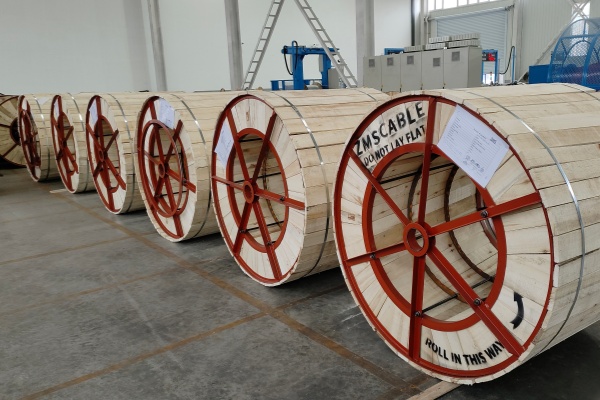
- Neat and customizable packaging : ZMS cables are packaged on wooden coils, wavy boxes or drums, with hermetically sealed ends for moisture protection. Outdoor marking can be printed on request with waterproof materials.
- Dedicated technical support : Our engineers and advisers accompany you in the choice of the electric cable most suited to your installations, in accordance with local standards.
Related Products
- All Posts
- News
- Blog
- Resources
- Electric cable types
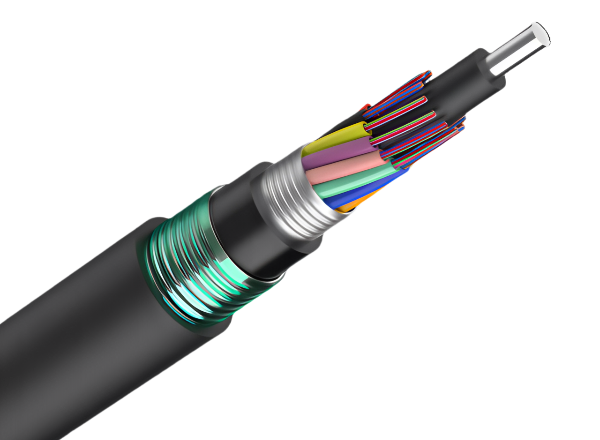
Armored fiber optic cable What is Armored Fiber Optic Cable ? Armored fiber optic cable is....
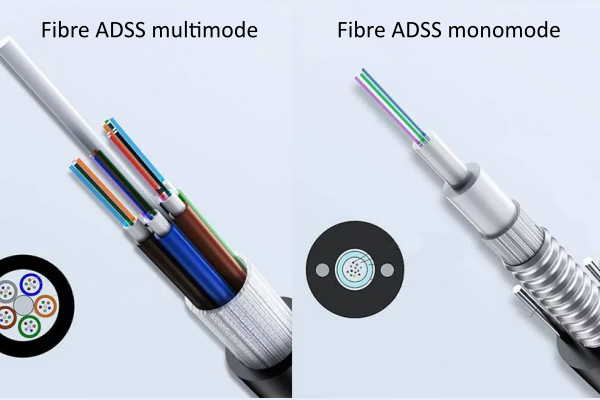
ADSS cable ADSS cable is composed of optical fibers surrounded by a dielectric material (non-conductor), which eliminates the need...
Fiber Optic Cable Fiber optic cable is a type of cable that uses glass fibers..