
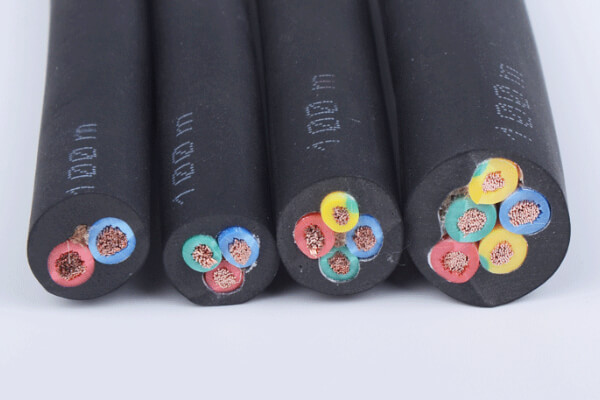
Rubber Cable
THE rubber cables are electrical cables used for power supply and transmission of energy in installations requiring great flexibility and good resistance to mechanical stress. Thanks to their rubber insulation or thermosetting elastomers such as EPR, these cables offer excellent abrasion resistance, humidity, oils and demanding industrial environments.
They are widely used for mobile electrical equipment, Industrial machines, construction facilities, welding equipment, as well as in sectors such as energy, the maritime, mining and wind energy. Flexible rubber cables are particularly suitable for applications requiring frequent movements or severe conditions of use..
As a specialist manufacturer, ZMS CABLE produces a wide range of rubber cables compliant with international standards, including widely used types such as H07RN-F, H05RR-F et H05RN-F, as well as other elastomeric insulated industrial cables for different power levels and operating conditions.
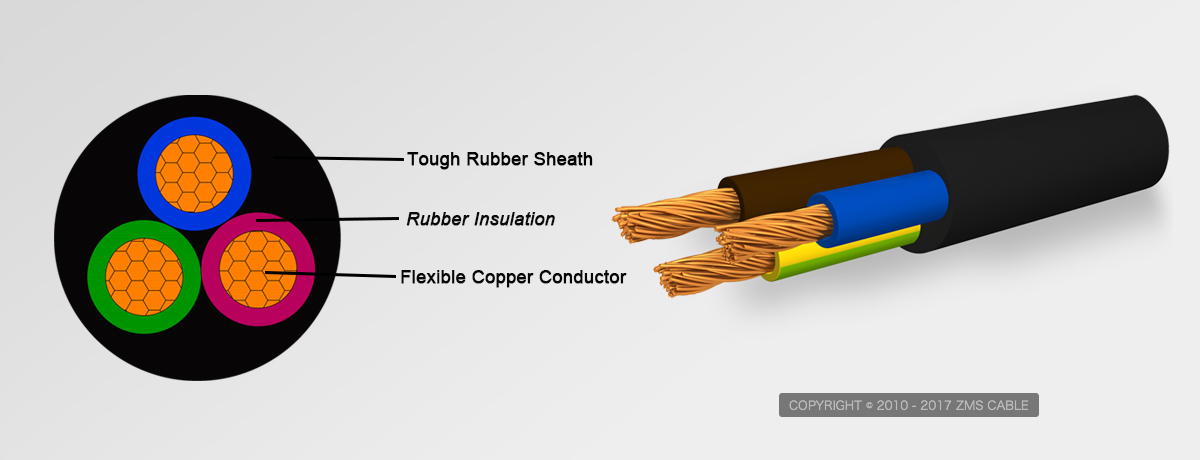
Types of Rubber Cables Available at ZMS Cable
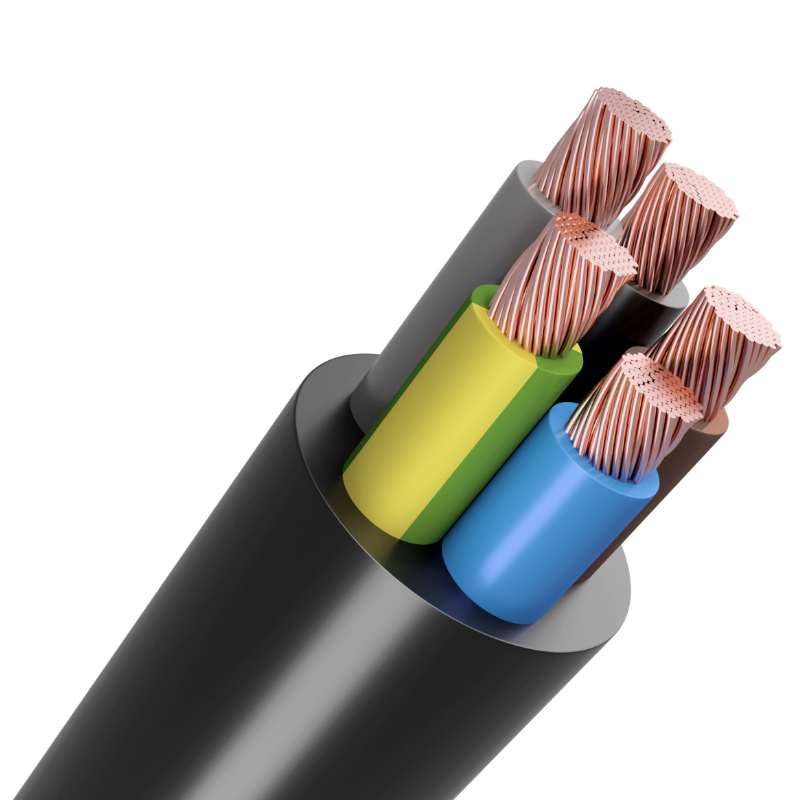
Soft rubber cable
THE flexible rubber cables suitable for a wide range of applications requiring great flexibility and good resistance to difficult industrial conditions.
In the industrial field, these cables are used for power supply, control and transmission of signals from various equipment. They also serve as power cables for construction machinery and equipment, such as cranes, tower cranes and other mobile equipment.
The most common types include and H07RN-F, widely used for mobile equipment and construction sites.
Structure : Fine stranded flexible copper conductor, rubber insulation (EPR or synthetic rubber) and abrasion-resistant rubber outer jacket, to humidity and oils.
Features : Very high flexibility and excellent resistance to repeated movements. Ideal for mobile equipment and demanding industrial environments.
Standards : IEC 60245, IN 50525, IEC 62067,IEC 60502,GB/T 12706-2008,ASTM B800
ZMS CABLE expert advice :
THE flexible rubber cables are particularly suitable for mobile machines, to construction sites and industrial equipment. For environments presenting significant mechanical risks (crushing or shock), the use of an armored rubber cable can provide additional protection.
| Cable type | Number of conductors × section (mm²) | Driver class | Driver diameter (mm) | Insulation thickness (mm) | Outside diameter Approx. (mm) | Masse approx. (kg/km) |
| H05RR-F | 3 × 1,5 | Class 5 | 1,38 | 0,7 | 8,5 – 9,5 | 110 – 130 |
| H05RN-F | 3 × 1,5 | Class 5 | 1,38 | 0,7 | 9,0 – 10,5 | 120 – 150 |
| H07RN-F | 3 × 2,5 | Class 5 | 1,78 | 0,9 | 11,5 – 13,5 | 190 – 230 |
| H07RN-F | 3 × 10 | Class 5 | 4,12 | 1,0 | 18,0 – 21,0 | 700 – 820 |
| H07RN-F | 4 × 25 | Class 5 | 6,00 | 1,2 | 28,0 – 32,0 | 1800 – 2100 |
| H07RN-F (extra flexible) | 3 × 10 | Class 6 | 4,40 | 1,0 | 19,0 – 22,5 | 720 – 860 |
| H07BQ-F | 3 × 2,5 | Class 5 | 1,78 | 0,9 | 11,0 – 13,0 | 200 – 240 |
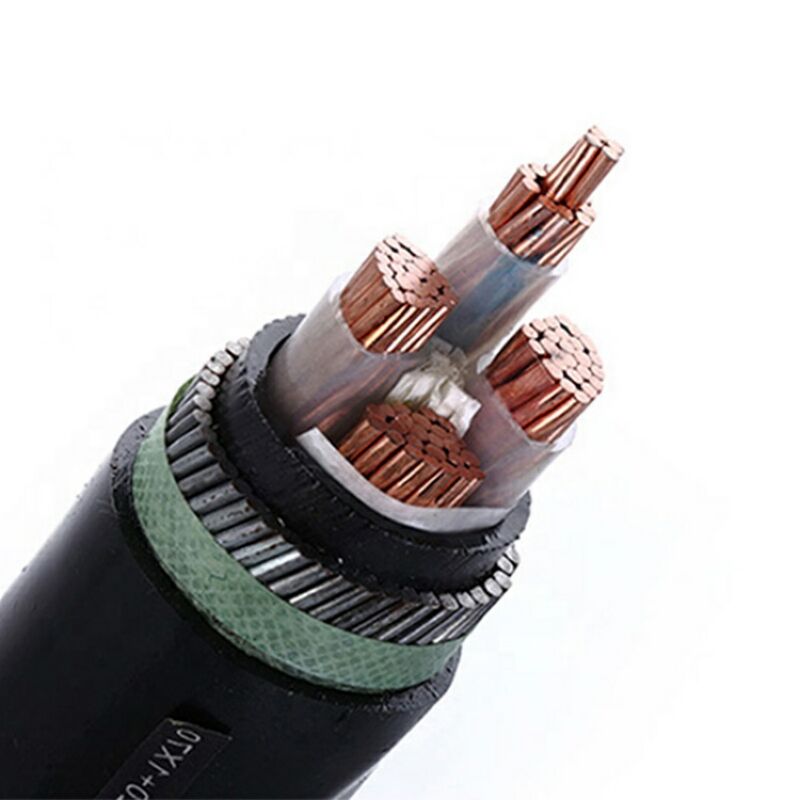
Armored rubber cable
THE armored rubber cables combine the flexibility of rubber insulation with metal armor designed to enhance mechanical protection in demanding industrial environments.
Stucture : Soft copper conductor, rubber insulation (EPR or equivalent), inner sheath, metal armor (SWA / STA / AWA) and abrasion and oil resistant rubber outer jacket
Features : Reinforced mechanical protection against crushing and abrasion. Less flexible than a soft rubber cable, but better suited to harsh industrial environments.
Standards : IEC 60245, IEC 60502, BS 5467 / BS 6622
ZMS CABLE expert advice :
In mobile installations, an unarmored flexible rubber cable is often preferred for its flexibility. On the other hand, when the cable is exposed to risks of crushing or abrasion, the use of an armored rubber cable is recommended. THE SWA armor are generally chosen for fixed installations requiring high mechanical resistance, while STA is more suitable for multi-conductor cables in industrial environments.
The above values are typical for cables with insulation and rubber sheath, galvanized steel wire armor.
| Driver type | Number of conductors × nominal section (mm²) | Driver diameter (mm) | Nominal insulation thickness (mm) | Diameter of armor wires (mm) | Outside diameter of the cable (mm) | Cable mass (kg/km) |
| Classy driver 2 | 3 × 10 | 4,05 | 1,0 | 1,6 | 23,07 | 1084,29 |
| Classy driver 5 | 3 × 10 | 4,12 | 1,0 | 1,6 | 23,22 | 1088,36 |
| Classy driver 6 | 3 × 10 | 4,43 | 1,0 | 1,6 | 23,89 | 1117,99 |
Advantages of rubber cables
THE rubber cables stand out for their performance in demanding environments and mobile applications :
- Excellent flexibility : flexible rubber cables withstand repeated bending without deterioration, ideal for mobile equipment
- High mechanical resistance : good abrasion resistance, to shocks and tensile stresses ; for more severe environments, armored rubber cables offer reinforced mechanical protection
- Good resistance to harsh environments : adapted to humidity, oils, to bad weather and external conditions
- Large temperature range : reliable operation in variable thermal conditions
- Safety and reliability : elastomer insulation (EPR) offering good dielectric properties
Expert council : for environments with high mechanical constraints, it is recommended to opt for a armored rubber cable (EITHER or STA) to improve protection and lifespan.
Rubber cable applications
Thanks to their flexibility and robustness, rubber cables are used in many industrial sectors :
- Mobile electrical equipment : power supply of machines, portable tools and construction equipment (H07RN-F widely used)
- Construction and construction sites : cranes, lifting machines, temporary facilities
- Industry and production : cabling of equipment subject to frequent movements or severe conditions
- Energy and infrastructure : temporary facilities, generators, mobile power distribution
- Maritime and port sector : humid environments exposed to climatic conditions
- Mining : equipment subject to high mechanical stress
Expert council : for applications with frequent movements, favor flexible rubber cables ; for installations exposed to high mechanical risks, choose an armored rubber cable adapted to the environment.
Unarmored vs Armored EPR Cables
| Criteria | Unarmored EPR cable | Armored EPR cable (SWA / STA) |
| Structure | Copper or aluminum conductor + isolation EPR + sheath | Driver + isolation EPR + metal armor + sheath |
| Mechanical protection | Standard | High |
| Flexibility | Very good | Average |
| Conditions d’installation | Interior, cable tray, protected installation | Buried pose, industrial environments, risk areas |
| Shock resistance | Limited | Reinforced |
| Cost | More economical | Higher |
| Typical applications | Fixed industrial installations, technical premises | Heavy industry, infrastructures, buried networks |
ZMS CABLE expert advice – How to choose ?
The choice between an unarmored EPR cable and an armored EPR cable does not only depend on voltage, but above all real installation conditions.
- Choose an unarmored EPR cable when flexibility is the priority, the ease of installation and that the cable is installed in a protected environment, without significant mechanical risks (indoor facilities, cable trays, zones techniques).
- Opt for an armored EPR cable when the cable is subjected to mechanical stress, for buried installation or a demanding industrial environment.
Armor provides additional protection essential to guarantee safety, the sustainability and continuity of service of the network.
At ZMS Cable, we recommend always analyze the installation method, the environment and the expected lifespan of the project before defining the final structure of the EPR cable.
Services and Logistics ZMS CABLE
Custom manufacturing (OEM / ODM)
ZMS designs and produces tailor-made cables according to your technical specifications, with customization of the marking, Colors and packaging. Our products can be adapted to meet international standards (GB, IEC, BS, NFC, ASTM, FROM, etc.) and the specific requirements of each project.
Certified quality
All cables are tested before shipment and comply with CE certifications, IEC and ISO. Detailed test reports can be provided upon request to ensure the reliability and safety of your installations.
Packaging and protection
ZMS cables are carefully packaged on wooden spools, corrugated cardboard boxes or metal drums. Ends are tightly sealed with plastic wrap or BOPP to prevent moisture. Exterior marking can be personalized with waterproof materials.
Transport and delivery
We offer flexible and fast logistics solutions to more than 130 pays :
- Maritime : 20ft or 40ft containers depending on volume.
- Land : Local or regional delivery.
- Air : Option available for rush orders.
We also provide all necessary export documents : commercial invoice, packing list, certificate of origin and customs documents.
Technical support and customer service
Our engineers and advisors support you in choosing the cables best suited to your installations. We offer comprehensive consulting services, including technical assistance and project management, to ensure every step of your order is covered professionally.
Services d’installation
ZMS offers two options for your electrical projects :
- Option A (led by ZMS) : Sending engineers and a supervision team to site to provide technical advice, installers and final tests. Travel expenses, accommodation, per diem and translation are to be expected.
- Option B (local subcontracting) : Collaboration with qualified local companies for installation, with technical training, On-site supervision and compliance verification provided by ZMS.
FAQ & Expert advice – Rubber cables
1. What is the difference between soft rubber cable and PVC cable ?
THE flexible rubber cables offer better flexibility and superior resistance to mechanical stress, oils and harsh environments, while PVC cables are more rigid and generally used for lower cost fixed installations.
2. What type of rubber cable to choose for mobile equipment ?
For mobile equipment, THE flexible rubber cables, notably the H07RN-F, are the most used due to their excellent flexibility and durability under intensive use conditions.
3. Are rubber cables resistant to water and oils? ?
Oui, most rubber cables offer good moisture resistance, with water and oils, making them suitable for industrial environments, exteriors and marines.
4. What standards apply to rubber cables ?
Rubber cables are generally manufactured in accordance with international standards such as IEC 60245, as well as European standards such as EN 50525 for certain types of flexible cables.
5. How long does a rubber cable last? ?
In practice, the lifespan of rubber cables is generally between 10 et 15 years in mobile use, depending on the intensity of use and environmental conditions.
In favorable conditions (installation semi-fixe, limited mechanical constraints), she can reach 15 has 20 ans.
Expert council : Soft rubber cables are designed to provide excellent flexibility and resistance to harsh environments. For fixed installations requiring a very long lifespan, of the XLPE insulated cables can be considered in addition, depending on the application.
Common models
- All Posts
- News
- Blog
- Resources
- Electric cable types
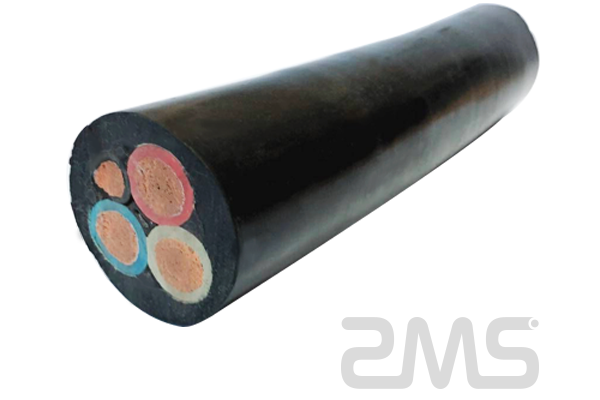
H05RN-F cable is ideal for mobile power supply, indoors. It offers exceptional flexibility and ...
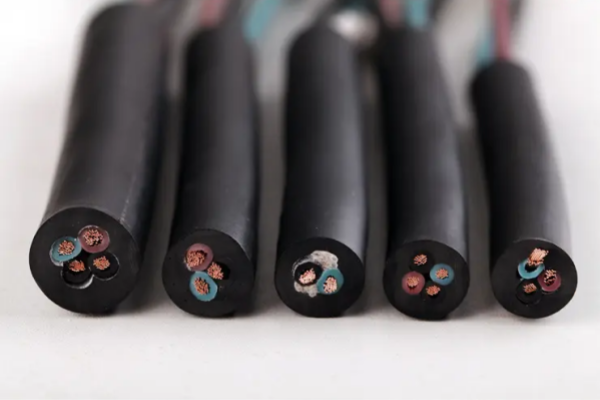
Flexible, Cold -resistant, Ozone resistant Electric cable/Copper cables/Flexible cables/Low voltage cables certified Har, EAC, compliant with standards...
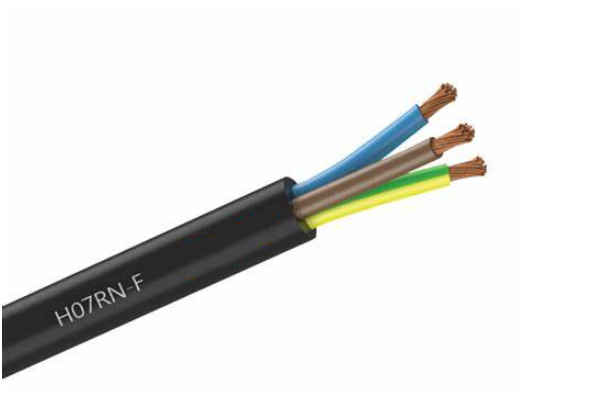
H07RN-F cable – High performance rubber cable cable in high flexibility oil resistant flexibility, Ozone and ...
