

Cables for renewable energies
THE cables for renewable energies ensure the transport of electricity produced by solar power plants, wind farms and storage systems, from the production site to the point of connection to the network. They combine a copper or aluminum conductor with an insulator and a sheath UV resistant, to ozone and temperature variations.
This page presents renewable energy cables par type d’installation, from the DC connections of a photovoltaic plant to medium voltage connections.
Chez ZMS CABLE, our cable structure engineers design tailor -made solutions adapted to the constraints of each project : tension nominale, conditions d’installation, mechanical and environmental constraints. From material selection to cable structure definition, each solution is designed according to your specifications and the requirements of your installation.
You are looking for the right cable for your renewable energy project ? Check out our table of applications and cable types further down the page.
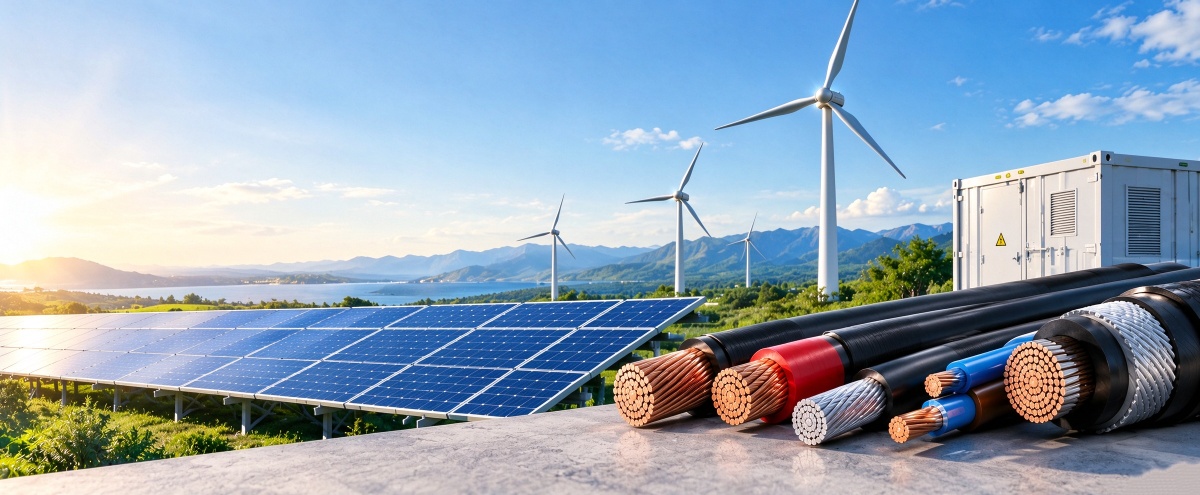
Cables for photovoltaic solar power plants
A photovoltaic plant converts solar energy into electricity and injects it into the grid. The modules produce direct current (DC), that inverters convert to alternating current (AC). The voltage is then raised by one or more transformers, depending on the voltage level of the connection. Finally, cables connect the transformer stations to the network connection point.
Three categories of cables are involved : the DC cables on the module side, low voltage AC cables on the inverter side and medium voltage cables downstream of the transformers. Each meets specific technical requirements, presented below.
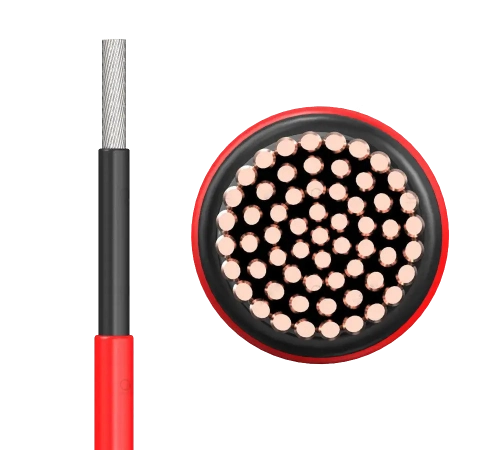
DC cables on the module and string side
In a photovoltaic power plant, THE DC solar cables connect the modules within the strings and route direct current to the inverters, directly or via junction boxes. Presentations UV, to heat and humidity, they must have good resistance to external conditions over the long term. The solar cable H1Z2Z2-K, in accordance with EN standard 50618 and IEC 61034, is designed for photovoltaic installations up to 1 500 In DC.
ZMS CABLE advice : dimension the conductor section according to the current, cable length and allowable voltage drop. In hot or desert environments, also check the maximum service temperature of the cable.
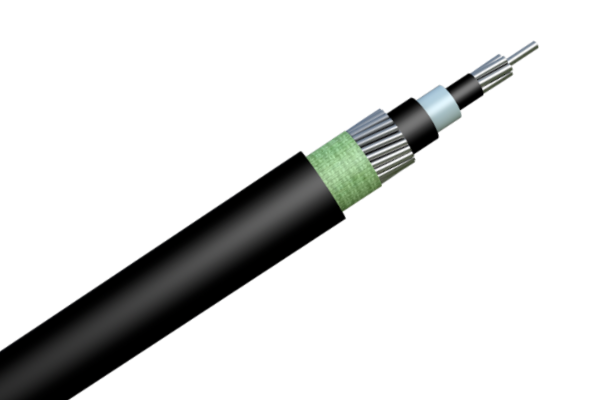
Low voltage AC cables on the inverter side
At the inverter output, the current is alternating, most often at low voltage. The exact level depends on the inverter model. Of the low voltage cables, insulated in XLPE, carry this current to the power plant transformers. For a cable for solar power plant, the section must take into account the output current and the distance, to limit online losses.
ZMS CABLE advice : on long connections, compare copper and aluminum. Aluminum makes the cable lighter and reduces its cost, provided that the section and connections are adapted.
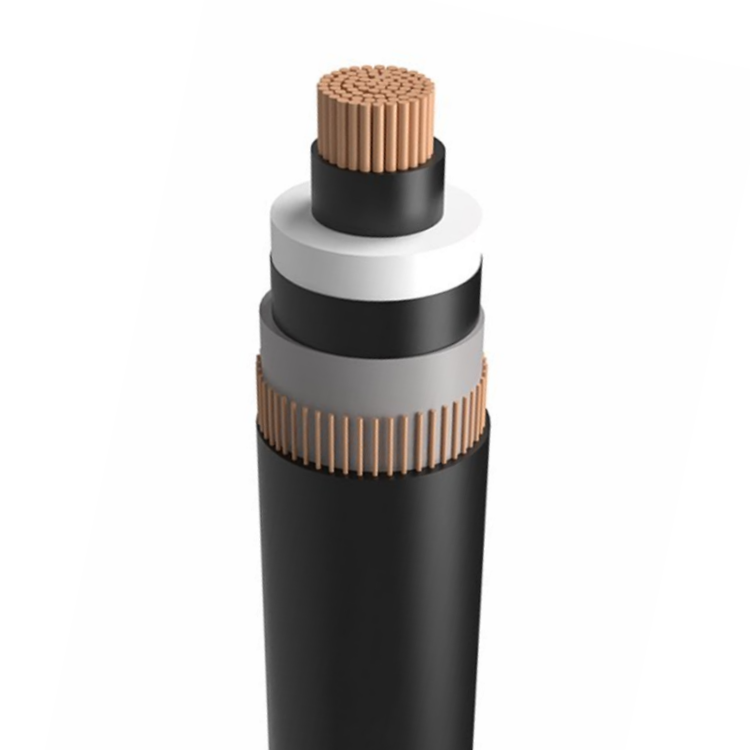
Medium voltage cables for connection to the network
On medium and large power plants, of the medium voltage cables connect the transformer stations to each other, then to the connection point. They are most often buried, sometimes placed in gutters. Over long distances, and aluminum cable for solar power plant helps reduce the cost of the project. Depending on the power of the plant and the requirements of the network manager, the connection can also be air, with ACSR conductors, or go through an elevation station to high voltage. Small installations can be connected directly to low voltage.
ZMS CABLE advice : in the open ground, the carrying capacity of the cable depends on the temperature and thermal resistivity of the ground. In dry or sandy soil, heat evacuates less well : plan for a higher section. Also check that the cable screen supports the network short-circuit current.
Wind farm cables
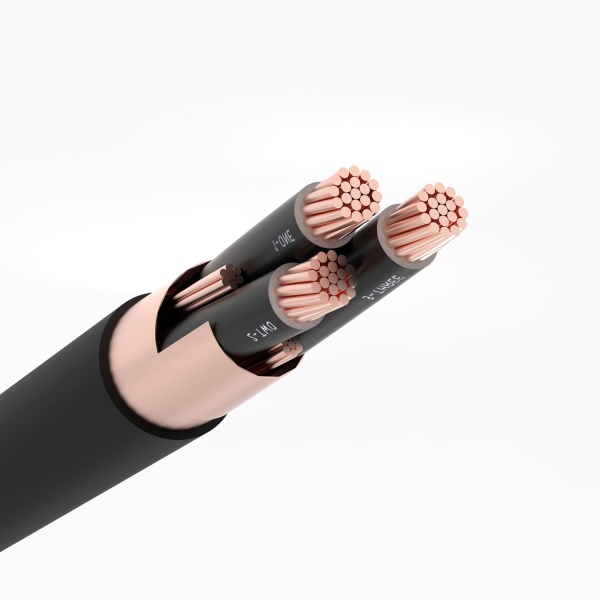
Power cables for tower and nacelle
In a wind turbine, the electricity produced in the nacelle goes down the tower to the transformer and the park network. Depending on the location of the transformer, ces power cables are low or medium voltage. Not everyone faces the same constraints. The cables which follow the rotation of the nacelle are subjected to repeated twisting movements : we then use a twist-resistant cable for wind turbine, flexible, with a stranded copper conductor. Cables attached along the tower do not move and do not have this requirement.
ZMS CABLE advice : only use this cable on the sections which follow the rotation of the basket. When purchasing a cable for wind turbine, tell your supplier the location of the cables in order to obtain the suitable model.
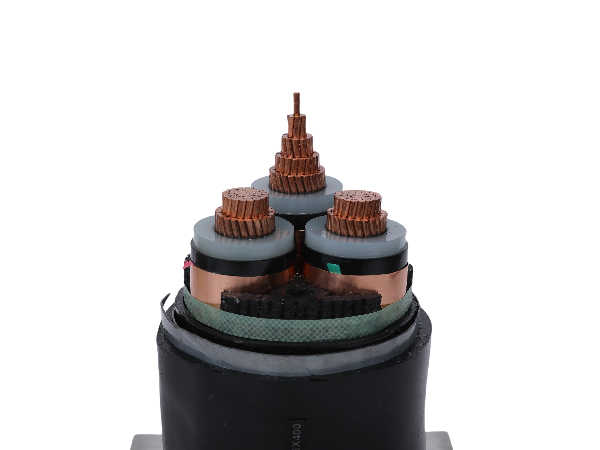
Medium voltage cables for the park's collector network
In a wind farm, the wind turbines are distributed on the site and connected to the park's transformer station by a collector network. This network is based on medium voltage cables for wind farms, which combine the production of several wind turbines before being transported to the station. Unlike tower cables, they are placed in a fixed position : their main challenge is reliability over long distances and varied terrain.
ZMS CABLE advice : do not choose the section of a medium voltage cable for a wind farm based on the nominal current alone. Over long distances to the post, also check line losses and voltage drop, and take into account the installation method and the number of circuits installed in parallel.
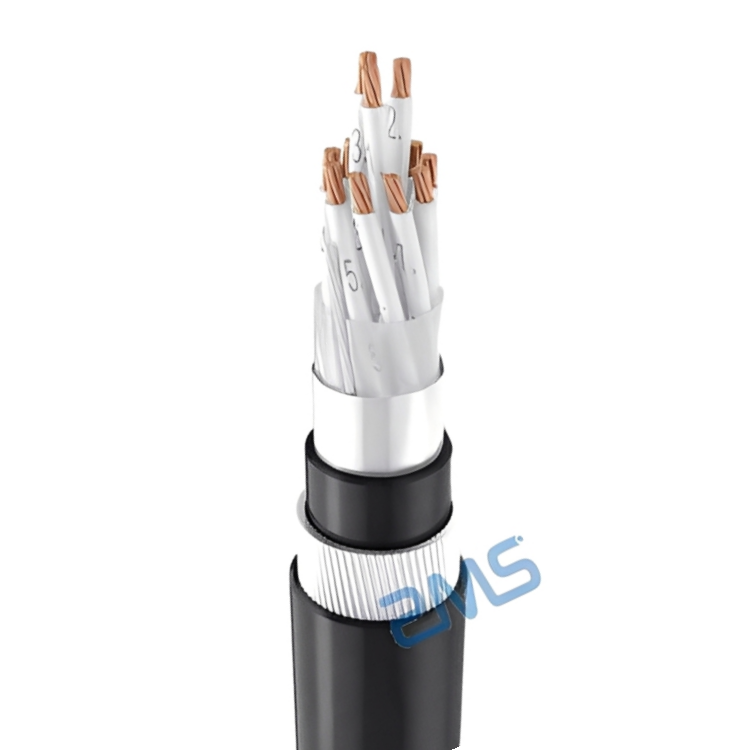
Control and communication cables
A wind turbine is continuously controlled and monitored. THE control cables for wind turbines transmit orders and measurements between the nacelle, the base of the tower and the park supervision system, for example for blade regulation, the orientation of the nacelle or the measurement of the wind. THE communication cables, whose fiber optic cables, ensure data transmission. As for the power cables, those who follow the rotation of the nacelle undergo movements, while those fixed along the tower remain immobile.
ZMS CABLE advice : and control cable for wind turbine which follows the rotation of the nacelle must be chosen to resist repeated movements, and not just for the signal it transmits. Simply tell us where the cable will be installed and what it is used for : our engineers cable structure define the adapted construction.
Energy storage cables
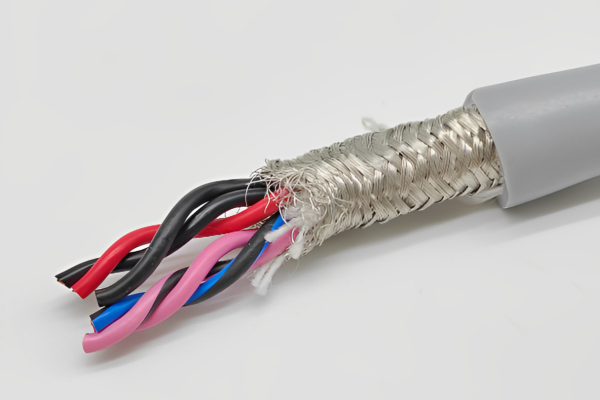
And battery energy storage system conserves the electricity produced by a solar power plant or wind farm, or taken from the network, to return it at the appropriate time. THE energy storage cables connect the batteries to the bidirectional converter (PCS), which charges and discharges the system, then this converter to the transformer. Battery side, THE storage battery cables are high current DC cables, installed in small spaces such as containers. Of the control cables also ensures communication with the battery management system (BMS).
ZMS CABLE advice : in a storage container, the section is not enough to choose the cable. The lack of space requires a flexible cable, and fire safety halogen-free, low-smoke sheath. Tell us the connection diagram and the power of the system : our cable structure engineers define the suitable construction.
Other applications of renewable energies
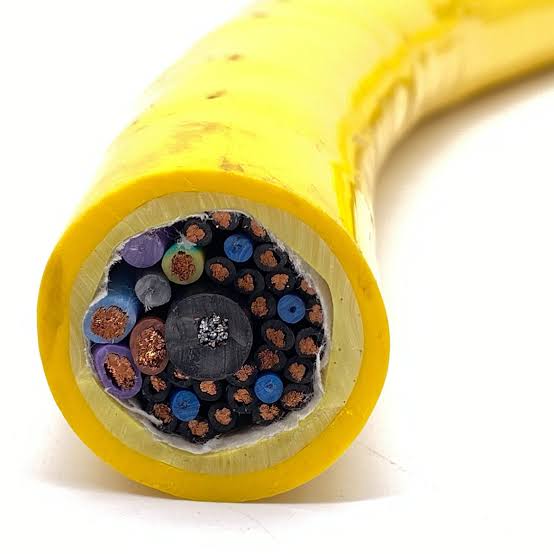
Cables for hydroelectric power stations
In a hydroelectric power station, the turbine drives an alternator, whose electricity is transported to a transformer which raises the voltage before connection to the network. THE cables for hydroelectric power stations ensure these power connections, as well as the control and measurement of equipment. Installed in the engine room, galleries or near works, they work in humid environments, sometimes in the presence of water.
ZMS CABLE advice : for a cable for a hydroelectric power station, humidity is a major constraint : the cable must be chosen for its water resistance, and not only for its tension and its section.
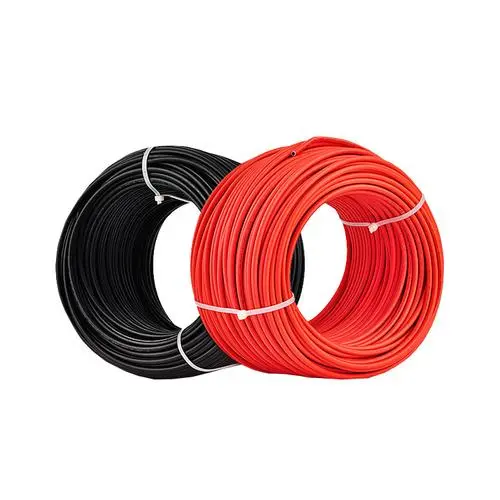
Cables for solar mini-grids and rural electrification projects
And solar mini-grid supplies a village or isolated area, without depending on the national network. It combines photovoltaic panels, storage batteries and a distribution network reaching homes. THE cables for solar mini-grids cover the entire chain : DC solar cables panel side, battery cables, then low voltage distribution cables, buried or above ground. For a cable for rural solar electrification, the climate is a strong constraint : heat, UV, humidity and dust act continuously on remote sites.
ZMS CABLE advice : on an isolated site, replacing a cable is expensive and difficult. It is better to choose it to hold in the heat, UV and humidity over the entire duration of the project, and not just for its price.
Table of applications and cable types
| Application | Cable type | Usage principal | Selection tips |
| Solar power plant, module side | DC solar cable (H1Z2Z2-K) | Connect the modules in strings to the inverters, directly or via junction boxes | Check UV resistance, the operating temperature and the maximum DC voltage of the installation. Size the section according to the current, length and allowable voltage drop. |
| Solar power plant, inverter side | Low voltage AC cable | Route AC power from inverters to transformers | Size the section according to the AC current, the length of the circuit, the method of laying and grouping the cables, taking into account the warm-up. |
| Solar power plant, connection to the network | Medium voltage cable | Connect the transformer stations to the connection point | Choose the rated voltage and the section according to the power to be transported, short circuit current, the installation method and thermal conditions of the ground for buried cables. |
| Wind turbine, tower and gondola | Power cable, twist-resistant cable depending on application | Route electricity to the tower and nacelle | For sections subject to rotation, check the radius of curvature, torsional resistance and number of movement cycles. Adapt the sheath to the temperatures and exposure conditions. |
| Wind farm, collector network | Medium voltage cable | Connect the wind turbines to the park’s transformer station | Calculate the section according to the admissible current, grouping of circuits, burial depth and thermal resistivity of the soil. Also check short-circuit resistance. |
| Wind turbine, control and data | Control cable, communication cable, fiber optics | Manage the equipment, monitor the installation and transmit data | Choose shielding according to the level of electromagnetic disturbances. For mobile connections, check flexibility, torsional resistance and cycle life. |
| Energy storage system | DC power cable, control cable | Connect batteries to converters and control equipment | Size DC cables according to maximum current, the possible overload duration and the admissible voltage drop. Check the warm-up, flexibility in connections and fire requirements of the project. |
| Hydroelectric power station | Power cables, control and measurement | Connect the alternator, the transformer and auxiliary equipment | Adapt the sheath and protections to exposure to water, to humidity and mechanical stress. Check the ambient temperature, the installation method and the risks of immersion depending on the area. |
| Solar mini-grid | DC solar cable, battery cable, low voltage distribution cable | Route electricity from panels and storage to equipment and users | Sizing DC cables, battery and distribution according to currents, permissible lengths and voltage drops. For exterior sections, check resistance to UV and local temperatures. |
Criteria for selecting a cable for a renewable project
The right cable depends on the application, the environment and configuration of the project. Five criteria guide this choice.
Installation environment
A cable installed outdoors must maintain its properties throughout the life of the project. The insulation and sheath must be UV resistant, with ozone, to temperature variations and humidity, an essential point on hot sites, desert or humid.
Mechanical constraints
A fixed cable does not have the same requirements as a cable subject to movements. In a wind turbine, only the sections which follow the rotation of the nacelle require a torsion-resistant construction.
Tension, current and section
The section is determined according to the current to be transported, the length of the connection and the allowable voltage drop. A section that is too small causes overheating and energy losses.
Copper or aluminum
Copper offers better conductivity and greater flexibility, making it suitable for DC solar cables and moving areas. L’aluminium, lighter and less expensive, suitable for long fixed connections, with a higher section and adapted connections.
Applicable standards
Standards depend on cable type and project country. For DC solar cables, we find in particular EN 50618 and IEC 62930.
These criteria are combined differently depending on each project. Our cable structure engineers analyze them for you, as shown below.
Project references
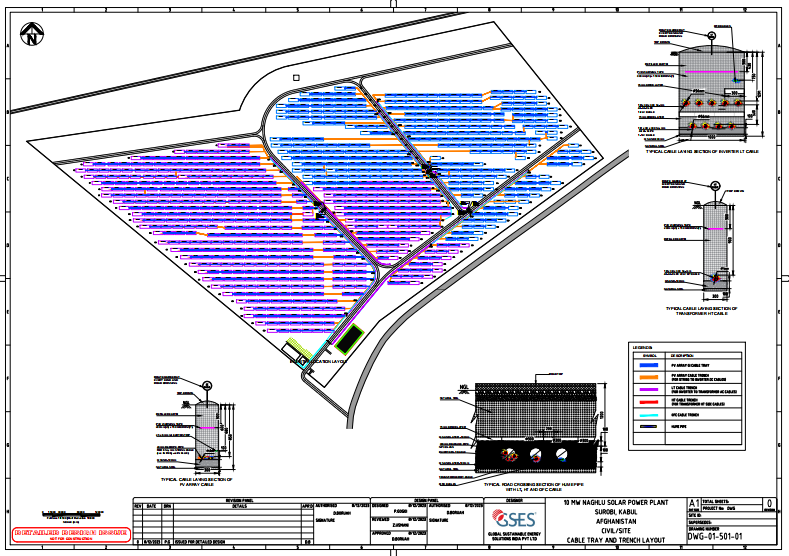
Naghlu solar power plant 10 MWdc, Kabul, Afghanistan
- Project : grid-connected photovoltaic plant, district of Surobi, made with Green State Power
- Solar cables : 1×6 mm² et 1×10 mm²
- Low voltage cables : 3×300 mm²
- Medium voltage cables : 3×300 mm²
- Air conductor : ACSR 185/30
- Accessories : PV connectors and tool kits
Frequently asked questions
Which cables to use in a photovoltaic solar power plant ?
A photovoltaic solar power plant uses DC solar cables module side, of the low voltage AC cables at the output of the inverters and medium voltage cables for connection to the network. The choice depends on the installation configuration and electrical requirements.
What is the difference between DC solar cable and AC cable ?
THE DC solar cables transport the direct current produced by the photovoltaic modules to the inverters. They must resist UV and external conditions. After conversion by the inverters, THE AC cables carry alternating current to transformers.
How to determine the cross section of a DC solar cable ?
The section of a DC solar cable depends on the current to be carried, the length of the connection and the allowable voltage drop. The method of installation and the ambient temperature must also be taken into account. Our cable structure engineers can assist you in this choice.
Is a twist-resistant cable required across the entire height of a wind turbine? ?
Non. Only the sections subject to the rotation of the nacelle require a twist-resistant cable. The cables fixed along the tower generally remain stationary and must be selected according to their installation conditions.
Which cables to use in an energy storage system ?
And energy storage system uses DC power cables between batteries and converter (PCS), AC cables between converter and transformer, as well as control and communication cables for system monitoring. Sizing depends in particular on the maximum current and installation conditions.
Does ZMS CABLE manufacture custom cables for renewable energy projects ?
Oui. ZMS CABLE designs tailor -made cables for renewable energies, particularly for solar and wind projects. Our cable structure engineers study your specifications taking into account the tension, materials, conditions of use and project requirements. Contact us to study your needs.
Our professional services
By choosing high quality overhead cables, you offer your teams and facilities a higher level of security — and this is precisely what ZMS services aim to guarantee.
ZMS designs and produces tailor-made cables according to your technical specifications, with customization of the marking, Colors and packaging. Our products can be adapted to meet international standards (GB, IEC, BS, NFC, ASTM, FROM, etc.) and the specific requirements of each project.
All cables are tested before shipment and comply with CE certifications, IEC and ISO. Detailed test reports can be provided upon request to ensure the reliability and safety of your installations.
ZMS cables are carefully packaged on wooden spools, corrugated cardboard boxes or metal drums. Ends are tightly sealed with plastic wrap or BOPP to prevent moisture. Exterior marking can be personalized with waterproof materials.
We offer flexible and fast logistics solutions to more than 130 pays :
- Maritime : 20ft or 40ft containers depending on volume.
- Land : Local or regional delivery.
- Air : Option available for rush orders.
We also provide all necessary export documents : commercial invoice, packing list, certificate of origin and customs documents.
Our engineers and advisors support you in choosing the cables best suited to your installations. We offer comprehensive consulting services, including technical assistance and project management, to ensure every step of your order is covered professionally.
ZMS offers two options for your electrical projects :
- Option A (led by ZMS) : Sending engineers and a supervision team to site to provide technical advice, installers and final tests. Travel expenses, accommodation, per diem and translation are to be expected.
- Option B (local subcontracting) : Collaboration with qualified local companies for installation, with technical training, On-site supervision and compliance verification provided by ZMS.
