
According to the British Financial Times, due to the deterioration of the geopolitical situation with the United States, China Mobile and China Telecom left the SEA-ME-WE submarine cable project last year 6.
This submarine cable project connects Southeast Asia, the Middle East and Western Europe.
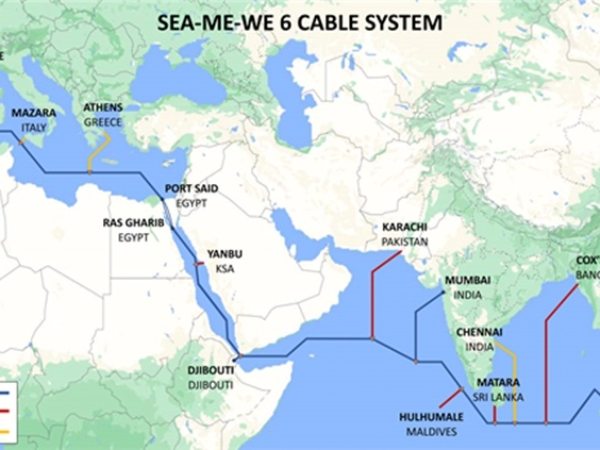
This cable 19 200 km long, first revealed last year, will connect Singapore to Marseille, In France, passing through Italy, Greece, Egypt, Saudi Arabia, Djibouti, Pakistan, India, the Maldives, Sri Lanka, Bangladesh and Malaysia.
However, growing tensions between China and the United States over control of infrastructure led the two Chinese operators to withdraw from the project.
What is a Submarine Cable ?
Submarine cables have a long history, going back to 1851 when the first transatlantic cable was laid to connect North America to Europe.
Since then, thousands of kilometers of cables have been laid on the seabed, creating a global communications network that allows people to easily connect and communicate, regardless of their geographic location.
What is its structure ?
Building a submarine cable is a complex and expensive process that requires advanced technical skills and specialized equipment.
Cables are usually made from optical fibers which enable faster and more reliable data transmission than traditional electrical cables.
Enveloping the core, we find a layer of insulation to protect copper wires from the corrosive effects of seawater.
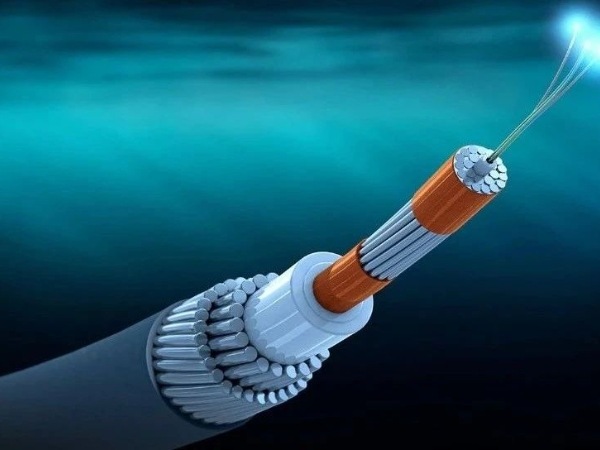
Ensuite, a layer of steel shielding is added to protect the cable from physical damage such as rock impacts, cracks in rock or collisions from ships.
This shielding layer is followed by a filling layer, which is usually made of silicone gel to protect cables from seawater damage.
Finally, an outer layer of polyethylene is added to protect the cable from damage caused by the sun's ultraviolet rays.
How to Lay the Submarine Cable?
Laying a submarine cable is a complex undertaking that requires careful planning and coordination between different countries and companies involved.
First of all, cables are manufactured in specialized factories before being transported on cable ships for installation.
Once at sea, cable ships use survey equipment to measure ocean depth and identify obstacles such as rocks or ship wrecks that could damage the cables.
Cable vessels also use tracking equipment to track the position of cables and ensure they are laid to specifications.
Underwater cables are laid on the ocean floor using specialized machines called cable divers.
Cable divers slowly lower the cable to the ocean floor, protecting it against possible impacts or damage during the installation process.
Once placed, the cable is covered in sediment to protect it from damage by ocean currents or waves.
How to Protect Underwater Cables ?
Submarine cables are designed to be strong and durable, but they are also vulnerable to damage caused by human activities and natural disasters.
Ships dropping anchors can damage cables, just like earthquakes or storms that can move cables or damage them.
To protect them, protection zones are created around the areas where the cables are laid. These areas are reported to browsers, who are required to avoid them to protect the cables.
Surveillance patrols are also carried out to detect vessels which do not respect these protection zones and which could damage the cables..
Submarine cables are also equipped with monitoring systems to detect damage or communication disruptions.
Cables are often continuously monitored using sophisticated technologies such as acoustic detection, which can detect damage from ships or earthquakes.
Finally, Submarine cables are often equipped with redundancy systems to ensure that if part of the cable is damaged, communications can continue to function through other parts of the cable.
Why The Submarine Cable Project Is So Important Between Countries Today ?
Submarine cables are vital infrastructure for countries to communicate with each other. They carry most of our internet data across the world's oceans.
These cables are essential for international communications, financial transfers, trade and much more.
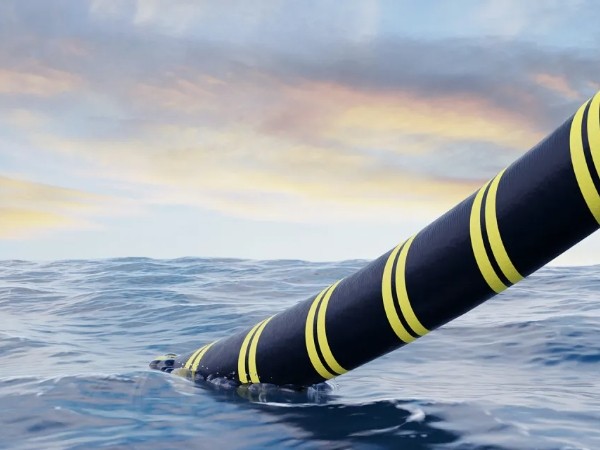
They are fiber optic cables that are laid on the sea floor, generally at depths of about 2 has 3 km.
The cables are built to be very durable and able to withstand harsh weather, earthquakes and other extreme conditions that can occur in the underwater environment.
These cables have an incredibly high data transmission capacity, often measured in terabytes per second.
This means they can transport large amounts of digital data across incredibly long distances at incredibly fast speeds..
More Efficient Information Transfer
Submarine cables are a much more reliable and faster alternative to satellites for intercontinental communications.
While satellite signals can be affected by weather conditions and interference, submarine cables are much more reliable.
They can also carry a much larger amount of data than satellites.
Due to their strategic importance, submarine cables are often the target of attacks and sabotage.
Governments and military organizations may be particularly concerned about cable security, because they are used for highly sensitive communications.
Cables can also be damaged accidentally, for example by ship anchors or earthquakes.
However, the benefits of submarine cables for international communication far outweigh the risks.
They revolutionized our ability to communicate across continents, to share knowledge and trade.
Without them, the global economy would be very different from what it is today.
The submarine cable project will continue to play a vital role in global connectivity in the future, and new technologies will improve speed and security.