
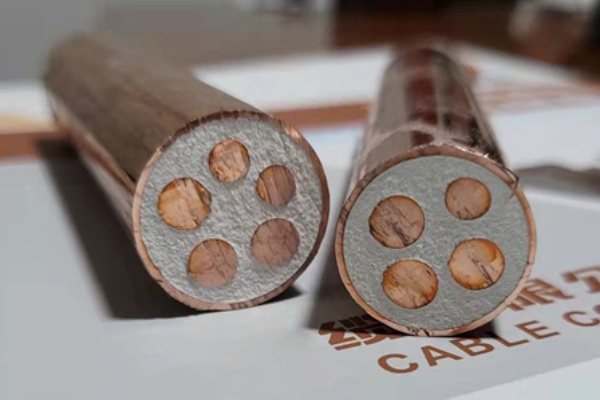
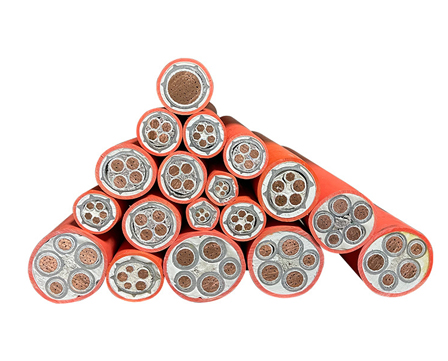
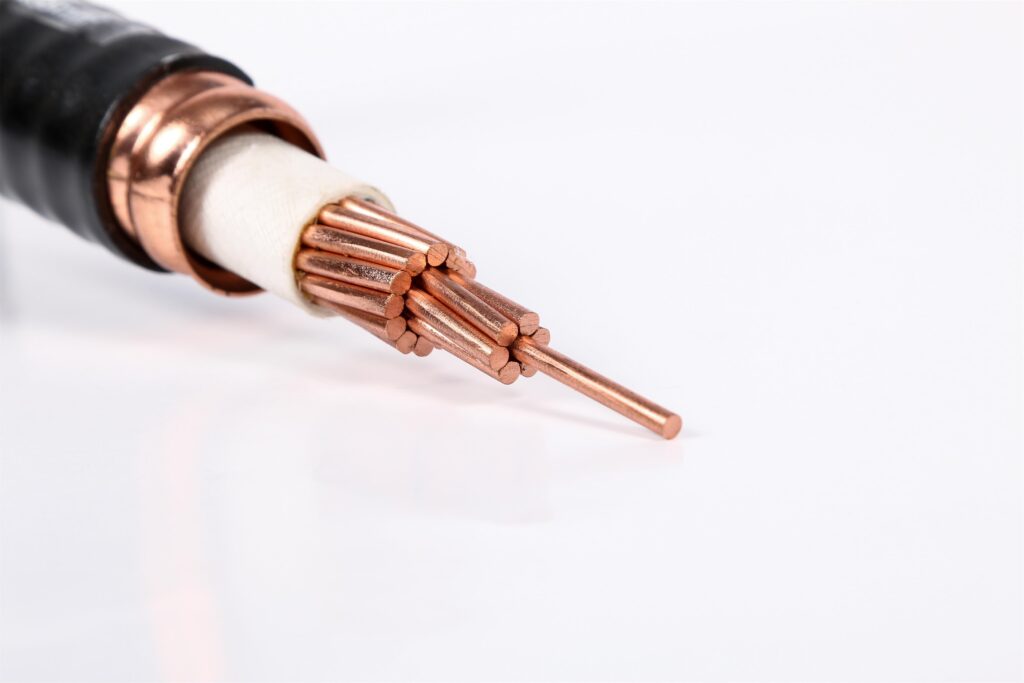
Mineral insulated cable is a cable with highly flame retardant minerals. This type of cable is also called MICC or MI cable. Mineral insulated cable is also a type of cable using inorganic insulation materials. The outer layer of the cable is a seamless copper jacket. Between the cable sheath and the metal conductor there is a tightly compacted insulating layer of magnesium oxide. The metallic conductor is usually copper, and suitable protection can also be chosen according to the requirements for the outer layer of the cable.
Advantages of mineral insulated cables
Since all materials used to make this cable are inorganic, it has some advantages that are not possible with other cables.
Flammability
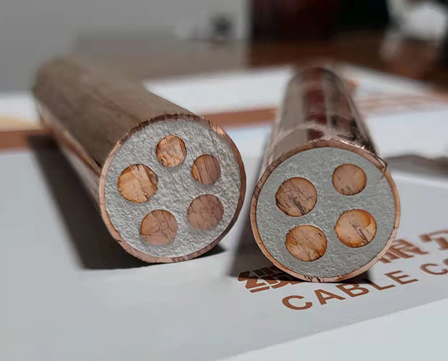
As this cable is made entirely of inorganic materials (metallic copper and magnesium oxide powder), it cannot cause a fire by itself. It is also impossible for this cable to burn or aid combustion.
Mineral insulated cable has a continuous operating temperature of 250°C. It can be used between 950°C and 1000°C. It can continuously supply power for 3 hours at 950°C – 1000°C. The melting point of copper is 1083°C and mineral insulation also melts at 1000°C or higher. Therefore, for a short period or an extraordinary period, this cable can continue to operate at temperatures near the melting point of copper. It can therefore be deduced that this cable can continue to maintain power supply in fire conditions up to 1083℃. This is a flame-retardant cable in the truest sense of the term..
High current carrying capacity, overload resistance
The normal working temperature of mineral insulated cable is 250℃. IEC60702 standard states that the continuous operating temperature of mineral insulated cable is 105℃. This takes into account terminal sealing materials and the need for safety. Despite this, its current carrying capacity remains much higher than that of other cables. Mineral insulation having better thermal conductivity than plastic, mineral insulated cables have a higher current carrying capacity at the same operating temperature. For the lines of a section of 16 mm2 or more, it can be reduced by one section ; for places where human contact is not permitted, it can be reduced by two sections. When they can withstand considerable overload at the same time as ordinary cables, the overload capacity of mineral insulated cables can reach more than 10 times the normal current carrying capacity.
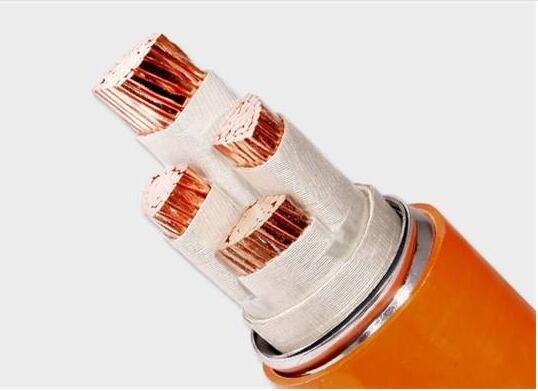
Due to the excellent performance of the mineral insulated cable. It is therefore suitable for lines whose nominal voltage is less than 1000 V.
Waterproof, explosion-proof, corrosion resistant
Due to the presence of a seamless metal sheath in the mineral insulated cable, it benefits from good water-proofing properties. It can even be completely submerged in water. What's more, thanks to the use of the metal sheath as a protective layer, flammable gases, oil vapors and flames cannot reach electrical devices connected to the cable, which gives the cable anti-explosion characteristics.
Copper having good corrosion resistance, it does not need additional protection under normal conditions of use. Under specific environmental conditions, such as copper has a strong corrosive effect on the environment, you can add another PVC layer on the outsider of the outer sheath of the cable, so that the cable has good corrosion resistance.
Due to the good corrosion resistance of copper, no other protective treatment is necessary under normal conditions of use. In special environments where copper is subject to heavy corrosion, a layer of PVC outer jacket can be added around the cable, which gives excellent corrosion resistance to the cable.
Halogen-free and non-toxic, resistant to mechanical damage and long-lasting.
This cable is entirely composed of inorganic substances (metallic copper and mineral insulating layer), therefore even in case of combustion at high temperature of 1000°C, it will not produce any fumes, nor halogens, nor toxic gases, making it a truly non-halogenated and non-toxic cable.
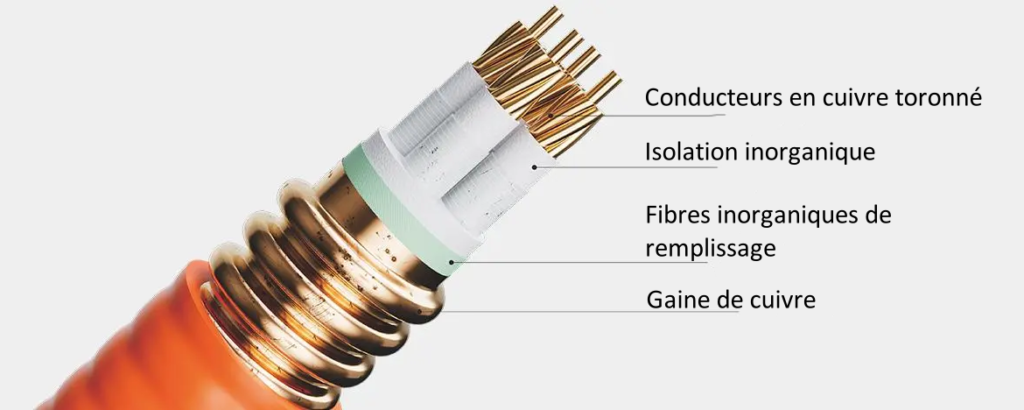
The metal sheath of the cable has a certain strength and flexibility, meaning that even when subjected to deformations such as bending, crushing or twisting, the relative positions between the conductors and between the conductors and the sheath remain unchanged, thus avoiding short circuits and preserving electrical performance.
Since this cable is made entirely from inorganic materials, he is practically immune to aging. Its lifespan can be calculated based on the rate of oxidation and corrosion of the copper sheath. According to the data, an oxidation of 0,25 mm of the sheath requires approximately 257 years at an ambient temperature of 250°C. However, the thickness of the sheath of mineral insulated cables is generally between 0,34 et 1,05 mm, and their operating temperature is less than 250°C, which gives them a prolonged lifespan.
Copper sheath can be used as ground conductor
Mineral insulated cables do not require a separate ground conductor. Indeed, the copper sheath used in these cables already acts as an earth conductor. It offers good and low resistance to earth. In MEN systems (Multi-Earth Neutral), outer copper sheath can be used as ground and neutral conductor.
The disadvantages of mineral insulated cables
1. Flexibility is poor. These cables use metal sheaths, which increases their ability to resist shock but reduces their flexibility. Installation of mineral insulated cables is more difficult than ordinary flame retardant cables.
2. The price is relatively high. He is 2 has 5 times higher than that of ordinary flame retardant cables. Initial purchase and installation costs for mineral insulated cables are higher. However, mineral insulated cables have high overload capacity and long service life, which makes them profitable in the long term.
Applications of mineral insulated cables
This cable has high safety performance and is suitable for use in demanding locations. It effectively resists animal tears, to chemical corrosion and external mechanical effects.
Mineral insulated cables are widely used in various industries, especially high-rise buildings, petrochemicals, airports, Tunnels, the ships, offshore oil platforms, aerospace, iron and steel metallurgy, shopping centers, the parking lots, etc.
Here are some areas of application for mineral insulated cables :
Used for thermal insulation of airport runways, railway tracks, ship cabins, roads, slopes, and mechanical equipment.
Used for thermal insulation of pipelines the petrochemical industry, heating of fluid pipelines, and heating storage tanks and production pipelines.
Antifreeze heating of natural gas tank seals, heating of catalytic gas reactors, antifreeze heating of pipeline valves, heating of natural gas by-products.
General and emergency lighting, electrical wiring for fire fighting, fire alarm systems in department stores, libraries, museums and other public places.
Used for heating containers, tanks and pipelines in the food and general industry, to maintain food temperature, pasta, oils, low melting point alloys, etc, or for heating moving liquids.
For lines of emergency elevators and lifting equipment, computer room control lines, the lines of potentially dangerous explosive zones, smoke evacuation and ventilation lines, and kitchen power lines.
It is used in the construction industry for precast concrete floors, accelerated hardening of walls and pre-drying of refractory bricks, wall heating, floors and ceilings in all types of homes.