
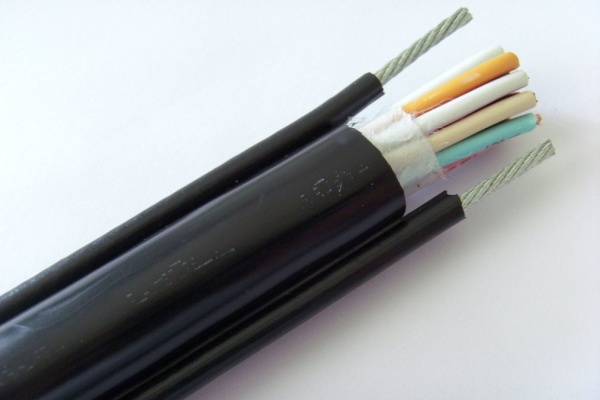
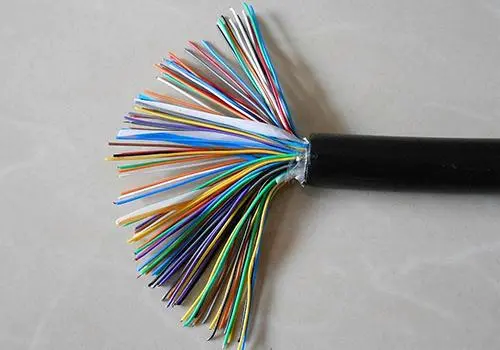
Communication cables (name in English : communication cable) are cables used for short-distance audio communication as well as signal transmission and high-frequency digital communication over long distances. Communication cables are used to transmit telephone calls, telegrams, fax documents, television and radio programs, data and other telecom signals. They are made up of several pairs of wires insulated together and twisted together. Compared to overhead cables, communication cables have advantages such as high communication capacity, high transmission stability, good confidentiality and less sensitivity to natural conditions and external interference.
Structure of communication cables
Communication cables are communication lines consisting of a cable core and a waterproof protective jacket. The cable core consists of several wires or conductors insulated from each other and twisted together. The sheath ensures waterproofing and protects the core from moisture and mechanical damage. In particularly harsh environments, it is sometimes necessary to add an additional layer of protection to the outside of the communications cable jacket. Here are the main parts of its specific structure :
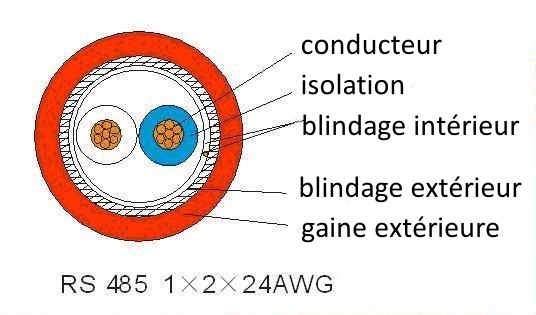
Driver : This is the medium for transmitting current. Usually made of copper or aluminum, it is responsible for transmitting energy or signals.
Insulation layer : It surrounds the driver. Its role is to insulate the conductors and prevent current leaks. There are various insulation materials, the most common being polymeric materials such as polyethylene and polyvinyl chloride (PVC).
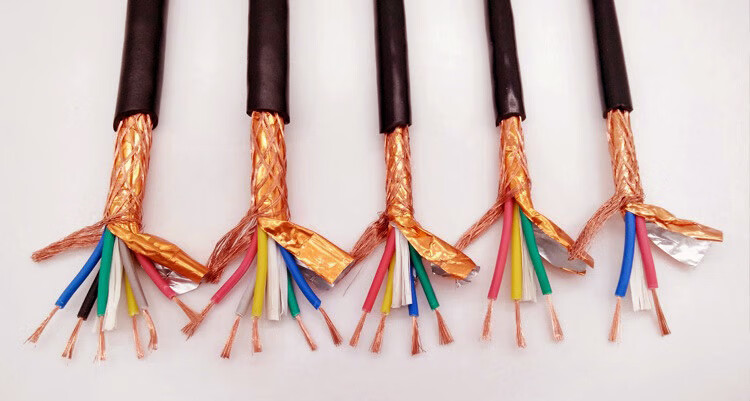
Shielding layer : It is mainly used to reduce electromagnetic interference and signal weakening. It can improve the quality of signal transmission. Shielding materials are usually copper wires, tinned copper wires, copper strips or aluminum foil.
Sheath layer : This is the outer layer of the cable. It protects the cable against external damage and corrosion. Sheath materials can be polyethylene, polyvinyl chloride (PVC), etc.
Classification of transmission cables
Communication cables are essential equipment in the field of modern communications. They play a crucial role in data transmission, telecommunications networks and transmission of television signals. Communication cables can be installed in different ways : in the air, in direct burial, in pipes or underwater.
According to their structure, they can be classified as symmetrical cables, coaxial and hybrid. Depending on their use, we distinguish between field cables and permanent cables (underground, submarines).
Communication cables have wide bandwidth and high communication capacity. They are not very sensitive to external interference, but are difficult to repair. They can transmit phone calls, telegrams, data and images. Depending on their use and structure, communication cables are divided into several types, such as telephone lines, coaxial cables and fiber optic cables. This article only introduces some common types of communication cables.
coaxial cable
Coaxial cable is one of the most common communications cables. It is composed of an inner conductor, a layer of insulation, an outer conductor and an outer sheath. The inner conductor and outer conductor of the coaxial cable are separated by an insulation layer. The inner conductor is mainly used to transmit signals, while the outer conductor serves to protect against external interference. Coaxial cables are widely used in cable television fields, computer networks and surveillance systems.
Twisted pairs cable
Twisted pair cable is two insulated wires twisted together in a certain way. It is commonly used for transmission in local networks (LAN) and telephone lines. Twisted pair cable can be divided into unshielded twisted pair cable (UTP) and in shielded twisted pair cable (STP). Unshielded twisted pair cable is mainly used for home and office networks, while the shielded twisted pair cable is suitable for industrial environments and high interference environments.
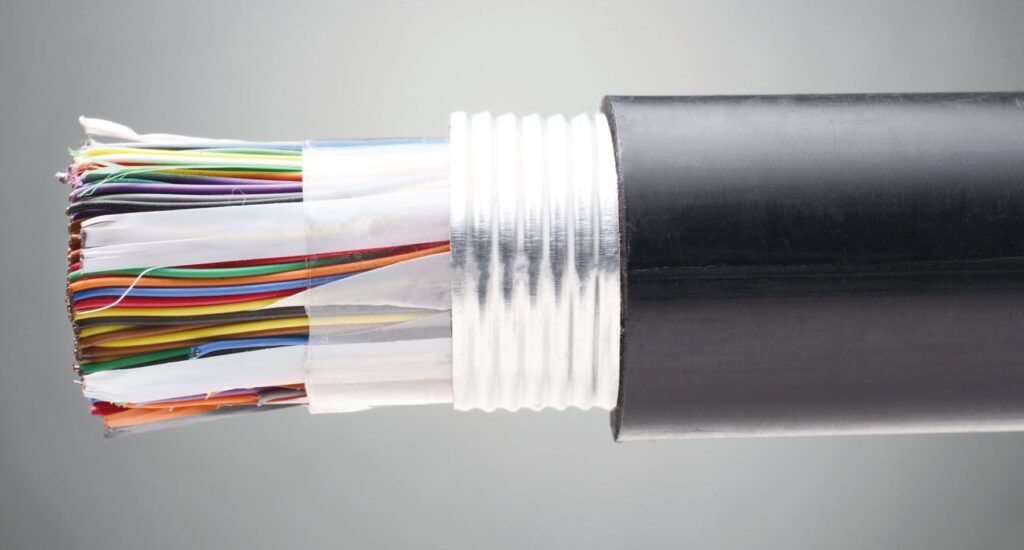
fiber optic cable
Optical fiber communication is a high-speed transmission technology based on light, using optical fiber as a transmission medium. It allows data transmission via light signals. Optical fiber has advantages such as high bandwidth, low loss and high resistance to interference. It is widely used in the fields of long distance communication, of the internet and the transmission of television signals. Optical fibers can be classified into single-mode and multi-mode fibers. Single-mode fibers are suitable for transmission over long distances, while multimode fibers are used for transmission over short distances.
Powerline communications
Powerline communications online (PLC) are a data transmission technology using power lines. Powerline communication cables are generally made of copper conductors, an insulating layer and a protective sheath, among others. They enable data transmission over existing power lines and are widely used in smart grid fields, smart home and smart meter.
Coaxial fiber optic hybrid cable
Hybrid coaxial fiber optic cables are communications cables that combine coaxial cables and fiber optic cables. They can transmit analog and digital signals simultaneously, suitable for areas such as video surveillance, broadband networks and cable television.
Applications
Communication cables are used in a wide range of applications, including but not limited to :
Data transmission : In local networks, Ethernet cables (like Cat5e, Cat6, etc.) connect computers, switches and routers to enable rapid data exchange and resource sharing.
Telephone telecommunications : Essential part of traditional telecommunication systems enabling remote voice communication.
Internet access : Using coaxial cables or fiber optic cables to connect users' homes or offices to Internet service providers, thus allowing rapid access to the network.
Transmission of TV signals : In cable television systems, transmission of TV channel signals offering a wide choice of entertainment and information.
Network expansion : Using fiber optic cables to extend network coverage, for example by connecting different zones.
Connecting wireless base stations : In wireless communications, connection between base stations and mobile communication networks requiring the use of cables, such as fiber optic or coaxial cables.
Connecting Data Centers : Use in large data centers to connect servers, storage equipment and network equipment, establishing fast and reliable data transmission channels.
Surveillance systems : Use for video signal transmission, power and control signals in monitoring systems.
Furthermore, communications cables also include urban telecommunications cables, long distance telecommunications cables, telecommunications cables for telecom equipment, digital symmetrical telecommunications cables, RF cables, etc. Each type of cable is adapted to specific communication needs and environments.
ZMS is a professional cable manufacturer with over 30 years of experience in the field of cables. ZMS is committed to producing high quality cables. If you would like more information, do not hesitate to contact us.