
Shielded cable is a type of cable capable of transmitting electrical signals while effectively filtering out external interference.
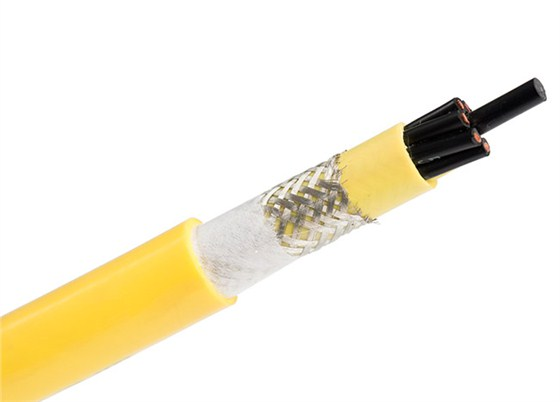
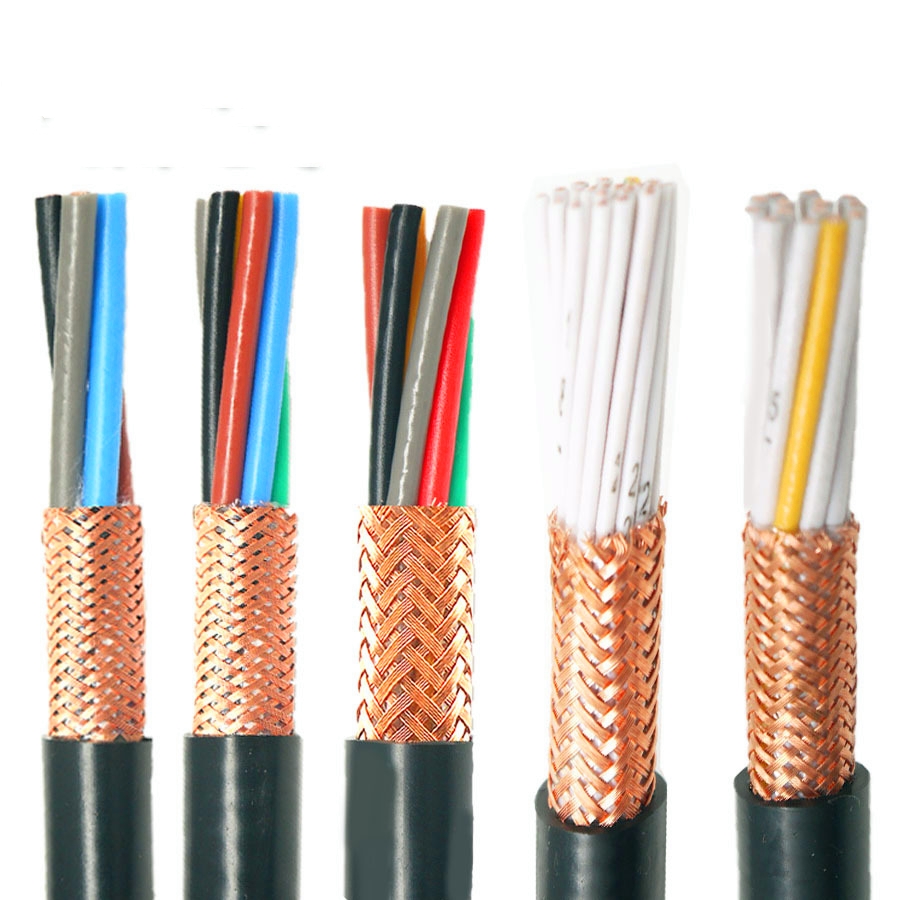
Shielded cable is usually wrapped with a layer of conductive material, such as copper foil or braided copper wire, forming a shielding layer around the insulation. This shielding layer helps reduce or eliminate external electromagnetic interference on cable signal transmission, thus ensuring the integrity and reliability of the signal. Using this type of cable effectively improves the quality and stability of signal transmission.
Principle of shielded cable
The shielded cabling system involves adding a layer of metal shielding to the exterior of a conventional unshielded cabling system. Using reflection effects, absorption and skin of the metal armor, it manages to prevent electromagnetic interference and electromagnetic radiation. This system exploits the principles of twisted pair balancing and the shielding action of the shielding layer, which gives it excellent electromagnetic compatibility characteristics (CEM).
The principle of cable shielding differs from the principle of balancing and compensation of twisted pairs. A shielded cable involves adding one or two layers of aluminum foil to the outside of the four pairs of twisted wires. By exploiting the principles of reflection, absorption and skin effect of the metal on electromagnetic waves, it can effectively prevent external electromagnetic interference from entering the cable. It also prevents the radiation of internal signals, which would disrupt the operation of other equipment.
Skin effect refers to the distribution of current along the surface of the conductor, which decreases with increasing frequency. The higher the frequency, the lower the penetration depth. In other words, the higher the frequency, the lower the penetration capacity of electromagnetic waves.
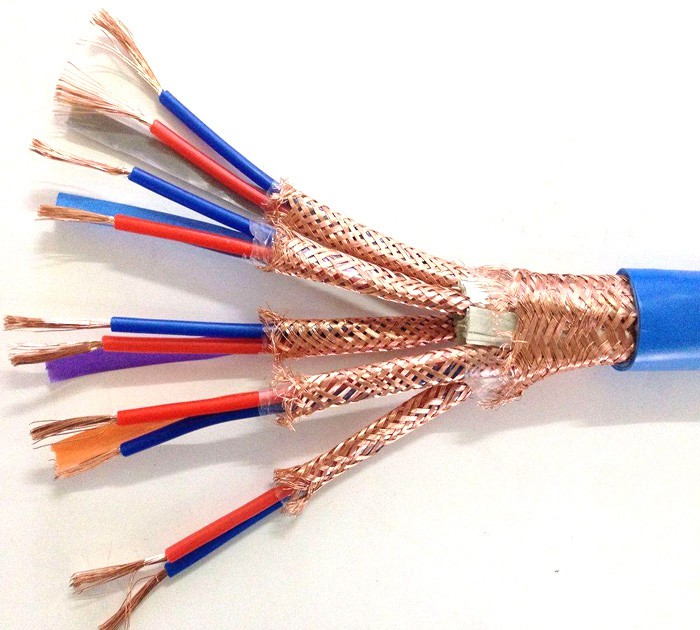
Experiments have shown that electromagnetic waves whose frequency exceeds 5 MHz can only pass through aluminum foil with a thickness of 38 µm. If the thickness of the shielding layer exceeds 38 µm, the frequencies of electromagnetic interference that can penetrate through the shielding layer in the cable are mainly lower than 5 MHz. As for low frequency interference, lower than 5 MHz, the principle of balancing and compensation of twisted pairs can effectively compensate them.
Classification
Shielded cables are one of the most used types of cables in the field of energy and data transmission. Shielded cables feature a wide variety of shielding methods and construction designs. Thanks to the different shielding methods and the structural design, shielded cables can effectively shield external interference signals while transmitting electrical signals. This also significantly improves the stability and reliability of signal transmission.. For different application scenarios, we need to choose the appropriate shielded cable according to the different characteristics of the shielded cable.
Depending on the number of layers of shielding, shielded cables can be divided into four categories :
Single layer shielded cable
Single-shielded cable refers to a cable wrapped with a layer of shielding material on the outside. This shielding material is usually aluminum or copper foil and is primarily used to protect the cable. It also plays a role in protecting against external interference during signal transmission through the cable. Common single shielded cables include RG59, the RG6, the RG7s, the RG11, etc. They are mainly used in cable television fields, DVD players, audio, etc.
Double shielded cable
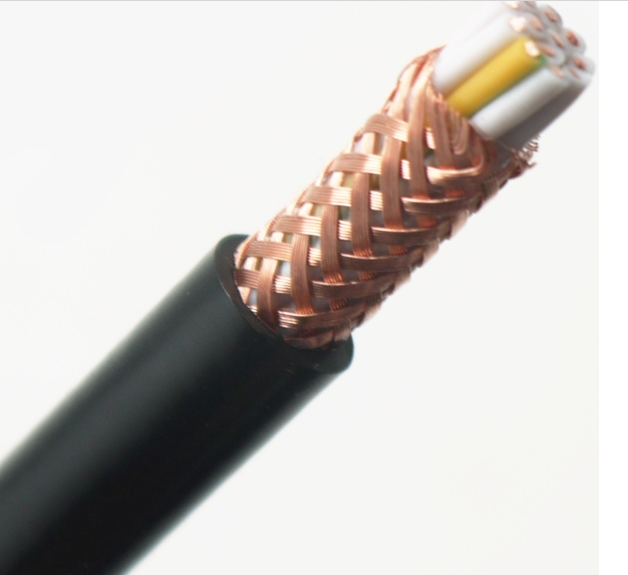
Double shielded cable is a cable that adds an additional layer of shielding material on top of a single shielded cable. Its structure is generally composed as follows : internal conductor, isolation internal, first layer of shielding, intermediate insulation, second layer of shielding, isolation external, external conductor. It is commonly used in environments with high levels of noise and interference, such as industrial control systems, communications networks, RF bands (5~1000MHz), interconnected equipment, etc. Common double shielded cables include RG223, the RG400, le RG58, the RG59, the RG6, the RG8, the RG11, etc.
Triple shielded cable
Triple shielded cable is a cable that adds an additional layer of shielding material on top of a double shielded cable. Its structure is generally composed as follows : internal conductor, isolation internal, first layer of shielding, intermediate insulation, second layer of shielding, isolation external, third layer of shielding, external conductor. Triple shielded cables are primarily used in applications where high shielding is required, such as medical equipment, research instruments, transmission of analog signals, electromagnetic compatibility tests, etc. Common triple shielded cables include RG58U, the RG62A/U, the RG59, etc.
Fully shielded cable
Fully shielded cable is a variation of double shielded cable, with the addition of an extra layer of shielding on the exterior. Its structure generally includes : an internal conductor, internal insulation, a first layer of shielding, intermediate insulation, a second layer of shielding, an external shielding layer, external insulation, and an external conductor. Fully shielded cable offers the largest shielding surface area and provides the best interference shielding capability. It is mainly used in fields such as signal transmission, power transmission, sensors and measuring devices. Common fully shielded cables include RG174, the RG213, le RG214, le RG223, etc.
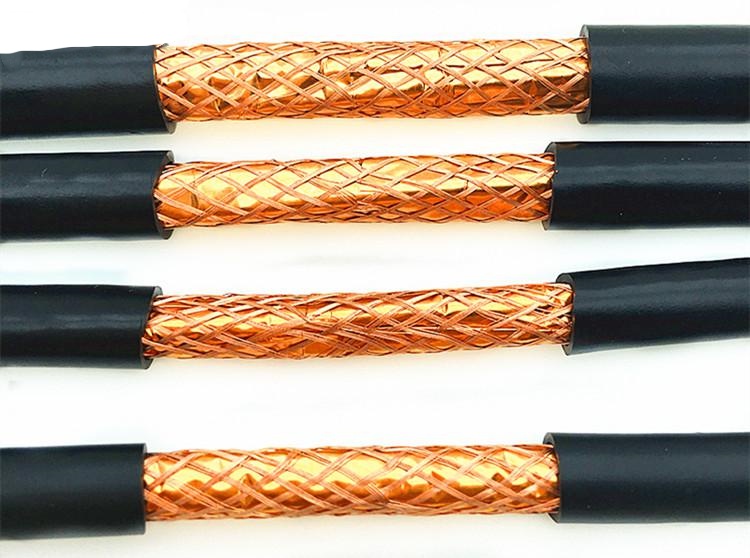
Shielded cable is a type of cable that uses a layer of electromagnetic shielding material enveloping the conductor to prevent interference and the effects of electromagnetic waves on the conductor.
Depending on the electromagnetic shielding material used, we can distinguish two types of shielded cables : metal shielded cable and copper shielded cable.
Shielded and armored cables
Armored armored cable refers to a cable having, outside its insulation and sheath, a layer of wire mesh or metal armor, or both simultaneously, providing double protection against electromagnetic interference. Its structure includes several layers, including a driver, a layer of insulation, a shielding material, metal armor and sheath. The shielding layer is usually made of copper, d’aluminium, stainless steel, etc.
Copper tape armored cable
Copper strip armored cable is a type of cable in which a copper strip is tightly attached to the outer surface of the cable insulation. The copper strip acts as a shield. Its structure includes a conductor, a layer of insulation, a copper shielding layer and a sheath. The copper strip used for the shielding layer is generally deoxygenated copper or tinned copper.
The structures and functions of different types of shielded cables mentioned above are different, and they are suitable for different uses. When choosing a shielded cable, It is important to fully understand the types and characteristics of shielded cables available in order to select the best one for your application, which will optimize its use. What's more, when purchasing cables, it is essential to match parameters and specifications to avoid unnecessary loss.
Areas of application
The shielded cable has the following characteristics : strong anti-interference ability, signal leak prevention, improved electromagnetic compatibility and increased transmission distance. It is widely used in electrical power systems, communication systems, control systems and other areas.
Electrical system
In electrical systems, shielded cables are used for cable connections in transmission lines, electrical substations and generators, which improves the stability and reliability of the electric transmission.
Communication system
In communication systems, shielded cables are commonly used in network transmission lines, cable television and telephone lines, which improves the stability of signal transmission and their ability to resist interference.
Regarding communications equipment, shielded cables can be used for various aspects such as high-speed data communication.
In communication control circuits, the use of shielded cables is very common. They are often used to prevent interference from external electromagnetic signals. Shielded cables are equipped with a shielding layer, which can be made of aluminum foil, in copper strip, copper mesh, etc.
Control system
In control systems, shielded cables are used to connect various sensors, actuators and controllers. They ensure the transmission precise signals and prevent external interference that could cause operating errors.
ZMS is committed to producing high quality shielded cables. If you need shielded cables, do not hesitate to contact us.