
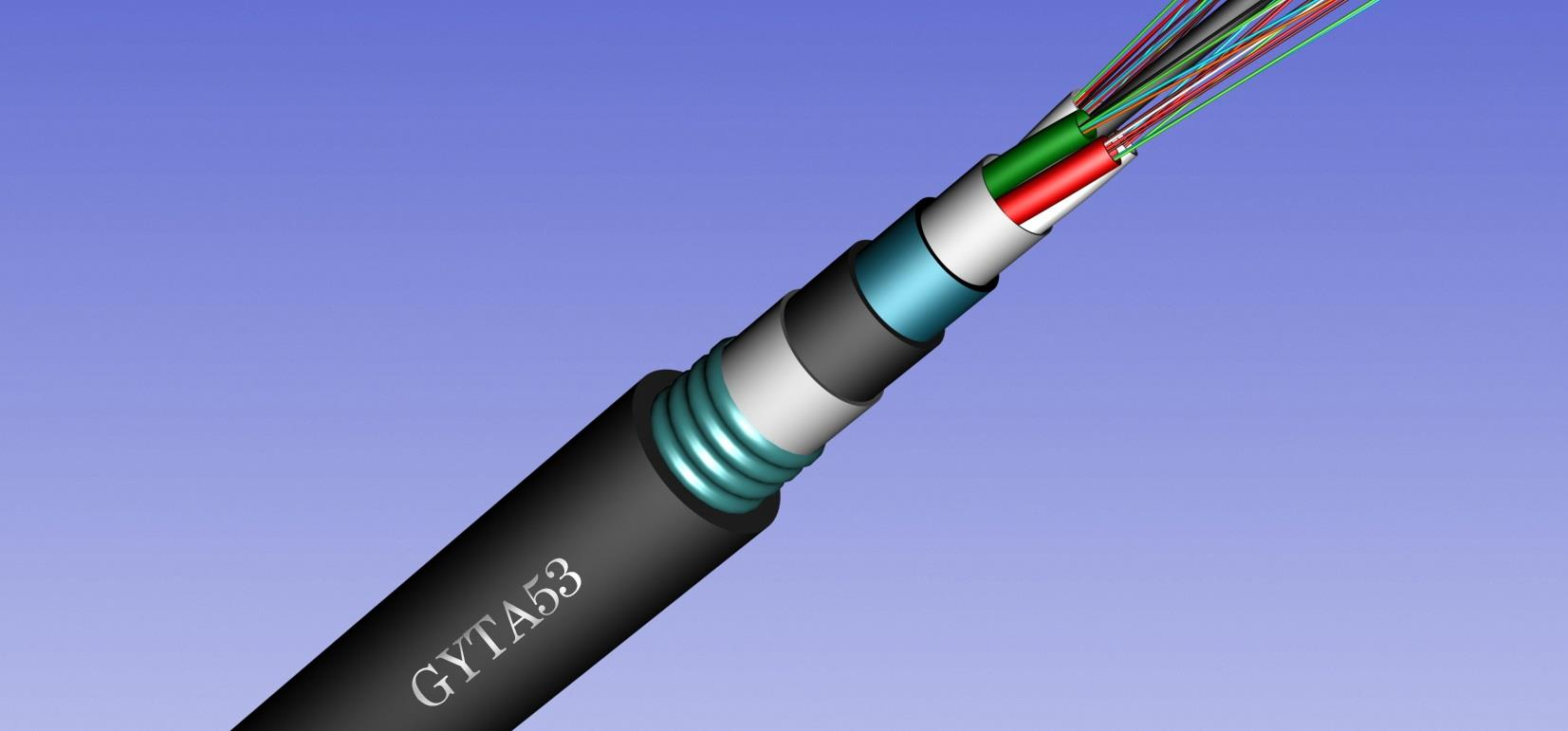
With the rapid development of optical fiber communication systems, more and more fiber optic cables are used in different environments. It has therefore become essential to ensure that fiber optic cables can transmit data securely, even in harsh environments. This is why armored fiber optic cables were invented during continuous exploration.
What is an armed fiber optic cable?
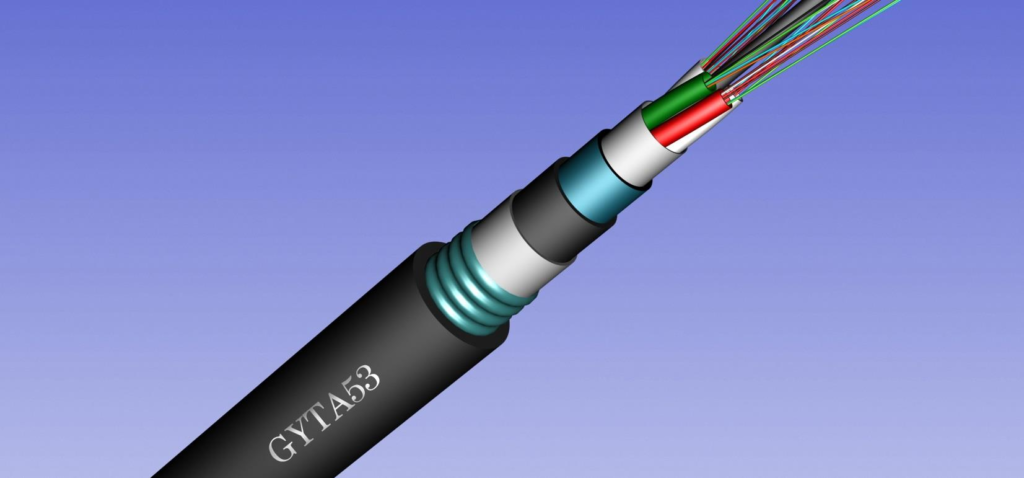
Armored fiber optic cable is a type of fiber optic cable specially used for long distance communications. It has good mechanical strength and good electrical properties, which ensures the transmission quality of optical fibers.
The armor, i.e. the use of armor materials, consiste à envelopper l’extérieur de la fibre optique d’une couche d'”armor” protective. This layer of armor gives the cable greater mechanical resistance, better resistance to pressure and greater tensile capacity. It protects the cable against animal bites, moisture erosion or other damage.
Furthermore, armored fiber optic cables have sheaths, d’aramides, lightweight steel tubes and layers of optical fibers that protect the cable. Plastic sheath protects against rodents, abrasion and twisting. The lightweight steel tube placed between the optical fiber and the outer sheath provides better protection of the optical fiber in the center, and the Kevlar is placed inside the outer sheath to cover the steel tube.
Armored fiber optic cable meets customers' requirements for anti-rodent bite fiber optic cables, humidity and erosion. It allows the fiber optic cable to work properly in harsh conditions.
Basic structure and working principle
Armored fiber optic cables consist of a central fiber, a protective layer enveloping the fiber and a high-strength armor. This armor protects the core fiber from damage when the cable is squeezed or pulled by external forces, thus ensuring its normal operation in extreme environments.
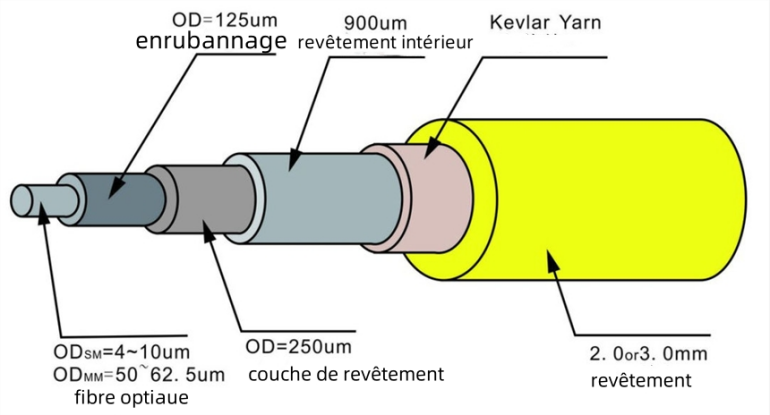
Armor material does not have to be metal, it can be fiber threads, glass thread, polyethylene, etc. The only difference between armored fiber optic cables and unarmored is that armored fiber optic cables have an additional outer layer of protection used for fiber optic cable.
Armored fiber optic cables work on the same principle as ordinary fiber optic cables. When an optical signal passes through an optical fiber, it is converted into an electrical signal, which is then processed by an integrated electronic circuit. During the signal transmission process, the armor prevents the optical fiber from being bent and stretched under the action of the protective layer, which ensures the stability of signal transmission.
What are the advantages and disadvantages of armored fiber optic cables ?
Benefits
1、High tensile and compressive strength, corrosion resistance, sustainability : armored fiber optic cable has good tensile and compressive strength during laying, which helps prevent damage caused by external shocks. Thanks to its robust structural design, the shielded optical cable can not only maintain good performance under changes in the external environment, but also function normally in humid environments, acids and alkalis and other harsh environments, which reduces the risk of failures due to environmental factors and extends cable life.
2、Good protection performance : shielded optical cable exterior in the outer metal armor and outer sheath under the double protection, has good protection performance, can ensure that the core of the cable is not damaged, and has high overall mechanical strength. The armored optical cable can effectively prevent damage from rats and other animals due to the external metal armor.
3、Good flexibility, construction facile, reduced maintenance costs : armored fiber optic cable has a certain degree of flexibility and strength, it is more suitable for bending environments and installation methods. This design of armored fiber optic cable also makes the installation and maintenance process more convenient, which helps reduce operating costs in the long term.
4、Wide range of applications : shielded optical cables can be used in various environments such as seabed, the mountains, the forests, the cities, rural areas, etc.
Disadvantages
1、High weight : due to the design of the protective layer of the armored fiber optic cable, the latter is heavier than an ordinary fiber optic cable. However, this disadvantage is acceptable to some extent due to the additional protection it provides in complex environments and long-term operation.
2、The price is higher than that of ordinary optical cable : due to the higher materials and technological content of armored optical cable, its price is also higher than that of ordinary unarmored optical cable. The price of an armored cable 4, 6 or 8 drivers is 4 yuan per meter, that of a cable 12 drivers is 7 yuan per meter and that of a cable 24 drivers is 15 yuan per meter. Armored cables are much cheaper.
Applications for armored fiber optic cables
Armored fiber optic cables have become the first choice for many professional applications due to their excellent tensile properties, compression, corrosion resistance and protection, as well as their ability to adapt to difficult environments. Armored fiber optic cables have a wide range of applications, mainly in the fields of electrical energy, of communication, railways and others.
Applications in the energy sector
Transmission Line Monitoring
With the development of modern electricity networks, more and more digital equipment is widely used in energy monitoring systems. Armored fiber optic cables can be used to provide high bandwidth communication channel for transmission line system, which facilitates the real-time collection and transmission of monitoring data and helps avoid damage to fiber optic cables caused by corrosion and other reasons. Furthermore, armored fiber optic cables can be automatically broken in case of danger, which makes it possible to effectively avoid safety accidents.
Electrical communication
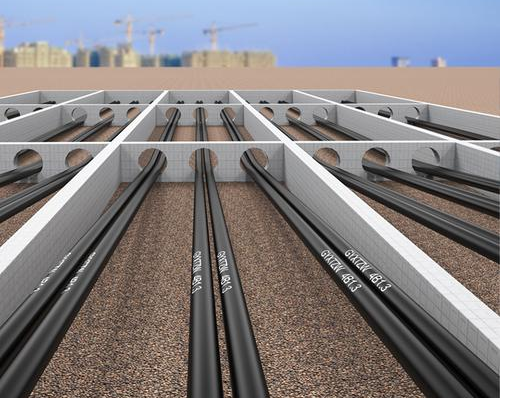
Armored fiber optic cable has a wide range of applications in the field of power communication, For example, it can be used in communication pipeline between substation and power distribution in cities or rural areas. The high-strength armor of the armored cable can effectively protect the cable body, which makes its operation more stable and reliable in the environment of bridges and highways.
Applications in the field of communications
Armored fiber optic cables have a wide range of applications for communication in harsh environments, such as laying underwater fiber optic cables in the ocean or in harsh weather conditions when data transmission over long distances is required.
Applications in the railway sector
Armored fiber optic cables have become an indispensable element in the field of railway signal transmission, such as high-speed railway signal transmission, decentralized automatic train control (CTC), the emergency communication system (ETC) and so on, all of which rely on the high-speed transmission technology of armored fiber optic cables.
With the continued development of digital technology, Armored fiber optic cables will be used in an increasing number of areas to provide better services for social and economic development.
The next article will tell you about the information related to the types of armored fiber optic cables. Keep paying attention to us to know more cable information. ZMS is committed to providing high quality cables at affordable prices. If you want to know more about cables, you can visit our home page or contact us.