
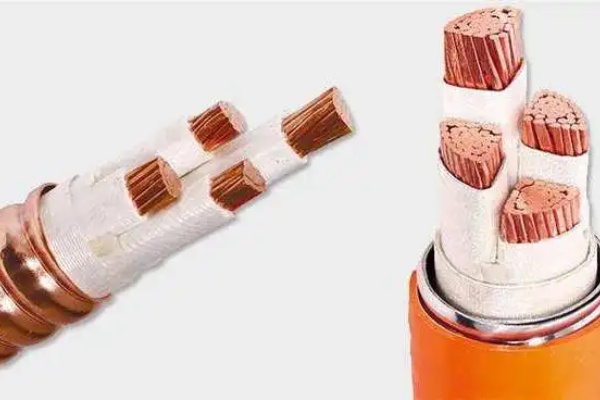
Mineral insulation cable, also known as MI cable. These cables use copper, which has high electrical conductivity, as a conductor. A seamless copper tube envelops the conductive copper core. It uses oxidized magnesia powder as an inorganic insulating material to insulate the conductor and sheath. An additional layer of protection can be chosen as required for the outer layer of the cable. For example, when used in environments corrosive to copper, a layer of anti-corrosion outer coating can be added to the outer layer of the cable. Mineral insulated cables have the advantages of being flame retardant, waterproof and explosion-proof, incombustible, smokeless, non-toxic and fire resistant.
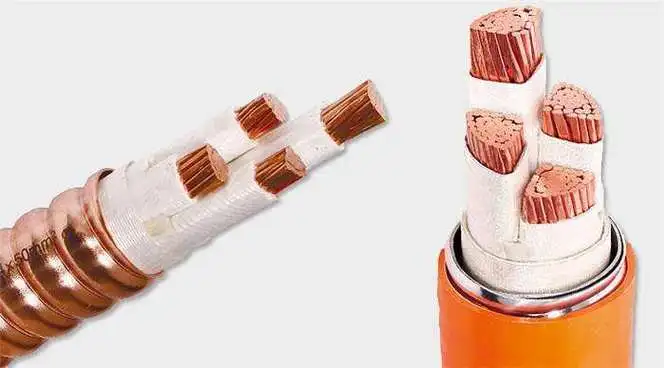
There is a similar type of cable that uses metal instead of copper to wrap the core and insulating material. This type of cable is called mineral insulated metal sheath cable (MIMS cable).
History and operation
In 1896, mineral insulated cable was invented in Switzerland. The MI cable arrived in France in 1934. In 1936, it began to be used in Britain and the United States. Afterwards, due to its excellent flame retardant properties, mineral insulated cable has been widely used.
The working principle of mineral insulated cable is as follows: : electric current flows through the internal conductor, passes through the insulating layer and reaches the outer sheath. Thanks to its mineral insulating layer, the cable effectively prevents current leakage, thus ensuring its safety. Mineral insulated cable has a certain degree of fire resistance. It can still work normally under high temperature conditions. It is suitable for transmission and distribution systems in high temperature environments, high pressure and highly corrosive. What's more, it has good mechanical strength and an ability to withstand external stresses for long periods without damage.
Cable structure
(1) Cable conductor : high conductivity metallic copper as conductor.
(2) Insulation layer : inorganic minerals resistant to high temperatures and non-combustible are used as insulation material.
(3) Insulation layer : made of inorganic mineral material.
(4) Sheath : non-toxic, low-smoke plastic material. It has good anti-corrosion properties.
The insulating material of mineral insulated cables consists of a mixture of mineral powders (aluminum oxide, magnesium oxide, etc), organic fillers and binders. This insulating material covers the conductors to form mineral insulated cables. Insulating materials used in mineral insulated cables have advantages such as high temperature resistance, good insulation and high mechanical resistance. These insulating materials guarantee the reliability and safety of the cables in operation. What's more, MI cable insulation materials do not produce harmful gases or pollutants during use, which makes them environmentally friendly. Mineral insulated cables also provide good durability and stability. They have broad application prospects in fields such as electric power, chemistry, metallurgy, aerospace, etc.
Classification
Classification par structure
Mineral insulated cables can be classified into rigid and flexible cables depending on their structure. Rigid mineral cables are extremely difficult to bend and have significant limitations for transportation and installation. But the rigid insulated mineral cable, in addition to the hardness of the cable itself, has very high impact resistance. It can effectively prevent animal tearing, chemical corrosion and external mechanical action, etc. Flexible mineral cable is easier to bend than rigid mineral cable. They are also less difficult to transport and install. Furthermore, flexible mineral cable is more flexible, so its impact resistance is relatively low.
3 common cable types
Magnesium oxide insulated cable with copper core and copper sheath
It consists of solid copper wire, magnesium oxide insulation and a seamless copper tubular sheath.
Cable models without outer jacket include : BTTZ, BTTQ. Cable models with outer jacket include BTTVZ, BTTVQ, WD-BTTYZ.
Flexible mineral insulated cables with inorganic mica tape
It consists of a stranded copper wire, Fluorinated mica tape insulation and copper tape wrapped longitudinally in a continuous welded sheath.
Cables without outer jacket include YTTW, RTTZ. Cables with outer jacket include YTTWV, WD-YTTWY, RTTZV, WR-RTTZY, Bttw, BTTRZ.
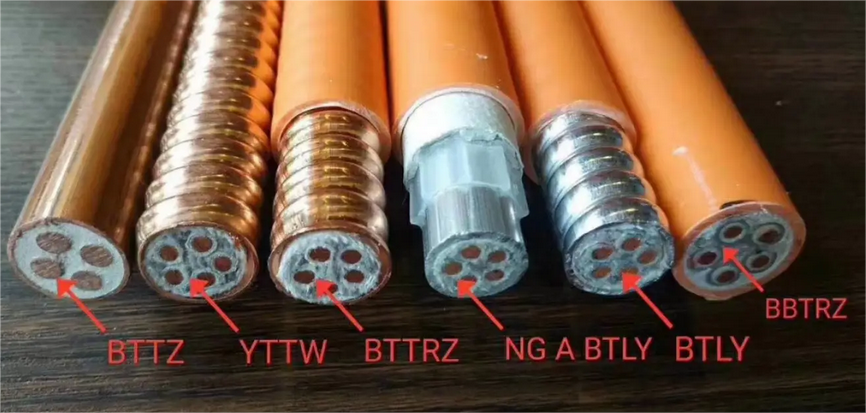
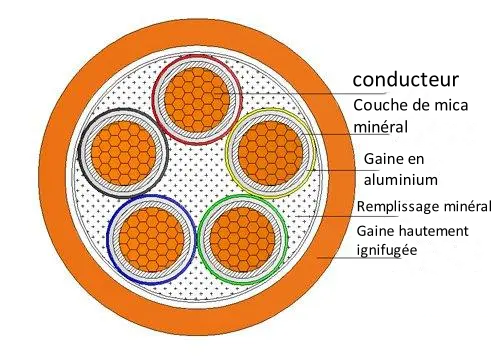
Flexible mineral insulated cable with aluminum sheath
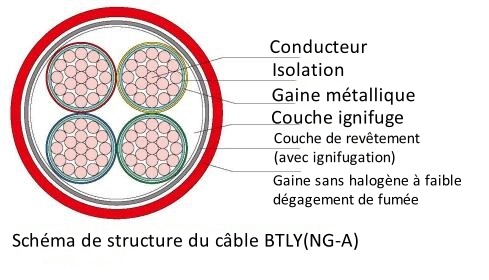
This type of cable is made of twisted copper wires, gold mica ribbon insulation, a seamless aluminum tube sheath, a filling of an insulating oxygen layer, an insulating fire protection layer, and a sheath low smoke and halogen free.
Common cable models include : NG-A, BTLY.
Misconceptions about price
Many people think that mineral insulated cables are expensive and therefore do not consider using them. Actually, this is not the case. Thanks to the continuous efforts of manufacturers and material suppliers in recent years, the price of mineral insulated cables is constantly approaching the price of ordinary cables.
Mineral insulated cables have a cross section of 25 square millimeters or more and are unipolar. Therefore, the current carrying capacity of these cables is higher than that of ordinary cables. This conclusion also resulted from the characterization experiments of the simulated solid cables. Furthermore, the copper sheath of mineral insulated cables can be used directly for grounding wire. This allows the number of cores to be reduced by one when choosing mineral insulated cables.. Overall, purchasing mineral insulated cables does not necessarily cost more than regular cables.
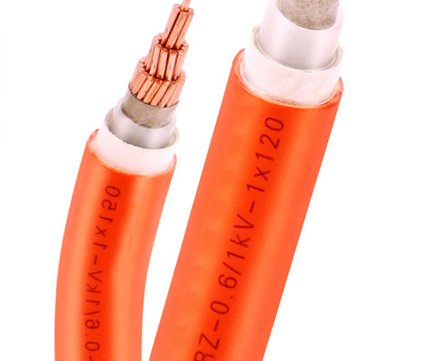
Utilisation
Mineral insulated cables are mainly used in important areas of electrical engineering. For example, dangerous places, important public facilities, places where personal property is safe. It is also commonly used in airports, firefighting services, high-rise buildings, libraries, shopping centers, Hospitals, etc. Once installed and installed, mineral insulated cables can be used indefinitely.
MI cables produced by ZMS
ZMS is committed to producing high quality cables and also offers customization services for its products. Mineral insulated cables manufactured by ZMS have the following characteristics :
Excellent durability
ZMS mineral insulated cables use high quality materials and advanced production processes. They have excellent durability. Whether in harsh industrial environments or harsh outdoor conditions, these cables can work stably and reliably.
Excellent insulation properties
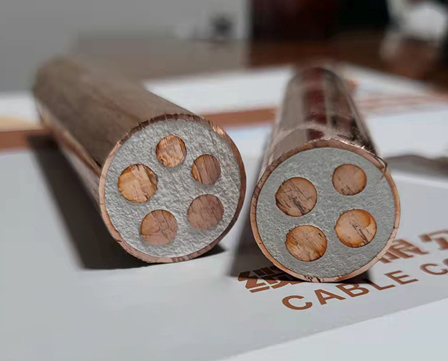
Mineral insulated cables produced by ZMS offer exceptional insulation performance. They can effectively prevent current leakage and short circuit between electrical equipment. This insulation performance helps maintain the electrical stability of the cables over the long term., thereby reducing maintenance and troubleshooting costs.
Suitable for various applications
Whether in the mines, on construction sites, on factory production lines or in other industrial areas, ZMS mineral insulated cables are an ideal choice. They offer good resistance to abrasion, compression and high temperatures, making them suitable for various demanding working environments.
Safety and reliability
ZMS mineral insulated cables meet strict safety standards, ensuring that they pose no risk to personnel or equipment during use. This security and reliability is essential in industrial environments where security requirements are high.
In summary, mineral insulated cables manufactured by ZMS are reliable products, durable and efficient, offering reliable electrical connection solutions for a variety of industrial applications. If you would like more information, do not hesitate to contact us.