
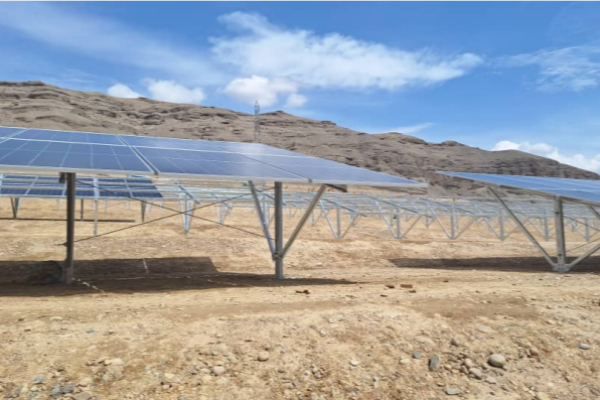
Afghanistan has launched a new solar energy project aimed at producing 10 megawatts of electricity, thus marking a step towards energy self-sufficiency in the country. Financed by the private sector at a cost of approximately 8,9 million dollars, the project takes place in the Surobi district, has 60 km east of Kabul. The project was launched on 30 october 2023 and aims to connect the Afghan electricity grid. It is expected to be completed within a year. It is exciting to note that, until the date of writing of this report, 70 % project work has already been carried out. The project is on track to be completed within the approved time frame, by 19 July 2024.
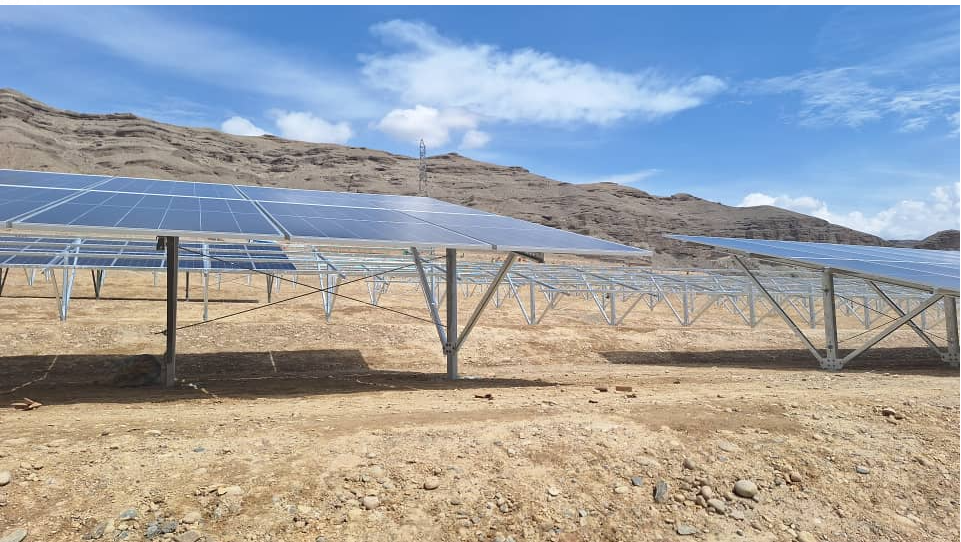
Photovoltaic project 10 MWP in Kabul, an Afghanistan
Currently, Afghanistan relies heavily on imported electricity from its neighboring countries, namely Iran, Tajikistan, Uzbekistan and Turkmenistan. During its inauguration ceremony, the interim deputy prime minister in charge of economic affairs, Abdul Ghani Baradar, declared : “The production capacity of this project may seem modest, but it is of great importance for our journey towards self-sufficiency. »
The solar project of 10 MWc de Naghlu, located in Surobi district of Kabul, an Afghanistan, aims to connect to Afghan power grid. The objective of the project is to provide clean energy to approximately 10 000 households. The electricity produced will mainly illuminate Surobi, while surplus energy will be monitored by the national grid system. ZMS provides a range of high quality cable products for this project, including photovoltaic cables. ZMS has been dedicated to research for many years, to innovation and production of photovoltaic cables, and constantly strives to use renewable energy to provide electricity to more people.
Collaboration between ZMS and Green State Power (GSP)
ZMS Cable is a company specializing in the manufacturing, the sale and export of cables. Founded in 1990, it has a factory 63 000 square meters and more than 30 years of experience in wire and cable production. ZMS has opened several markets in the Middle East, in Southeast Asia, in Africa, in the United States and Europe. Its cables sell well in 183 countries around the world. It is a high-tech enterprise integrating scientific research, industry and commerce.
ZMS has a complete and powerful production line. The company offers a wide range of cable products and offers cable customization services. It mainly produces various cables for photovoltaic power generation systems and photovoltaic components., such as PV1-F photovoltaic cables, H1Z2Z2, as well as various photovoltaic accessories, like photovoltaic ground wires, photovoltaic earthing clamps, etc. Furthermore, ZMS Cable also manufactures AAC cables, AAAC, ACSR, ABC, optical cables, HO7V-K cables, communication cables and control cables.
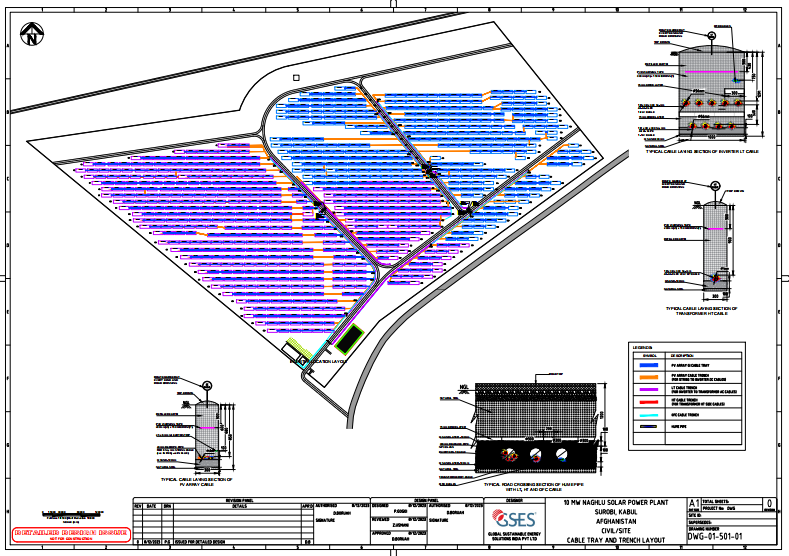
Design drawings for the photovoltaic project of 10 MWP in Kabul, Afghanistanv
GSP is the owner of this ZMS partnership. GSP is a company specialized in providing premier investment advisory services. It works closely with international partners to deliver value to its customers in global markets. Over the years, GSP has invested considerable sums to develop its professional skills, covering construction, the design, engineering, facilities management and security services. This has led to the establishment of a global network of integrated professional consultancy and consultancy firms. GSP has earned a reputation as a reliable partner in major transportation and energy infrastructure projects around the world. The company works closely with customers, entrepreneurs, contractors and asset operators to provide design solutions based on commercial knowledge, with assistance from local experts with a deep understanding of field conditions and industry standards.
This new solar power plant project in Afghanistan marks a new collaboration between ZMS and Green State Power. The value of this collaboration amounts to 246 000 USD. Products supplied include 1X10 and 1X6 photovoltaic cables, low voltage and medium voltage cables 3X300, ACSR cables 185/30, photovoltaic connectors and tool boxes.
“Looking to the future, ZMS will remain committed to supporting Afghanistan’s energy development goals and contributing to the country’s progress. We believe that our continued cooperation with the Ministry of Energy will bring more opportunities for innovation and collaboration, promoting positive change and sustainable development in the Afghan power sector. »
“This collaboration also allowed us to see the immense development potential of the Iraqi market, and better understand trends and project needs. Through inspection of our factory and products, our customers' trust in us has increased. This will lay a stronger foundation for our future trade collaborations with Afghanistan. »
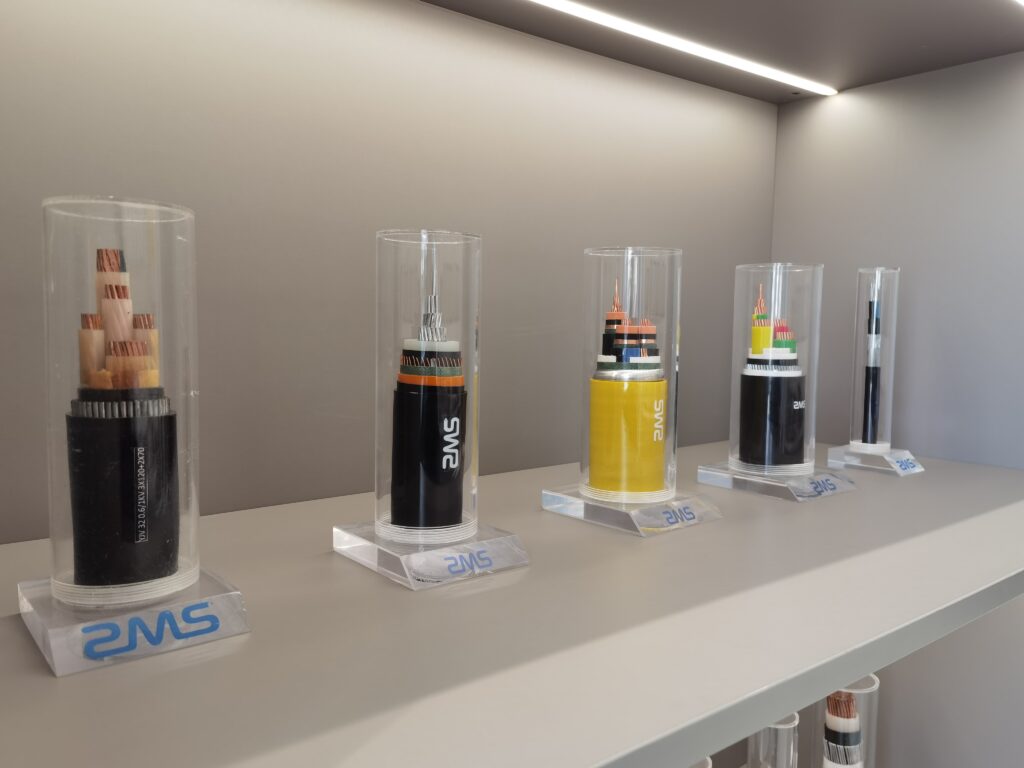
Different cables are produced by ZMS
Electricity development in the cooperative region
The Islamic Republic of Afghanistan is a landlocked country located in Central and Western Asia.. It is bordered to the north by Turkmenistan, Uzbekistan and Tajikistan, to the west by Iran, to the south and east by Pakistan, and has a narrow strip in the northeast that connects it to China. The country covers an area of 647 500 square kilometers and its capital is Kabul.
Afghanistan is one of the least developed countries in the world. After decades of conflict, its economy is almost completely destroyed and it depends heavily on foreign aid.
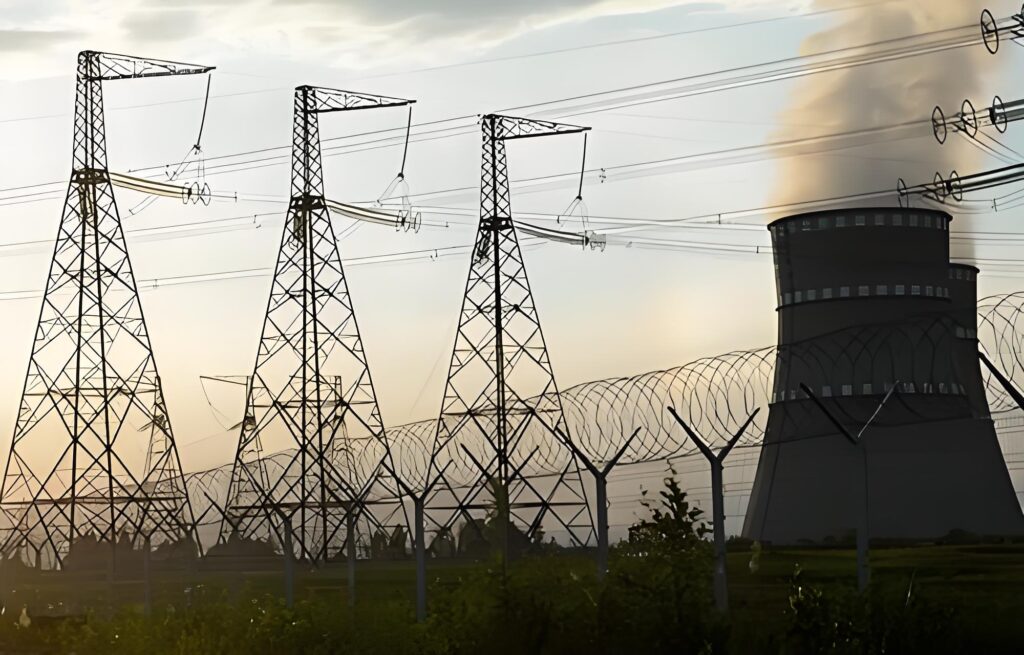
After decades of war, Afghanistan's electricity industry is virtually non-existent. With the continued growth of the urban population and the constant increase in residential electrical appliances, the electricity deficit continues to grow.
As an example, in the capital Kabul, domestic electricity can only provide a tenth of the needs, majority of electricity supply relying on diesel generators. If the capital Kabul struggles to guarantee electricity, it is obvious that rural areas are almost without electricity. On the other hand, border towns to the west and north are slightly better off. For example, the city of Herat in the west is supplied with electricity by Iran. Northern provinces receive electricity from Tajikistan, of Turkmenistan and Uzbekistan, largely meeting the needs of neighboring ethnic communities, like the Tajiks and Uzbeks of Afghanistan. Nationally, only 35 % of the Afghan population has access to electricity.
Electricity development in Afghanistan
However, in terms of energy resources, Afghanistan is not poor, which explains why it seeks to achieve energy independence. Afghanistan's renewable energy resource potential is estimated at more than 300 000 megawatts, of which more than two thirds come from solar energy, with approximately 300 sunny days per year. Afghanistan has the potential to produce 220 000 megawatts of solar energy, 20 000 megawatts of hydroelectric power and 70 000 megawatts of wind energy, while only 2 000 megawatts have been developed so far, which leaves enormous untapped potential.
Samuel Tumiwa, country director of the Asian Development Bank (BAD) an Afghanistan, declared : “Demand for electricity is growing rapidly across Afghanistan. Economic development and income opportunities depend on adequate energy supplies. This new solar power plant project will not only provide clean and reliable power supply, but will also demonstrate the viability of future investments in renewable energy. »
Over the next few years, the Asian Development Bank (BAD) will support the country to increase its electrification rate by 30 % has 83 %, and to increase the share of domestic electricity production from 20 % has 67 % from here 2030. The AfDB will also play a crucial role in transmission of electricity both at regional and national level, and encourage clean energy, including solar energy. Afghanistan's policy is also actively engaged in finding viable solutions for electricity supply. Huge potential of solar power generation brings hope to Afghanistan's electricity supply. Afghanistan’s solar energy market has a bright future and immense potential.
Challenges of electricity development in Afghanistan
In terms of energy production, Afghanistan has limited production and relies heavily on fossil fuels and electricity imports. Due to rapid population growth and advancements in industrial sectors, services and agriculture, current energy resources cannot meet the country's energy needs. What's more, the imbalance between electricity supply and demand is significant, leading to energy shortage in Afghanistan. Dependence on energy imports, insufficient production capacity, the small size of the domestic market and limited financing pose significant challenges to Afghanistan's energy security.
Therefore, it is necessary to focus on the development of renewable energies to ensure energy sustainability. Solar power generation is theoretically suitable for Afghanistan, practical and economical, and can perfectly solve the country's energy shortage problems. Afghan government should make solar energy development a priority for energy security, socio-economic development and improvement of quality of life in Afghanistan.
Solar Cable
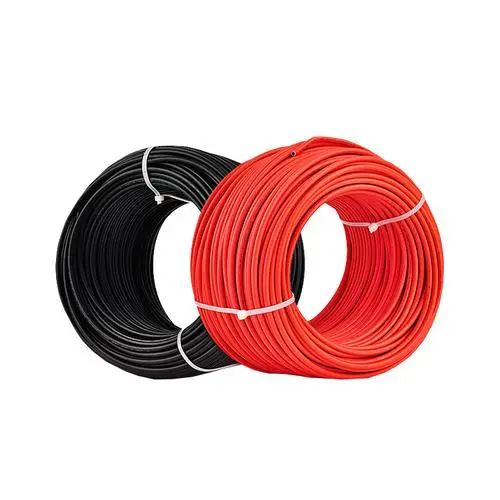
Photovoltaic cables, also called solar cables, are cables specially designed to connect solar panels, inverters and other components of photovoltaic systems. They play a crucial role in photovoltaic solar energy production systems. Solar cables ensure the transmission of energy, connecting components, performance monitoring, system stability and adaptation to harsh environments. They are essential components to ensure efficient and safe operation of solar systems.
Solar cables have advantages such as high efficiency, great stability and ease of installation.
- High efficiency
Photovoltaic cables are cables that use solar energy to perform photoelectric conversion. They can convert solar energy into electricity to meet energy needs in different contexts. Compared to traditional methods of electricity supply, photovoltaic cables have a higher conversion efficiency, which can provide more stable power to equipment in a short time, which improves production efficiency. - High stability
Photovoltaic cables use high-quality photoelectric sensors and cable materials, offering great resistance to wear, to bad weather and acids and alkalis. What's more, photovoltaic cables are treated with professional fire protection methods, which can effectively reduce the risk of fire and improve the stability of the electrical system. - Ease of installation
Photovoltaic cables are not only small and light, but also very flexible. They use pluggable connectors, which facilitates their installation and dismantling. Unlike traditional cables, photovoltaic cables do not need to be buried or require the laying of conduits, which reduces costs and installation time.
In addition to the benefits mentioned above, photovoltaic cables must be able to be used in harsh environmental conditions and must have the following characteristics :
① Good UV resistance, an ability to withstand harsh climatic conditions and mechanical impacts ;
② Good resistance to ozone and chemical corrosion ;
③ Tolerance to large temperature variations, generally from -40°C to 120°C, with maximum temperatures sometimes exceeding 150°C, and usually from -40°C to 90°C ;
④ Good damp heat resistance performance (90°C, 85% humidity, 1000h) ;
⑤ Good bending and torsion performance at low temperatures ;
⑥ Flame retardant properties and low smoke emission without halogen ;
⑦ Ability to pass notch resistance tests, thermal shrinkage and dynamic penetration ;
⑧ Long lifespan, exceeding 20 years under working conditions at 120°C.
As an essential element in the field of renewable energies, solar cables have superior performance and high application prospects. With the continued expansion of the renewable energy market, the use of solar cables will become more and more widespread and will constitute an important part of the electricity industry. Solar cables produced by ZMS Cable can be used in harsh environmental conditions and have features such as ozone resistance, UV, to acids and alkalis, at high and low temperatures, to the cuts, halogen-free and flame retardant. ZMS offers a complete range of photovoltaic cables and their accessories, and the solar cables produced by ZMS Cable are of high quality and long service life. ZMS is committed to providing you with a full range of photovoltaic equipment products to avoid losses due to incompatibility of purchased cable models. For more information, please send an email to info@zmscable.fr.