

Biden government asks Tesla CEO, Elon Musk, to open its electric car charging network to its competitors.
If the company persists in its monopoly on charging stations, she will lose 75 billions of dollars in subsidies.
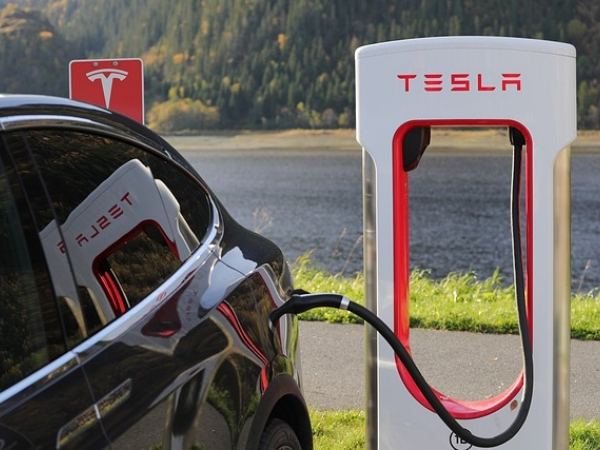
Tesla's Supercharger network is the largest, the largest and most reliable DC fast charging network in the United States, with approximately 1 700 charging stations.
Elon Musk often talks about opening his Supercharger network to his competitors and has already done this in some places around the world, like Norway and Sweden.
However, this has not yet been done in the United States, which is obviously what the Biden government wants to change.
According to Reuters, The Department of Transportation is expected to decide next week on a requirement forcing Tesla to expand its U.S.-proprietary charging equipment and increase competitors' use of chargers.
Otherwise, the car manufacturer will be excluded from the subsidy 75 billions of dollars coming out of Washington.
The Benefits of Supercharging Stations
Tesla's U.S. Supercharger station network is often considered the gold standard : fast, reliable and sufficient, with approximately 40 000 charging stations around the world.。
Tesla drivers can purchase an adapter to connect to a standard CCS charger in the United States, but people without Tesla cannot perform the same operations with Superchargers.
However, for years, this network has always been reserved for Tesla owners, thanks to a plug that can only be connected to Tesla cars, which means that drivers of Volkswagen cars, Ford or Chevrolet will not be able to benefit from it.
Although this may increase Tesla's funds and revenue streams, it could also tarnish the prestige of the brand and make it difficult for this car manufacturer to manage the network.
The Main Importance of Electric Vehicle Charging Cables
charging cables for electric vehicles are made from different types of electrical wires.
The most commonly used electrical wires for charging cables are copper and aluminum.
Copper is considered the best choice due to its superior electrical conductivity, which means it can carry more current than aluminum.
However, aluminum is often used due to its lower cost.
What Are Electric Vehicle Charging Cables ?
Charging cables are also coated with a rubber or plastic sheath to protect them against mechanical damage and bad weather.
This jacket can also improve the durability and longevity of the cable.
In addition to the electrical wires and the sheath, charging cables for electric vehicles may also include connectors, such as standard power outlets and vehicle connectors.
Connectors are essential to enable a seamless connection between the electric vehicle and the power source.
Electric vehicle charging cable is a crucial item for electric car owners.
This is the way to connect their vehicle to an electrical power source to recharge it.
Charging cables vary in length, power and functionality, and it is important to choose the one that best suits your needs to ensure an efficient and worry-free charging experience.
What Types of Charging Cables Are Available ?
There are several types of charging cables for electric vehicles, each with its own advantages and disadvantages.
First of all, there are Level charging cables 1. Level charging cables 1 are the simplest and cheapest charging cables for electric vehicles.
They usually plug into a standard outlet 120 volts and are the slowest for charging electric vehicle batteries.
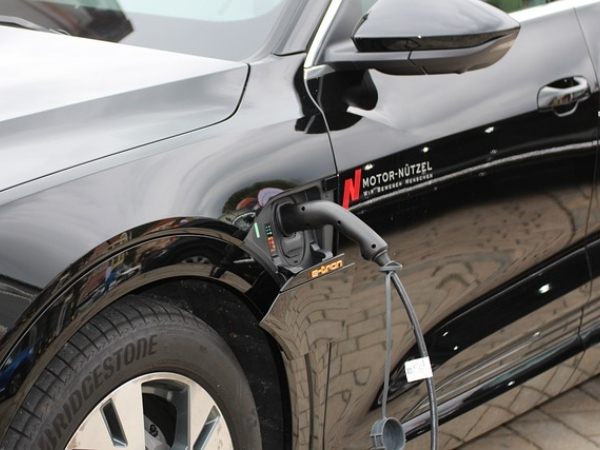
Level charging cables 1 are often included with the purchase of an electric vehicle and are an ideal choice for electric vehicle owners who drive only a few miles each day and do not need to charge their vehicle quickly.
Ensuite, there are Level charging cables 2. Level charging cables 2 connect to a power outlet 240 volts, making them faster to charge electric vehicle batteries than Level cables 1.
Level charging cables 2 are an ideal choice for electric vehicle owners who drive long distances every day and need to charge their vehicle faster.
Level charging cables 2 can be installed at home or in a public space for more practical use.
Finally, there are DC fast charging cables. DC fast charging cables use a power outlet of 400 volts or more to charge electric vehicle batteries in a fraction of the time of Level cables 1 and Level 2.
DC fast charging cables are often used at public fast charging stations and can charge an electric vehicle almost completely within a few hours.
However, DC fast charging cables may cost more than Level cables 1 and Level 2 and may require additional modifications for use with certain electric vehicles.
How to Choose the Right Length ?
During the choosing a charging cable for your electric vehicle, it is important to take into account the length of the cable.
There are many lengths of charging cables available on the market, going from 3 has 25 feet or more.
Longer charging cables are more convenient for home charging, because they can reach a distant power outlet, while shorter cables may be easier to store when not in use.
It is important to check the output power of the cable, as this will determine how quickly your vehicle will be charged.
It is also recommended to choose a charging cable certified by the manufacturer of your electric vehicle, because this guarantees optimal compatibility and increased security.
What's more, some electric cars may require specific charging cables, therefore it is important to check the specifications of your vehicle before making a purchase.
There are different types of charging cables, each with its own advantages and disadvantages, therefore it is important to choose the one that best suits your needs based on the length and power required.
Also be sure to choose a cable certified by the manufacturer of your electric vehicle to ensure optimal compatibility and safety.
At the end of the day, Choosing the right charging cable can significantly improve your electric vehicle driving experience.