
Introduction
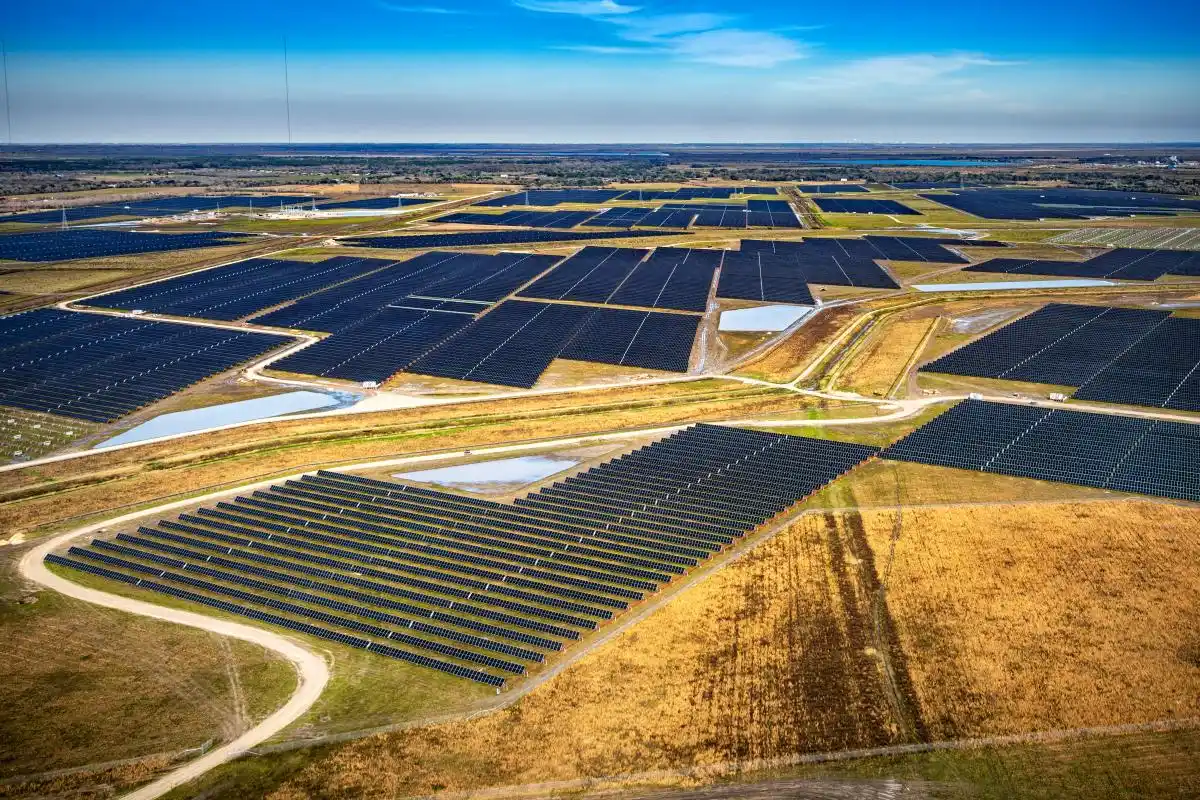
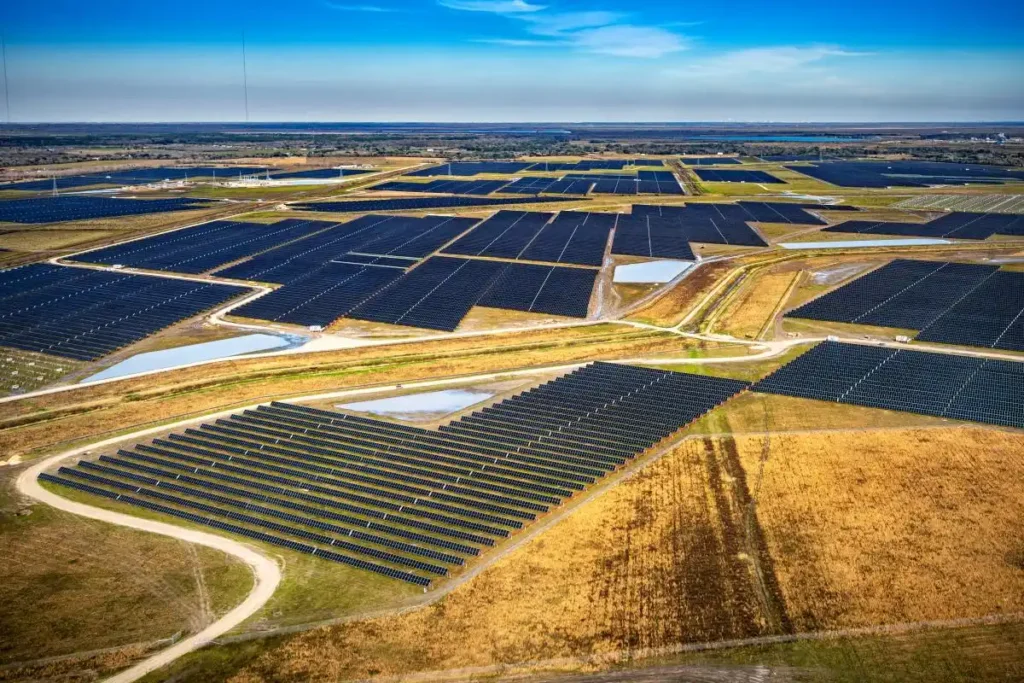
Solar power plants in desert environments are now emerging as a key solution in the global energy transition.. Thanks to intense sunshine, low population density and very low land costs, desert areas —- especially in North Africa (Morocco, Algeria and Tunisia) —- offer ideal conditions for the development of large-scale photovoltaic projects.
However, the construction of a solar power plant in the desert cannot be improvised. Between extreme climatic conditions (heat, sandstorms) and specific technical constraints (structures, wiring, anti-sand devices), each component of the system must be carefully selected and perfectly adapted to the environment.
In this article, we will present the basic equipment necessary for a photovoltaic power plant in a desert area, estimate the quantity of energy saved and the environmental benefits of such an installation, discover the largest solar projects in the world. As well as the tailor-made solar cabling solutions offered by ZMS Cable for installers and developers in Africa and Europe.
What equipment is needed for a solar power plant in the desert ?
Desert areas are characterized by extreme climatic conditions : winds loaded with abrasive sand, high temperatures, and strong thermal amplitudes between day and night.
To build a solar power plant in these environments, it is essential to use equipment specially designed to withstand these constraints.
Bifacial photovoltaic modules
Bifacial panels are now favored for desert projects. By capturing direct sunlight at the front and light reflected from the sand at the back, they allow a significant increase in yield. These modules must be designed with reinforced glass and surfaces resistant to sand erosion.
Support structures and foundations
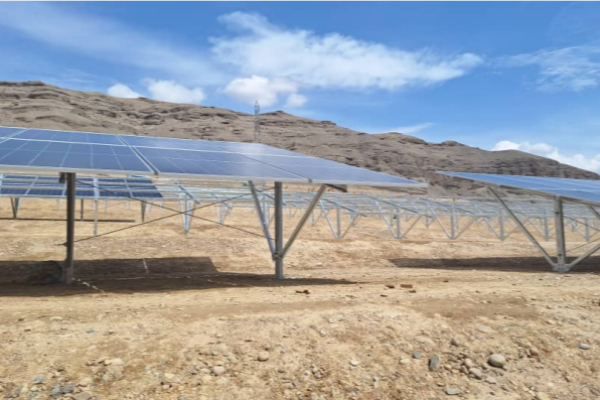
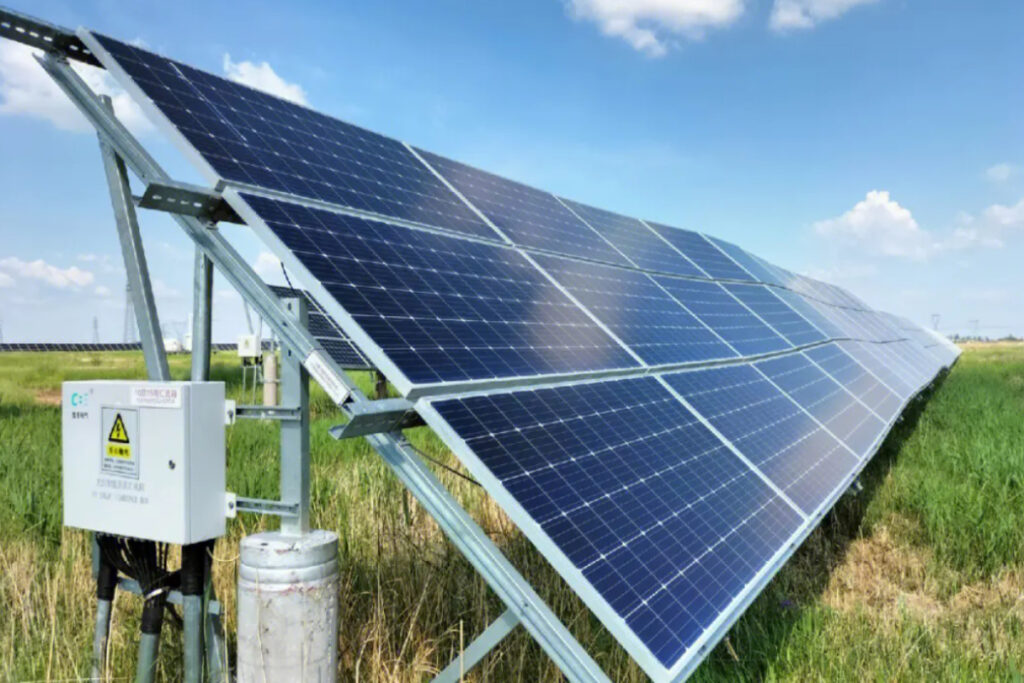
The support structure must be able to withstand strong winds, to sandstorms, etc. Galvanized steel or anodized aluminum materials are usually chosen for the supporting structure. In dune areas, We recommend a minimum ground clearance of 300 mm to prevent the panels from getting stuck in sand. The choice of the angle of inclination must also take into account the dominant direction of the wind and the movement of the dunes..
Solar tracking system (optional)
The use of single axis structures (horizontal trackers) makes it possible to increase the production of 20 has 30 %. However, they require a reinforced system against wind loads and more rigorous maintenance in sandy environments.
Solar inverters for extreme environment
Inverters used in desert power plants should be outdoor type or integrated into pre-assembled containers to facilitate transportation and installation in remote areas.
They must be certified IP54 or higher, with airtight dust-proof design, active cooling systems with filtered ventilation or sealed fans, and low temperature start-up capability to cope with significant day/night differences.
These inverters must also have excellent resistance to sand wind conditions to ensure maximum reliability in severe environments..
Connection boxes and transformers
Smart junction boxes (or DC connection boxes) enable remote monitoring of photovoltaic module chains and facilitate predictive maintenance.
As for power transformers, they must be able to withstand the significant temperature variations typical of desert regions. They also have the role of raising the output voltage up to 35 your kV 110 kV. This elevation is essential to allow the stable integration of the energy produced into the electrical network..
High performance solar cables
Photovoltaic cables are critical elements in desert environments. They must be :
- UV resistant, to heat and sand abrasion,
- compliant with EN standard 50618 / IEC 62930,
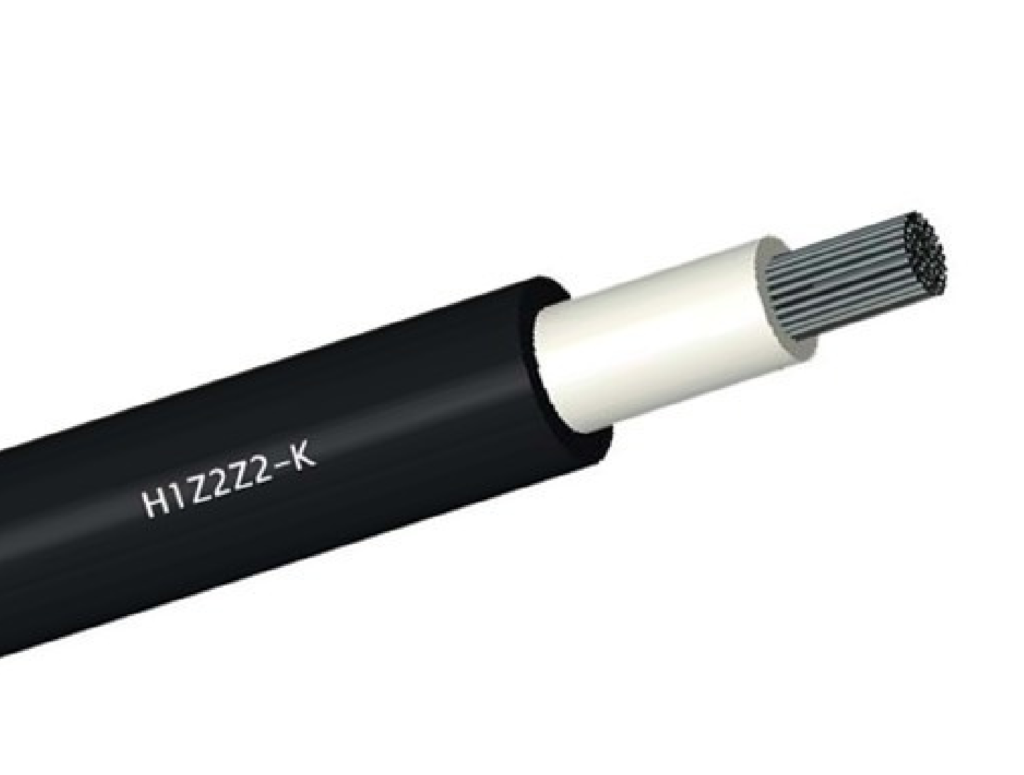
- with XLPO insulation or double sheath (type H1Z2Z2-K) for extended life.
At ZMS Cable, we offer tailor-made solar cables, tested in extreme conditions, shielding, customization of sections, etc.
Sand protection systems
To stabilize the ground and protect the installations, we use :
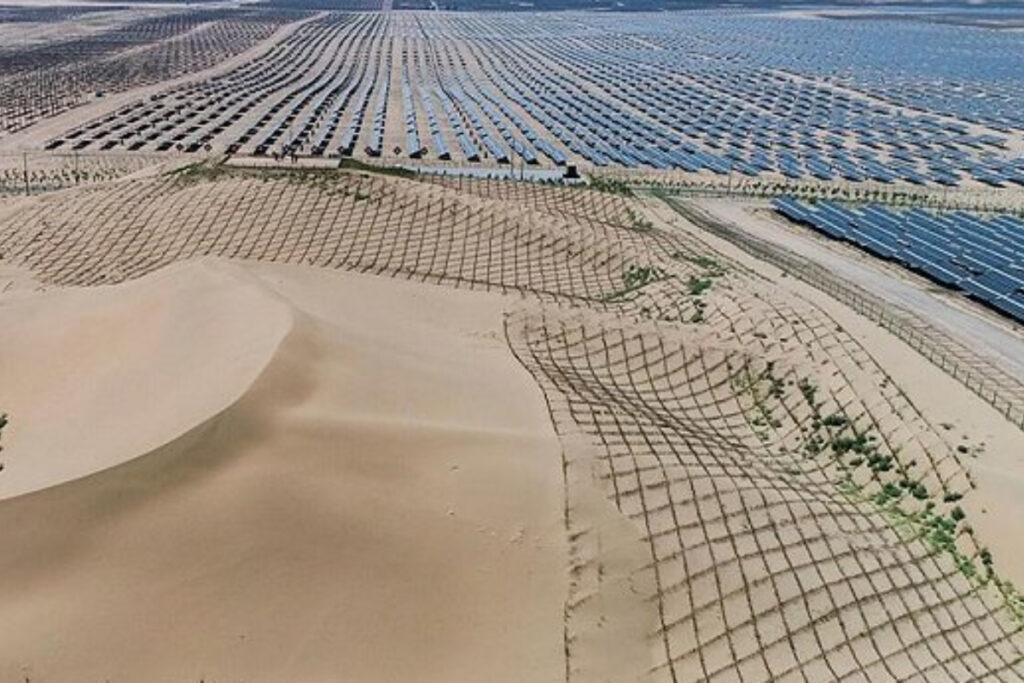
- mechanical anti-sand barriers (nylon nets or branches in a checkerboard pattern 1m x 1m),
- sand-fixing plants (halophytes or local plants such as calligonum or mugwort),
- vegetated areas under the panels to combine energy production and ecological rehabilitation.
How does a photovoltaic plant work? ?
The operation of a photovoltaic power plant is based on an optimized energy conversion chain, ranging from light capture to the injection of electricity into the network. Here are the main stages of this process :
Conversion of light into electricity (direct current)
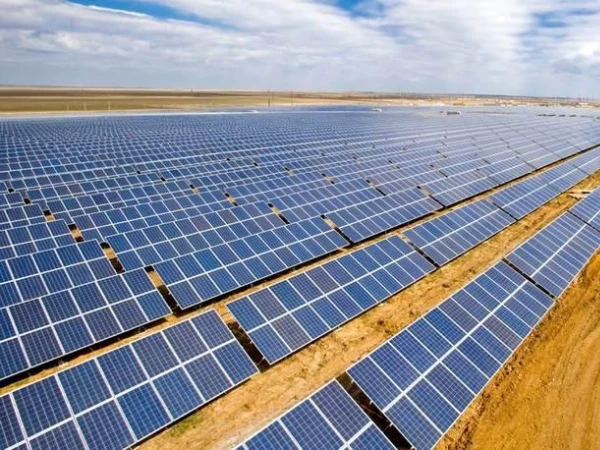
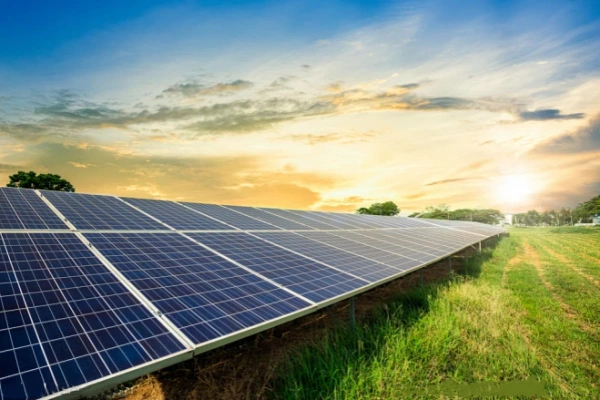
Photovoltaic modules capture sunlight and generate direct electrical current thanks to the photovoltaic effect, a physical phenomenon produced by certain semiconductor materials (often silicon). The stronger the irradiation, the higher the current production.
Converting direct current to alternating current
The direct current produced is not directly compatible with electrical networks. It is first routed through junction boxes to inverters (or power inverters).
These convert direct current (DC) in alternating current (AC), at the frequencies and voltages required by the network.
Injection into the network (medium or high voltage)
The electricity thus converted is then raised in voltage via transformers to reach 35 kV, 110 kV or more depending on network requirements.
Once this step has been completed, energy can be injected into medium or high voltage lines, then distributed to users.
Real-time optimization
Modern power plants use intelligent control systems, integrating in particular :
MPPT (Maximum Power Point Tracking), which constantly adjusts the operation of the modules to capture maximum solar energy ;
SCADA systems (Supervisory Control And Data Acquisition) for remote management, performance analysis and preventive maintenance.
What is the environmental impact of a solar power plant? ?
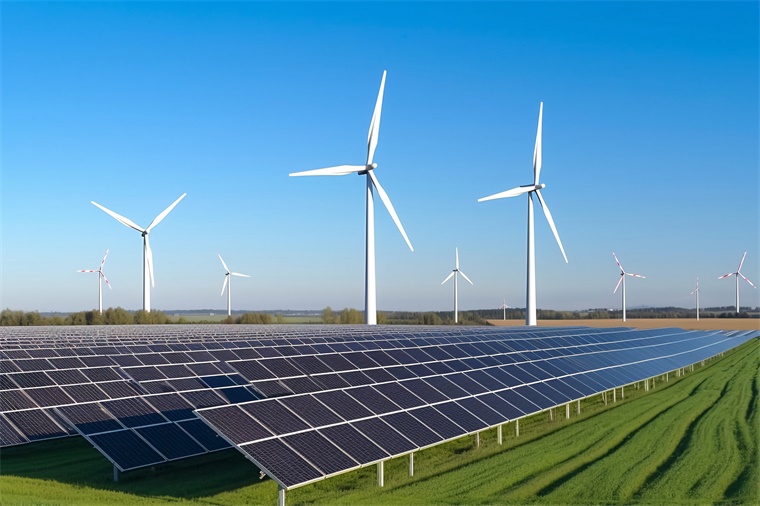
Solar power plants have multiple positive effects on the environment, particularly in terms of reducing carbon emissions, conservation of resources, ecological regeneration and promotion of sustainable development. Here is a detailed analysis :
Reducing greenhouse gases and fighting climate change
Electricity production without direct emissions
A photovoltaic plant produces no CO₂, ni SOₓ, is NOₓ, no fine particles during operation. Each kilowatt hour of solar electricity saves approximately 0,4 kg of CO₂ emissions, which amounts to a saving of 0,16 kg of standard coal.
Example : At the power stations of 310 MW located in the Kubuqi Desert (Inner Mongolia) generates 2,74 billion kWh per year, making it possible to reduce CO₂ emissions by 23,25 million tons, to save 8,62 million tonnes of coal and reach the equivalent of 127 000 hectares of restored forests.
Low carbon footprint over the entire life cycle
The majority of emissions come from the initial manufacturing of modules. However, technological advances — such as the use of renewable electricity in factories — can significantly reduce this footprint. Studies show that the carbon footprint of photovoltaics barely represents 10 % from that of coal.
Saving water and reducing pollution
Almost zero water consumption
Traditional thermal power plants consume approximately 1,5 liter of water per kWh produced, mainly for cooling. Conversely, a solar power plant only needs a small volume of water for periodic cleaning of the panels, which represents a significant saving of water, particularly valuable in arid areas.
Elimination of the chain of fossil pollution
Photovoltaics avoids :
- destructive coal mining,
- pollution linked to its transport,
- combustion residue (ashes, acid gases, acid rain).
Restoration of degraded lands and improvement of ecosystems
Valorization of uncultivated land
More than 60 % of the world's large solar power plants are installed on arid soils, desert or saline, thus reducing competition with agricultural land.
Ecological rehabilitation of desertified areas
Solar panels reduce water evaporation from the ground. Water used for cleaning seeps into the ground, increasing humidity.
Example : On the Gonghe photovoltaic site (province du Qinghai), the water content of the soil under the panels increased by 40 has 78 %, vegetation increased by 15 %, and the organic matter of the soil was multiplied by 11.
The structure of photovoltaic fields forms a physical barrier that reduces wind circulation at ground level. For this reason, the wind speed drops by more than 40 %, air humidity increases 2,8 %, and the day/night thermal amplitude decreases – conditions conducive to the resumption of micro-organisms and local flora.
Multifunctional land use
Agri-photovoltaïsme : Fire (Chine), strawberries are grown under the panels, combining agricultural and energy production while reducing energy requirements for greenhouses. Rearing under panels : In the Talatan region (Qinghai), sheep graze under the panels, naturally maintaining vegetation and allowing breeders to increase their income while regenerating pastures.
Promoting biodiversity and climate resilience
Creation of ecological corridors
Studies show that the thoughtful layout of installations — particularly the spacing between panels — helps preserve strips of vegetation serving as habitats for local wildlife..
For example, on the Kubuqi site, birds and small mammals have returned to settle.
Mitigation of the urban heat island effect
BIPV solutions (integrated photovoltaic building) — installation of panels on roofs or facades — limit heat absorption by buildings, reduce air conditioning consumption and improve the urban microclimate.
How does the construction of a solar power plant take place in the desert? ?
The construction of a solar power plant in a desert environment is a complex project that requires careful preparation, technical choices adapted to extreme conditions, as well as rigorous coordination at each stage. Here is an overview of the main phases of the process :
Site survey and location selection
First of all, environmental analyzes, geological and climatic studies are carried out over several months :
- Avoid areas of moving dunes, saline or unstable soils
- Collect weather data on 30 ans : sunshine, prevailing winds, sandstorms
- Evaluate the nature and mobility of the sand, topography, and access to electricity networks
Desert areas with high solar potential should be favored., large areas available and low population density, like those of the Maghreb (for example southern Morocco or the interior of Tunisia) and the Sahel region.
Technical design adapted to the desert
Engineers must integrate the challenges specific to these environments from the design phase :
- Raised structures to avoid silting (ground clearance ≥ 300 mm)
- Optimal orientation and inclination of the modules to compensate for variations due to micro-reliefs on the ground
- Choice of corrosion-resistant materials, to sandy abrasion and thermal shock
- Single Axis Solar Tracking Systems (trackers) reinforced to resist gusts of wind
Ecological integration and soil stabilization
To avoid wind erosion and limit ecological impact, measures are taken from construction :
- Sand protection nets or barriers (together, reed or nylon) on the outskirts and on the dominant wind axes
- Controlled revegetation with local species (ex. : mugwort, saxaoul, jujubier), drought resistant
- Regulated shade zones under the panels, conducive to the regeneration of local flora
Logistics, transport et installation
Getting the material to the site is a crucial step, especially in remote areas :
- Choice of vehicles adapted to sandy terrain
- Compliance with environmental resistance standards
- Modular and serial installation : the supports, panels, inverters and cables are installed in blocks to reduce the time exposed to wind and dust
Intelligent commissioning and maintenance
Modern power plants favor automation to limit dependence on on-site labor :
- SCADA systems for real-time remote monitoring (production, temperatures, breakdowns)
- Solar panel cleaning robots, reducing water consumption and maintenance costs
- Predictive maintenance using integrated sensors (temperature, dust, humidity)
Through careful planning, adapted technological choices and integrated ecological design, it is now possible to transform desert expanses into areas of sustainable energy production, without compromising local balances.
Strategic role of cables in desert power plants
If solar panels are at the heart of a photovoltaic power plant, the electrical cables are the nervous system : they ensure the reliable transmission of energy from the modules to the transformers, then to the network. In a desert environment, the stresses on the cables are particularly high — extreme temperatures, intense UV radiation, sand abrasion, buried or aerial installation over long distances.
Here are the most commonly used cables, and the key criteria to guarantee their performance in the desert :
DC solar cables (DC)
These are the cables that connect the photovoltaic panels to the junction boxes (junction boxes), then to the inverters.
Essential Features :
- Isolation double (often XLPE + outer sheath and LSZH or PVC) to resist UV and heat
- High thermal resistance : operation up to 90°C continuously, tolerance to peaks of 120°C
- Mechanical flexibility : for installation on mobile structures (solar trackers) or in curves
- Current standards : IN 50618 / TÜV 2 Pfg 1169
At ZMS Cable, we supply solar cables type PV1-F and H1Z2Z2-K, tested for high temperature and high solar intensity environments, with anti-rodent or flame retardant options as needed.
AC Power Cables (AC)
These cables connect the inverters to the transformers, then to the delivery station for connection to the electricity network.
Constraints specific to the desert :
- Long electricity transmission distances, requiring a suitable cable section to limit losses
- Aerial installation, in trench, or in technical gutter, with resistance to sand and thermal shock
- Possible presence of rodents or corrosive agents, depending on the region
ZMS offers shielded copper or aluminum cables, with XLPE or EPR insulation, for tensions up to 35 kV. We adapt the structure (simple, twisted, three-pole) depending on site configurations.
Cabling for control and monitoring systems (SCADA)
Modern solar power plants use intelligent monitoring systems, requiring specific wiring :
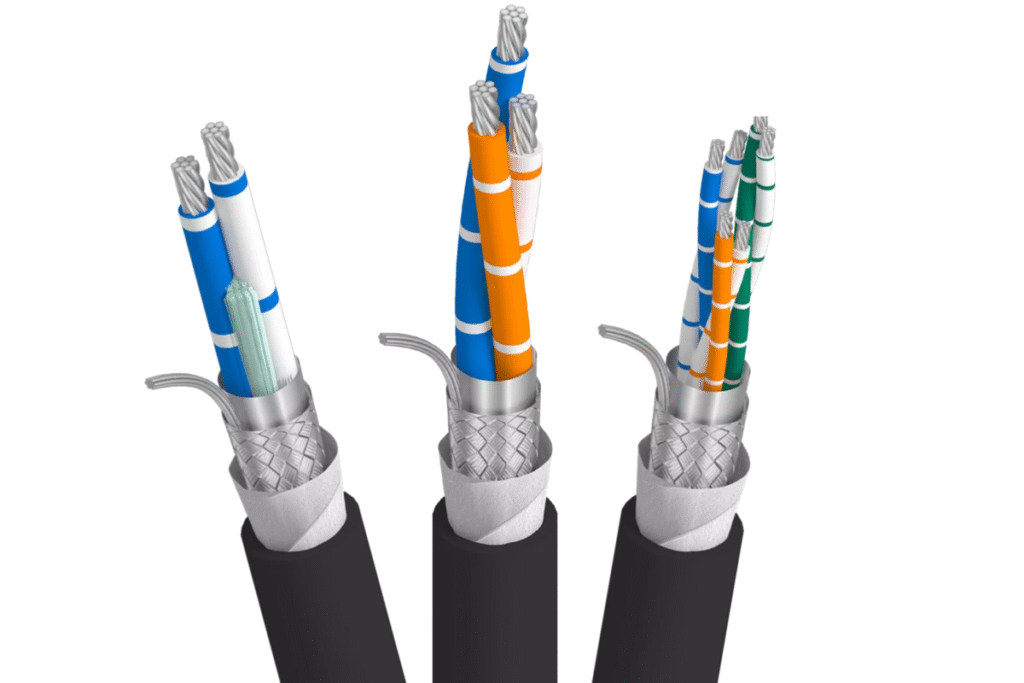
- RS485 communication cables, optical fiber or Ethernet for data transmission (production, temperature, alarms)
- Sensor cables (temperature, humidity, inclinometers)
- Resistance to electromagnetic interference (EMI)
ZMS can supply shielded cables for automation and data, compatible with standard industrial protocols and tested for prolonged UV exposure.
Why poor cable selection can compromise the entire installation
An insulation fault, an incorrectly dimensioned section or premature aging of the cable can lead to :
- Loss of energy efficiency
- Risk of short circuit or fire
- Expensive maintenance in hard-to-reach areas
This is why the choice of cables must be made according to the local climate., national standards and the plant load profile. A tailor-made solution, combined with reliable logistics and certificates of conformity, makes all the difference in large-scale projects.
Conclusion
Solar power plants installed in desert areas are no longer simple experimental projects — they now represent a strategic pillar of the global energy transition, particularly in French-speaking countries in Africa and Southern Europe, rich in sunshine and little exploited land.
Reference projects on a global scale already illustrate this colossal potential :
- Talatan solar park in Qinghai, in China, covers almost 600 km² and supplies more than 3,4 million homes each year — while serving as ecological pasture for 20 000 sheep.
- In Saudi Arabia, the ongoing Al Shuaibah project will reach 2,6 GW, which will make it the largest single photovoltaic power plant in the world.
- Still in China, the Midong power station (Xinjiang) displays a power of 3,5 GW, with an annual production around 6 billion kWh, the equivalent of the electricity consumption of a small country.
With their multiple benefits — massive production of clean electricity, Reduction of CO₂ emissions, revaluation of degraded lands, water saving, and even ecological restoration — these projects embody a circular and sustainable energy model.
But to guarantee their performance and longevity, each component must be carefully designed according to the environmental constraints specific to the desert. This concerns not only panels and structures, but also less visible but equally crucial elements such as electrical cables.
As a solar cabling solution provider, ZMS Cable supports developers, installers and EPCs in the EMEA region in the design of reliable photovoltaic projects, compliant with international standards, and adapted to extreme environments.
The desert is no longer an energy vacuum — it is a source of the future.