
Cables are everywhere in our daily lives and in industrial applications. Whether for domestic electrical wiring or the connection of large industrial equipment, choosing the right cable is essential. A correct choice not only guarantees the performance of the electrical system, but above all safety. Indeed, an unsuitable cable can cause electrical overloads, damage to equipment, even fires.
L’AWG (American Wire Gauge) is one of the key references for choosing a cable. Yet, many people are not familiar with this standard. In this article, we will answer common questions about AWG and help them better understand this system. You will therefore be able to use it more efficiently for your installations..
What is AWG ?
L’AWG, ou American Wire Gauge, is a standard that indicates the size of electrical wires. It represents the diameter and thickness of the cables. In this system, the smaller the AWG number, the thicker the cable. Vice versa, the larger the number, the thinner the cable. For example, a cable of 12 AWG is thicker than AWG wire 14 AWG. This system emerged in the 19th century and, with the increase in electric transmission needs, it has become a widely used standard in the United States and other countries.
The AWG system is defined logarithmically. This means that the diameter and section of the cables vary exponentially with the gauge number. For example, a cable of 6 AWG is approximately twice as thick as a cable 12 AWG, and its capacity to carry current is also much higher. This system has been designed to simplify the choice of cable sizes, helping users quickly identify the specification that meets their needs.
How AWG influences cable selection ?
Current capacity (courant admissible)
Current capacity refers to the maximum current a cable can safely carry. The AWG value has a direct impact on this capacity. In general, a thicker cable (i.e. with a smaller AWG number) can withstand greater current. Conversely, a cable that is too thin risks overheating, which can lead to electrical fires. It is therefore crucial to choose the right AWG rating according to the required current. For example, a cable of 12 AWG is common in household installations, capable of carrying approximately 20 amps, while a cable of 14 AWG is suitable for 15 amps.
Cable length and voltage drop
The length of the cable also influences the choice, especially for long distance installations, where voltage drop can become a problem. Voltage drop is the loss of voltage that occurs when current passes, due to cable resistance. The longer the cable, the higher the resistance and, therefore, the voltage drop is more marked. If this drop is too great, this may prevent equipment from functioning properly. For transmission over long distances, it is therefore advisable to select thicker cables (with smaller AWG) to minimize voltage drop. For example, although a cable of 12 AWG is suitable for circuits of 20 amps over short distances, cables of 10 AWG or even 8 AWG may be required to keep voltage drop within acceptable limits.
Application scenarios
AWG applies to various usage scenarios. Household appliances, lighting and industrial equipment require different cable specifications. For example, In electrical wiring domestic, the calibers of 12 AWG et 14 AWG are the most common. On the other hand, for electric vehicle charging stations or air conditioning systems, thicker cables, like 6 AWG or 4 AWG, are often required.
Differences between AWG and cable materials
Differences between copper and aluminum cables
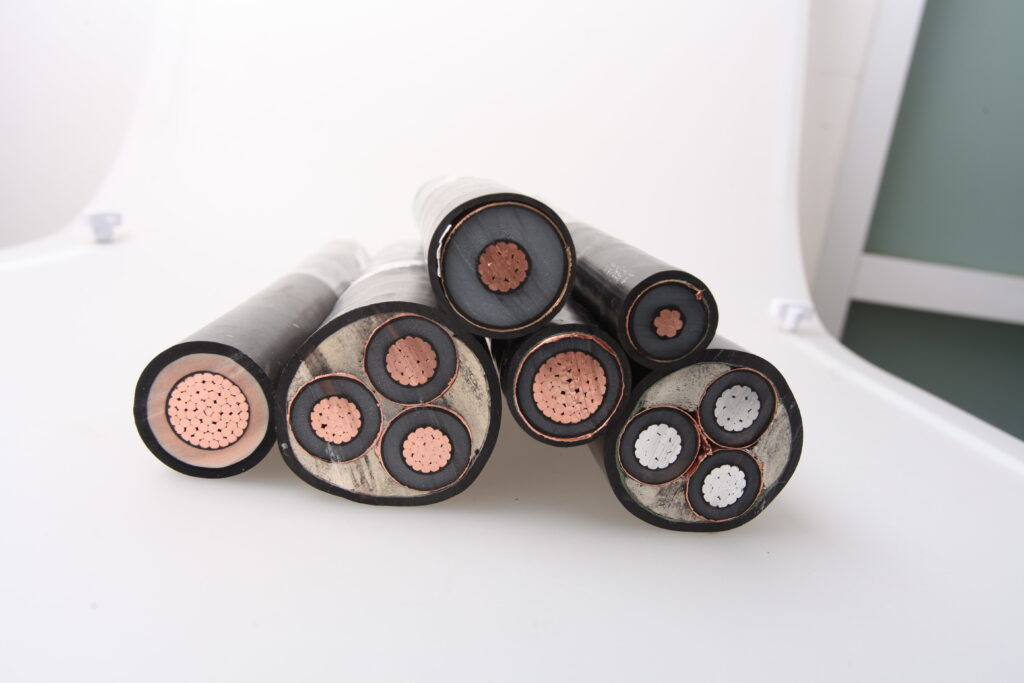
In addition to AWG, the choice of cable material is crucial. The most common conductive materials are copper and aluminum. At an equivalent AWG, copper cable has lower resistance than aluminum cable. Therefore, the current carrying capacity and conduction performance of copper cable is generally better than that of aluminum. However, aluminum cable, being cheaper and lighter, is widely used in some large industrial projects.
It is important to note that, due to its higher resistance, aluminum cable requires a thicker gauge to carry the same current as copper. For example, to transmit the same current, A copper cable of 12 AWG may require aluminum cable of 10 AWG or even 8 AWG to achieve equivalent performance. So, when choosing a cable, it is essential to take into account not only the AWG, but also the characteristics of the material.
When to choose copper cable and when to choose aluminum cable ?
Copper cables are suitable for applications requiring high reliability and superior performance, such as indoor home wiring and critical electrical equipment connections. On the other hand, Aluminum cables are often used for long distance and high current applications, such as power transmission lines and electrical wiring in large buildings. In the selection process, it is essential to take into account the specific needs of the application, the costs, installation conditions and safety.
How to Choose the Right AWG Based on Wattage ?
When choosing a cable, it is important to determine the correct AWG based on wattage, voltage and current of the device. The relationship between power (and watts), the tension (and volts) and the current (ampères) is given by the following formula :
P=U×I
By knowing the power and voltage, we can calculate the current, then choose the appropriate AWG. For example, if a device has a power of 2400 watts and operates at a voltage of 120 volts, the current will be 20 amps. For this current requirement, you can opt for a cable of 12 AWG.
What is the correspondence between AWG and mm² ?
AWG and square millimeter (mm²) are two methods different cable specifications. AWG is an American standard, while mm² is a widely used standard internationally. The conversion between the two is not a simple linear relationship, but can be consulted in correspondence tables. For example, a cable of 12 AWG has a diameter of approximately 2,05 mm and a section of 3,31 mm².
How to determine if a cable is too thin or too thick ?
When choosing a cable, a cable that is too thin can cause overheating, excessive voltage drop and, therefore, damage devices or cause fires. On the other hand, cable that is too thick can increase installation costs and complexity. It is therefore essential to select the correct cable gauge depending on the current, distance and environmental conditions. Referring to electrical standards and regulations is the best way to avoid wrong choices.
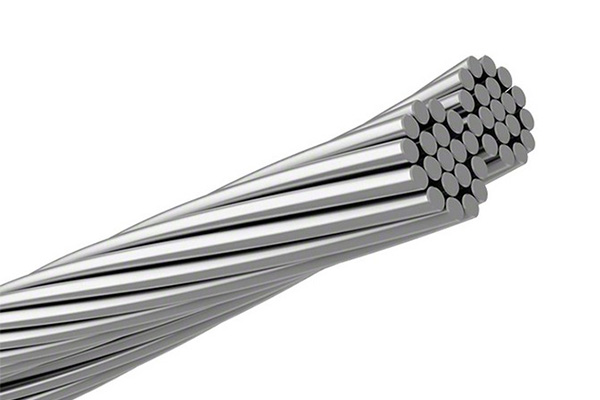
Choice of indoor and outdoor cables : Does AWG matter? ?
Outdoor cables often need to withstand harsher environmental conditions, such as temperature variations, ultraviolet radiation and humidity. Therefore, in addition to AWG, exterior cables must also have a certain level of protection, such as water and UV resistance. Although AWG is important, cable protection performance should be prioritized for outdoor applications.
How to properly install and use AWG-compliant cables ?
In practice, cable installation and wiring is crucial. Here are some basic tips for installing and wiring cables :
Proper cable installation : Avoid bending, excessively pull or compress cables to prevent damage to the coating and conductors.
Using appropriate connectors : Choose connectors and ferrules matched to cable specifications to ensure good contact and prevent overheating due to poor contact.
Safe use of cables : Regularly inspect cables for wear and aging, and replace damaged cables immediately to prevent accidents.
Conlusion
Choosing cable specifications correctly is essential not only to ensure the proper functioning of electrical equipment, but also to ensure the safety of people and property. In future electrical engineering projects and for domestic electrical appliances, we hope everyone can wisely select AWG standard cables according to their actual needs, to ensure optimal protection of the electrical system.
If you are not sure which type of cable to choose, do not hesitate to consult qualified cable suppliers, like ZMS Cable. With more than 30 years of experience in cable manufacturing, ZMS offers turnkey cable sales services as well as tailor-made solutions. Don't wait any longer, contact us today. We will provide you with the best professional cable consulting service.