
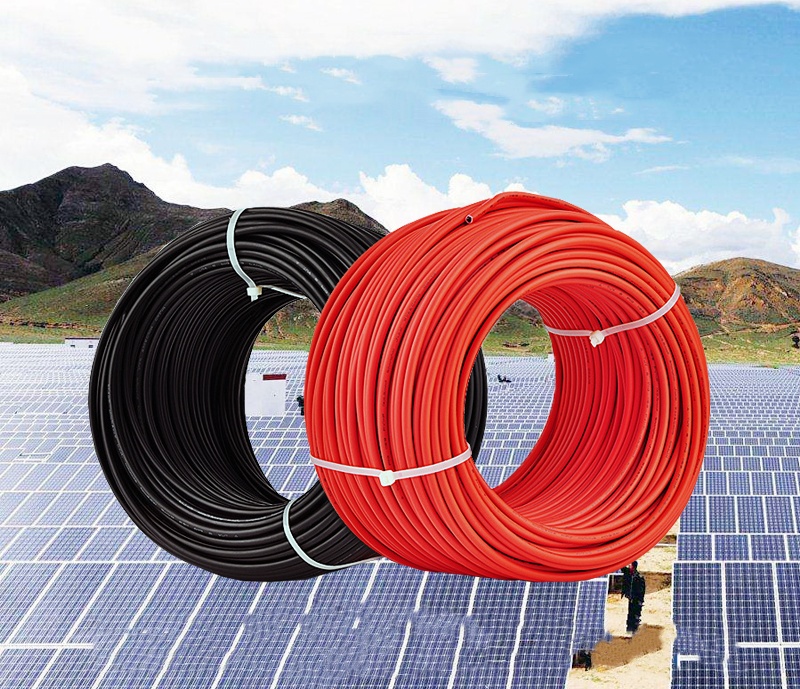
Cables constitute the basis for the proper functioning of the photovoltaic energy production system and are essential and important components of this system. There are many types of cables used in photovoltaic power generation systems. Depending on the characteristics of the cable and the installation method, we can distinguish five types of cables : special photovoltaic cables, Power cables, control cables, communications cables and radio frequency cables.
Special cable for photovoltaics
The cables used to connect strings of photovoltaic modules to junction boxes are generally special photovoltaic cables. Common models of these special photovoltaic cables include PV1-F and H1Z2Z2-K.
PV1-F
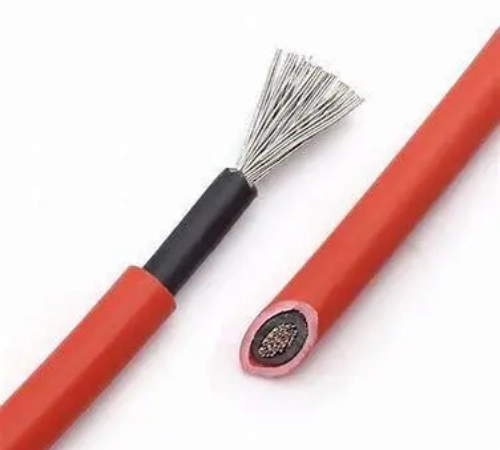
PV1-F is one of the common models of photovoltaic cables. It has characteristics such as good weather resistance, at high temperatures, and abrasion, as well as sufficient tensile strength, thus meeting the needs for modern photovoltaic electricity production. This type of cable can be used in harsh environments and has a very long lifespan. It is suitable for electrical connections of various photovoltaic systems. This cable can be installed in conduit, protected by pipes, and its routing and fixing can be ensured by the module supports, thereby reducing the impact of environmental conditions. This model of photovoltaic cable has a wide range of applications, mainly in the areas of base station communications, industrial power supply, meteorology, of television broadcasting, navigation lights, railways, Photovoltaic power plants, solar panel systems, wind generation systems and offshore wind farms. A criterion for evaluating the quality of PV1-F is the eccentricity rate of the cross section, the lower the eccentricity rate, the more stable the overall quality of the cable.
H1Z2Z2-K
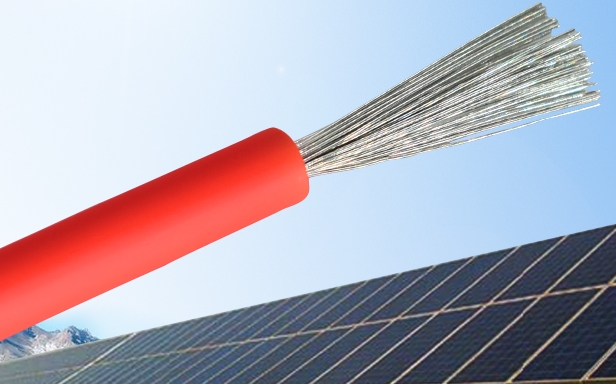
The H1Z2Z2-K model photovoltaic cable is a flame-retardant model, offering excellent performance in terms of fire resistance, suitable for photovoltaic systems requiring high safety requirements. This H1Z2Z2-K solar cable is used for interconnection of solar panels in photovoltaic installations such as solar panel arrays. It is suitable for fixed installation inside and outside of conduits or systems, but is not suitable for direct burial installations. The H1Z2Z2-K solar cable offers better UV and corrosion resistance, can withstand high temperatures and high humidity ; it also has good performance in terms of oil resistance, with acids, to alkalis and wear ; it is fireproof, with low release of smoke and without halogen. It is used for power connection in various fields such as communications, electricity, Meteorology, television broadcasting, navigation lights, railways and photovoltaic power plants where photovoltaic systems are used. It is also suitable for desert regions with strong day-night temperature variations, humid coastal regions with salt fog and regions with high radiation at high altitudes.
The launch of the H1Z2Z2-K photovoltaic cable aims to respond to the improvement in the performance of associated electrical equipment of photovoltaic power plants. Based on the basic physical structure of the PV1-F product, the H1Z2Z2-K has been optimized to further improve the electrical performance of the cable. Cable voltage changed from DC:1.0Kv and:Uo/U:0.6/1.0KV to DC:1.5Kv and :Uo/U:1.0/1.0KV. The purchasing trend in the market is gradually changing from PV1-F to product H1Z2Z2-K.
Power cable
Power cables are generally used to provide power. The models of power cables used in photovoltaic systems are generally of two types : ZRC-YJV22 et NH-VV.
ZRC-YJV22
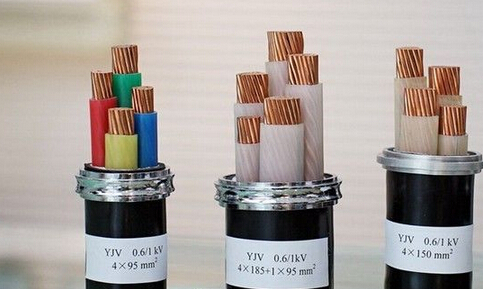
ZRC-YJV22 is a flame-retardant reticulated cable reinforced with a steel belt. This is the connection cable between the convergence box and the DC cabinet, between DC cabinet and inverter, between the inverter and the transformer, between the transformer and the distribution unit and between the distribution unit and the network.
This type of cable has a relatively rigid texture and a temperature rating of 90°C. It is easy to use, with low dielectric losses, resistance to chemical corrosion and installation without drop restrictions. Furthermore, this cable has high mechanical resistance. It is resistant to environmental stress, presents good performance in terms of thermal aging and electrical properties. ZRC-YJV22 can be buried directly. It is suitable for fixed installation and can meet the needs of different installation environments, such as underground installations, underwater, in canals and tunnels.
NH-VV
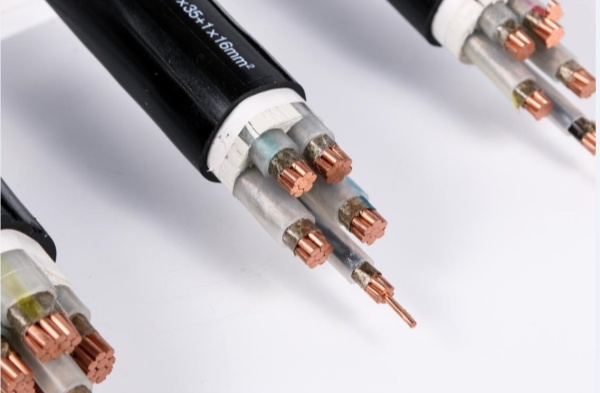
NH-VV is a fire-resistant power cable with copper conductor and PVC insulation and sheath. It is suitable for lines whose rated voltage is 0.6/1KV. Its allowable long-term operating temperature is 80° Celsius. The radius of curvature authorized during installation is as follows : single-core cable not less than 20 times the outer diameter of the cable, and multi-core cable not less than 12 times the outer diameter of the cable. The cable does not need to be preheated provided the ambient temperature is not below 0° Celsius at the time of installation. The installation tension is not limited by the drop. It is suitable for the fire resistance requirements of the occasion, can be placed in the room, tunnel and trench pipe. When installing, it should be noted that it cannot resist external mechanical forces and can be directly buried.
Control cable
The most common control cables in photovoltaic systems are ZRC-KVVP cables. The conductor of the ZRC-KVVP cable is made of copper, and the insulation and sheath are made of PVC. It is suitable for control circuits, monitoring and protection of nominal voltage of 450/750V and less. Its long-term allowable operating temperature is 70℃. Its minimum admissible radius of curvature must not be less than 6 times the outside diameter. It is generally placed indoors, in cable trenches, pipelines and other shielding requirements, fireproof fixed location.
Communication cables
The most common communication cables in PV systems are DJYVRP2-22 and RVVP cables.
DJYVRP2-22
The commonly used communication cable in photovoltaic systems is DJYVRP2-22 cable. The DJYVRP2-22 is a polyethylene insulated cable, polyvinyl chloride sheath, braided copper shield. This is a specialized flexible computer cable, suitable for electronic connection and automation cables requiring protection against interference, with a rated voltage of 500V or less.
DJYVRP2-22 cable features oxidation resistance, high insulation resistance, good voltage resistance and low dielectric coefficient. It can reduce mutual crosstalk between circuits and external interference while ensuring long life and high signal transmission quality. Its minimum radius of curvature must not be less than 12 times the outer diameter of the cable. This cable can be used in fixed installation at ambient temperatures between -40°C and 50°C. It is suitable for indoor use. It is suitable for indoor installation, in cable trenches, pipelines and other places where electrostatic shielding is necessary.
RVVP
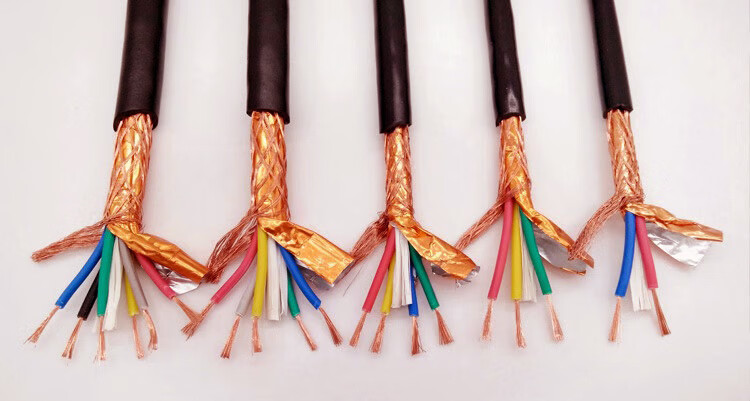
RVVP is a type of flexible cable whose conductor is made of copper and insulation, the PVC sheath and insulating screen. And it is also called anti-interference flexible cable for electrical connection. This is a type of communication cable that is suitable for alarm cables, security and other communications cables that require anti-interference data transmission, safe and effective.
The rated operating voltage of RVVP is 3.6/6KV. The long-term service temperature of the cable conductor is 90 ℃. The minimum authorized curvature radius is 6 times the outer diameter of the cable. It is mainly used as a communication cable to play the role of anti-interference. RVVP cable cannot be exposed to sunlight, the bottom core must be well grounded. It is commonly used in low circuit communication cables which need to suppress the intensity of electrical interference. It is placed in a steel tube and in a box. When laying in parallel with power cables, they should be kept as far away from each other as possible.
RF cable
SYV is a solid core coaxial cable used for RF applications. It uses polyethylene as insulation and polyvinyl chloride as protective sheath. Commonly used video cables in surveillance systems are mainly SYV75-3 and SYV75-5. If you need to transmit a video signal over a distance of 200 meters, you can use SYV75-3, and if the distance is 350 meters, you can use SYV75-5. These cables can be installed in conduits.
These are the cables commonly used in photovoltaic systems. The selection of these cables mainly depends on the specific needs and environmental conditions of the photovoltaic installation. Choosing the right cable is essential to ensure safe and stable operation of the circuit. If you are not sure which type of cable you should choose, do not hesitate to contact us, et ZMS will provide you more information about cables and help you choose the cable.