
Copper is a common metal in life and it has a wide range of applications. One of them is to serve as a conductive material in cables.
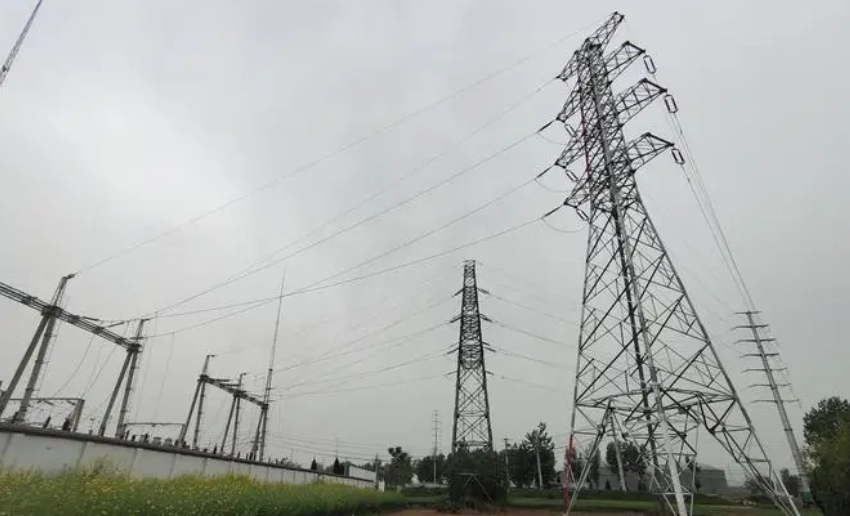
Power cables for electrical equipment. Cables used in power transmission equipment. Most of them are made of copper.
Not all cables are made with copper conductors. There are a number of other metals that can be used as conductors.
Copper Conductor Materials
Pure copper is a pink-red metal, the copper oxide film forming surface is purple, this is why pure industrial copper is often called copper or electrolytic copper. Its density is 8-9g/cm3, its melting point of 1083 ℃.
The conductivity of pure copper is very good, a large number of threads, of cables, of brushes and other manufactures.
Excellent plasticity, easy to process by hot and cold pressing, can be made into tubes, bars, fils, bands, bands, plaques, leaves, etc.
Good electrical conductivity is the key to copper as a conductive material.
Copper has good electrical conductivity, electrical conductivity is very high. It is much superior to that of other materials commonly used to make conductors. For example, l’aluminium, steel or iron.
This means that with copper conductors in wires and cables, current can flow more efficiently.
There is less energy loss and power can be transmitted over longer distances
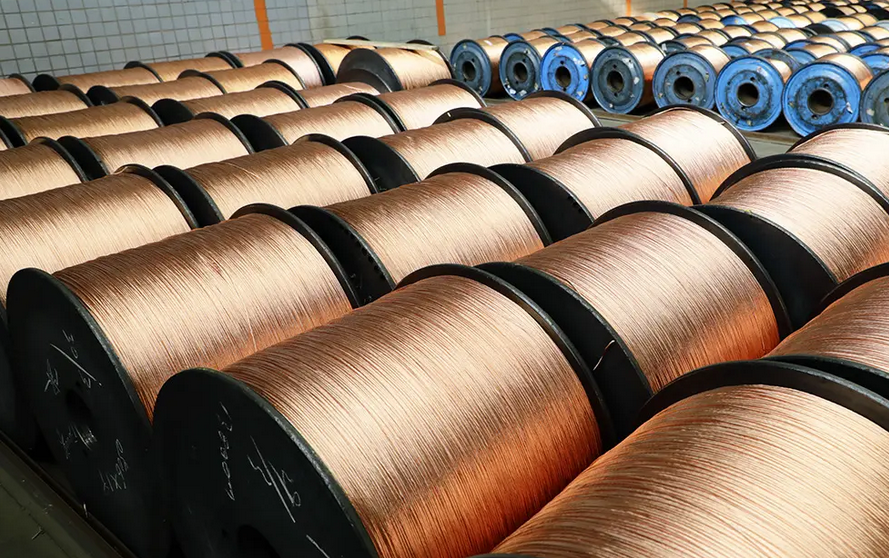
What Are the Advantages of Copper Conductors ?
Copper has good corrosion resistance and can be used in various environments. This is extremely important in some chemical plants or in areas where there is acid rain.
Copper resists oxidation, to corrosion and embrittlement, which makes it an excellent material.
It can be used in a wide variety of wire and cable categories. These include low voltage cables, XLPE cables, SWA cables, etc.
We have the impression that metals are hard, and some metal wires are difficult to break and bend by hand. But copper is soft and malleable.
This means it can be folded easily and is much easier to install in cable ducts. It is also easier to work with during processing and assembly.
Copper has good thermal conductivity. Wires and cables generate heat when they carry current.
Copper conductors dissipate heat faster and keep operating temperature stable.
For each temperature increase of 10 degrees Celsius, the signal attenuation of a cable increases by 4 %.
HAS 60 degrees Celsius, the transmission performance of a cable is less good than that of 20 degrees Celsius.
Copper reserves are immense. The Copper Development Association (CDA) estimates currently known global copper reserves at nearly 5,8 trillions of books.
Copper is highly recyclable, and recycled copper can be processed twice for reuse.
What Are the Disadvantages of Copper Conductors? ?
Copper is susceptible to oxidation and corrosion and requires surface protection, under penalty of compromising its performance and longevity.
The hardness of copper is low, it is easy to scratch and deform upon impact.
The price of copper wire is relatively high, which explains the high cost of manufacturing copper conductor cables.
Copper is heavy and limited in the field of overhead cables. Aluminum conductors are generally used as conductive material for overhead cables.
Why Aluminum Isn’t Used on a Large Scale ?
Aluminum is also a common conductive material. It constitutes a good alternative in certain applications.
Aluminum has many advantages, but as a driver, it presents many disadvantages for the transmission of energy.
Aluminum conductors are cheaper. Aluminum is half the price of copper for the same size specification. There is therefore an advantage in terms of production costs.
Aluminum's lower density makes aluminum conductors lighter, or a third of the weight of copper.
The advantage is greater for suspensions and short spans. Widely used in overhead cables.
Oxidation of aluminum in air produces a thin film of aluminum oxide. This prevents further oxidation of the conductor.
Aluminum conductors have poor electrical conductivity, which only represents 60 % from that of copper. This leads to significant losses during energy transmission..
To obtain equivalent conductivity, larger aluminum conductors are used, which reduces ease of use.
What's more, these larger dimensions require more outer sheath and insulation, which increases the cost.
Practical Applications of Copper Conductors
Copper is an excellent electrical conductor, with low resistance and high conductivity.
It conducts electricity well, reducing energy loss and resistance.
Copper is therefore widely used in a range of electrical and electronic equipment., as well as in energy transmission and distribution systems.
Copper is the main material for wires and cables. Copper conductors enable the transmission of electricity from the power plant to the consumer.
It is used in a wide range of electrical equipment such as buildings, automobiles, ships and planes.
Copper also exhibits good workability and malleability.
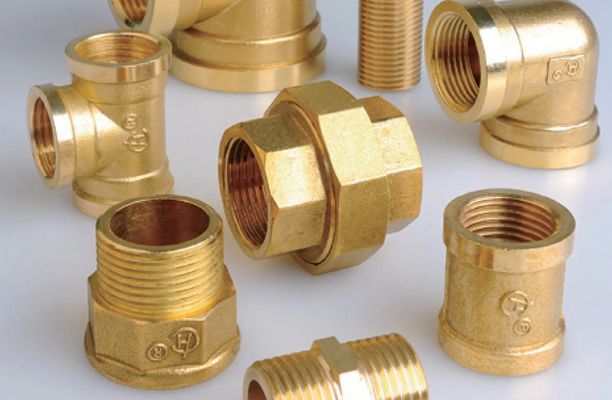
It can be easily machined into different shapes and sizes, both thermally and mechanically. It is commonly used in pipe manufacturing, of fittings, joints and connectors.
Copper also has excellent antibacterial properties. Copper ions have the ability to sterilize and stop the spread of bacteria.
Copper is used in a wide range of medical and health applications.
Copper products are often used in medical equipment and instruments to ensure a cleaner and safer environment.
Copper also has good thermal conductivity and is able to transfer heat quickly, which makes it very useful in many applications.
Copper is used in the manufacture of radiators and cooling equipment. Examples include heat sinks in computer central units., automotive coolers and radiators.
Furthermore, copper is widely used in applications such as heaters, refrigeration equipment and printed circuit boards.
ZMS Cable manufactures different types and sizes of copper cables. These include low voltage cables, of XLPE cables, of control cables, submarine cables, etc.
We support cable customization to meet your product needs.
If you need copper conductor cables, contact ZMS Cable today and we will provide you with a reliable, free quote.
Thank you, your article surprised me, there is such an excellent point of view. Thank you for sharing, I learned a lot.
It’s amazing to pay a quick visit this website
and reading the views of all mates concerning this article, while I am also zealous
of getting knowledge.