
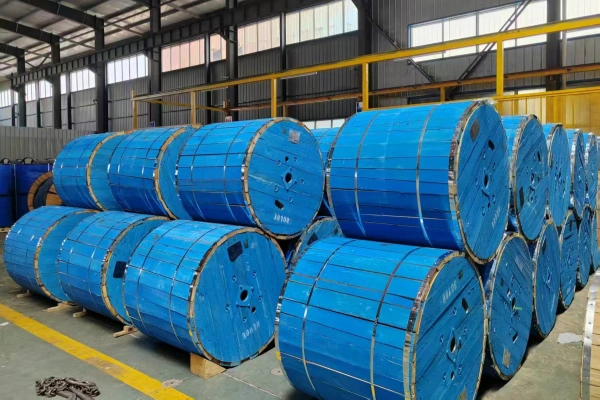
IEC cable 60228
The NORME IEC 60228 constitutes a major international reference for electric cable drivers. This standard defines the nominal section of the driver, electrical resistance in direct current and the different categories of conductors. It guarantees the quality and performance of the cables, as well as their safety, their reliability and international compatibility.
Types of IEC cables 60228 available at ZMS Cable
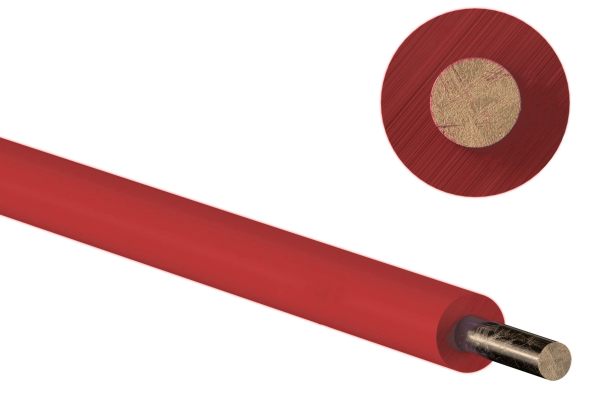
Class 1 – Solid conductors
- Characteristic : single solid copper or aluminum conductor, Compliant with IEC standard 60228 (IEC cable 60228 - class 1).
- Corresponding cable types : mainly low voltage power cables.
- Typical applications : fixed installations in residential and industrial buildings, underground electrical networks, wall passages and technical ducts.
- Technical advantages :
Simple and robust structure, ideal for permanent installation;
Lower cost and more economical compared to stranded or flexible conductors;
Excellent electrical stability and good conductivity. - Boundary :
Unsuitable for equipment requiring frequent travel;
High rigidity, not suitable for environments subject to constant vibration.
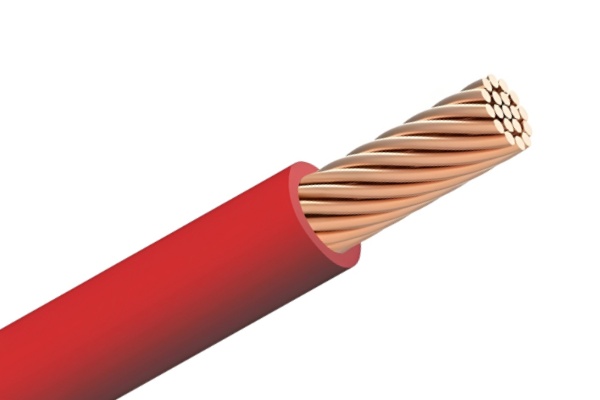
Class 2 – Stranded conductors
- Characteristic : made of several twisted copper or aluminum strands (stranded conductor), in accordance with IEC standard 60228 (IEC cable 60228 Class 2).
- Corresponding cable types : mostly medium and high voltage power cables.
- Typical applications : electrical distribution lines, industrial networks, energy infrastructures and large industrial installations requiring high mechanical resistance.
- Technical advantages :
Reliable electrical resistance and good conductivity;
Better resistance to vibrations and mechanical stress compared to solid conductors;
Suitable for installations requiring a certain level of flexibility while maintaining robustness and stability;
Suitable for carrying high currents and long distances. - Boundary :
Higher cost than solid conductors;
Less flexible than class drivers 5 or 6, not suitable for dynamic applications requiring great flexibility (par ex. cables for mobile machines or robots).
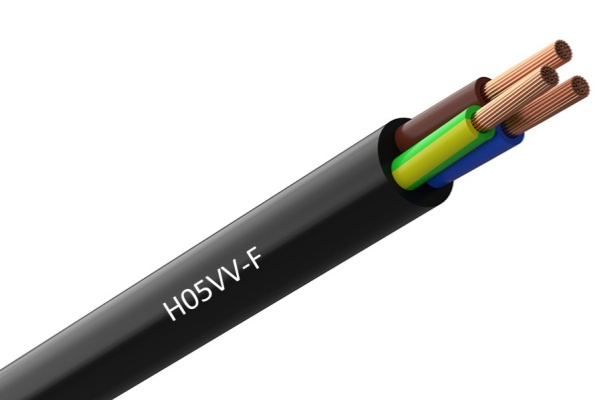
Class 5 – Flexible conductors
- Characteristic : flexible conductor made of several thin copper or aluminum strands, in accordance with IEC standard 60228 (IEC cable 60228 Class 5).
- Corresponding cable types : mainly control and instrumentation cables.
- Typical applications : automation lines, industrial control panels, installations requiring complex routes and easy-to-bend cables.
- Technical advantages :
Excellent flexibility for installations with limited space or complex routes;
Mechanical resistance adapted to curved installations and installation constraints;
Stable electrical performance and good conductivity. - Boundary :
Cost higher than solid or stranded conductors;
Not recommended for extra high voltage applications;
Not suitable for applications requiring long-term fixed installation without flexibility requirements.
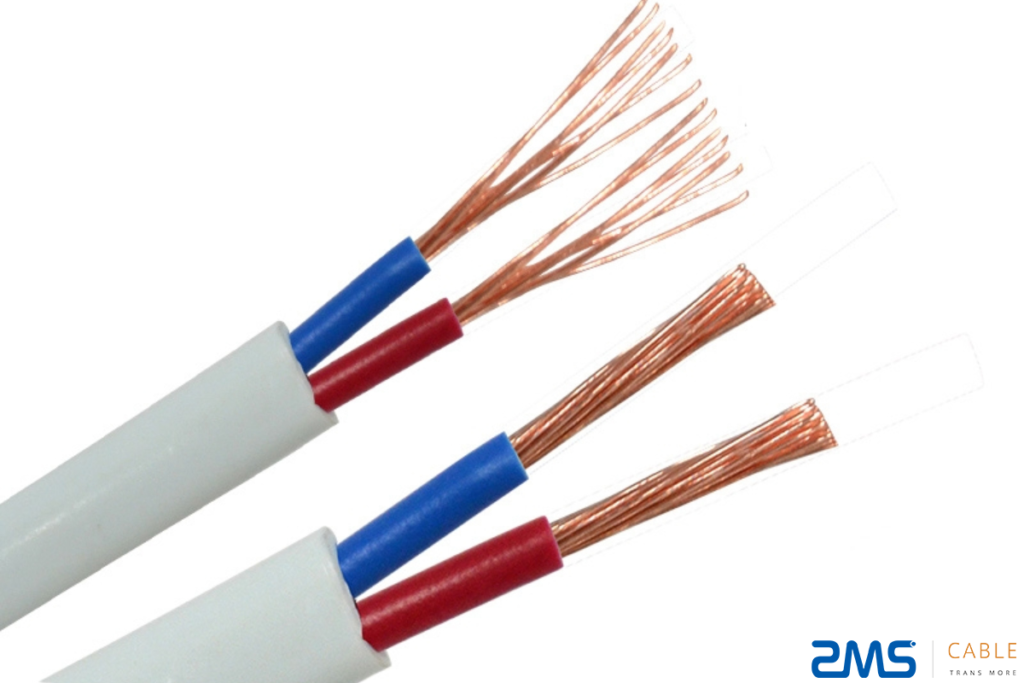
Class 6 – Very flexible conductors
- Characteristic : flexible conductor made of several thin copper or aluminum strands, , designed according to IEC standard 60228 (IEC cable 60228 Class 6).
- Corresponding cable types : mainly used for special cables, such as robot cables and flexible cables dedicated to mobile equipment.
- Typical applications : Industrial robots, automated arms, equipment requiring frequent movements and dynamic cables.
- Technical advantages :
Maximum flexibility and fatigue resistance for repeated movements;
Reliable conductivity and stable electrical performance;
Automation lines, industrial control panels, installations requiring complex routes and easy-to-bend cables. - Boundary :
Highest cost among the four classes;
Not suitable for static installations where extreme flexibility is not required.
IEC Conductor Sizes 60228
| Conductor Section Size | ||||
| 0.5mm² | 6mm² | 70mm² | 300mm² | 1200mm² |
| 0.75mm² | 10mm² | 95mm² | 400mm² | 1400mm² |
| 1mm² | 16mm² | 120mm² | 500mm² | 1600mm² |
| 1.5mm² | 25mm² | 150mm² | 630mm² | 1800mm² |
| 2.5mm² | 25mm² | 185mm² | 800mm² | 2000mm² |
| 4mm² | 50mm² | 240mm² | 1000mm² | 2500mm² |
Direct current electrical resistance of conductors (IEC 60228, 20 °C)
| Nominal section (mm²) | Maximum resistance (Ω/km) | |||
| Copper class 1/2 | Copper class 5/6 | Aluminum Class 1/2 | Aluminum Class 5/6 | |
| 1,5 | 12,1 | 13,3 | – | – |
| 2,5 | 7,41 | 7,98 | – | – |
| 4 | 4,61 | 4,95 | – | – |
| 6 | 3,08 | 3,30 | – | – |
| 10 | 1,83 | 1,91 | 3,08 | 3,30 |
| 16 | 1,15 | 1,21 | 1,91 | 1,99 |
| 25 | 0,727 | 0,780 | 1,20 | 1,26 |
| 35 | 0,524 | 0,554 | 0,868 | 0,900 |
| 50 | 0,387 | 0,386 | 0,641 | 0,653 |
| 70 | 0,268 | 0,272 | 0,443 | 0,461 |
| 95 | 0,193 | 0,206 | 0,320 | 0,328 |
| 120 | 0,153 | 0,161 | 0,253 | 0,268 |
| 150 | 0,124 | 0,129 | 0,206 | 0,217 |
| 185 | 0,0991 | 0,106 | 0,164 | 0,175 |
| 240 | 0,0754 | 0,0801 | 0,125 | 0,130 |
| 300 | 0,0601 | 0,0641 | 0,100 | 0,108 |
| 400 | 0,0470 | 0,0486 | 0,0778 | 0,0822 |
| 500 | 0,0366 | 0,0384 | 0,0605 | 0,0642 |
| 630 | 0,0283 | 0,0307 | 0,0481 | 0,0510 |
| 800 | 0,0221 | 0,0241 | 0,0366 | 0,0389 |
| 1000 | 0,0176 | 0,0191 | 0,0290 | 0,0308 |
Conversion of conductors according to IEC 60228 : AWG, kcmil et section en mm²
Council of our experts : To choose your electrical cables carefully, it is essential to understand the correspondence between the different measurement systems for electrical conductors. The NORME IEC 60228 defines the nominal section in mm², which is widely used internationally. However, in many countries, especially in North America, other measurement systems like AWG (American Wire Gauge) and kcmil remain very widespread.
Chez ZMS Cable, We advise our customers to use this conversion table as a handy reference tool. It facilitates comparison between sections expressed in mm², an AWG et a kcmil, ensuring your electrical cables meet international standards while meeting the specific needs of your projects.
| AWG | kcmil | ||||||
| Driver size | Nominal section (mm²) | Driver size | Nominal section (mm²) | Driver size | Nominal section (mm²) | Driver size | Nominal section (mm²) |
| 20 | 0,519 | 4 | 21,2 | 250 | 127 | 750 | 380 |
| 18 | 0,823 | 3 | 26,7 | 300 | 152 | 800 | 405 |
| 16 | 1,31 | 2 | 33,6 | 350 | 177 | 900 | 456 |
| 14 | 2,08 | 1 | 42,4 | 400 | 203 | 1000 | 507 |
| 12 | 3,31 | 1/0 | 53,5 | 450 | 228 | 1200 | 608 |
| 10 | 5,26 | 2/0 | 67,4 | 500 | 253 | 1250 | 633 |
| 8 | 8,37 | 3/0 | 85,0 | 550 | 279 | 1500 | 760 |
| 6 | 13,3 | 4/0 | 107 | 600 | 304 | 1750 | 887 |
| – | – | – | – | 650 | 329 | 2000 | 1010 |
| – | – | – | – | 700 | 355 | – | – |
Scope of application of the IEC standard 60228
| Cable type | Compliant with IEC 60228 |
| Power cables (BT, MT, HT) | ✔ Oui |
| Control cables | ✔ Oui |
| Instrumentation cables | ✔ Oui |
| Flexible cables (Class 5 et 6) | ✔ Oui |
| Special industrial cables (custom made) | ✔ Oui |
| Telecommunication cables | ✖ Non |
Noticed : THE telecommunications cables do not fall within the main scope of the IEC standard 60228. Certain requirements (ex. electrical resistance of copper conductors) can, however, serve as a reference.
FAQ – IEC 60228 and electric cables
Q1 : What is an IEC cable 60228 ?
R : L’IEC 60228 is not a specific cable model, but one international standard established by the International Electrotechnical Commission (the). It defines the requirements for electrical conductors of the electrical cables, in order to guarantee their performance and compatibility worldwide.
Q2 : What exactly does the IEC standard define? 60228 for electrical cables ?
R : IEC standard 60228 covers both electrical and structural characteristics of conductors :
- Driver Classes : Class 1 : massive conductor; Class 2 : stranded conductor; Class 5 : flexible conductor; Class 6 : very smooth driver
- Wiring method (stranding) : minimum number of threads, diameter of strands for classes 2, 5 et 6.
- Nominal section (mm²) : standardized dimensions with defined tolerances.
- Compact or rounded conductors : to optimize the diameter and structure of the cable.
- Surface quality : smooth conductors, without cracks or burrs, to ensure good conductivity and mechanical resistance.
Q3 : Are the conductors of telecommunications cables affected by the IEC? 60228 ?
R : Non. The standard IEC 60228 only applies to electrical power cables, control and instrumentation. THE telecommunications cables use other specific standards, suitable for the transmission of signals and not for the transport of electrical power.
Q4 : How to choose the correct nominal section of an electrical cable according to the IEC standard 60228 ?
R : The choice depends on the intensity of the current, the length of the line and the installation conditions. The nominal section in mm² allows the current carrying capacity to be calculated and ensures that the resistance remains within the limits imposed by the IEC standard 60228.
Q5 : What is the difference between mm², AWG and kcmil in the choice of electrical conductors ?
R : The mm² is the unit standardized by the IEC standard 60228, while theAWG and the kcmil are common in North America. To avoid any errors, it is recommended to use a conversion table, like the one proposed by ZMS Cable, in order to compare the different units.
Q6 : Where can I buy IEC compliant cables 60228 ?
R : Chez ZMS Cable, we offer a wide range of electrical cables compliant with the standard IEC 60228, with different conductor classes and nominal sections. Our products guarantee reliable performance, a long lifespan and can be personalized according to your needs.
Services & Delivery at ZMS Cable
- Personalized manufacturing service (OEM / ODM) : Custom cable design and production according to your technical specifications, with customization of the marking, Colors and packaging.
- Rapid global logistics : Shipping shipping, terrestrial or air to more than 120 pays ; Flexible delivery according to your deadlines.
- Certified quality : All products are tested before shipping ; conformity this / IEC / ISO ; test reports provided on request.
- Neat and customizable packaging : ZMS cables are packaged on wooden coils, wavy boxes or drums, with hermetically sealed ends for moisture protection. Outdoor marking can be printed on request with waterproof materials.
- Dedicated technical support : Our engineers and advisers accompany you in the choice of the electric cable most suited to your installations, in accordance with local standards.