
Optical Fiber Arrives in the Central African Republic
Monday, in the presence of partners, the infrastructure of the Central African Fiber Optic Backbone project (CAB) were officially transferred to the Central African government.
The next stage of this high-speed Internet connectivity project will be its commercialization by mobile telephone companies..
The project, launched four years ago, enters its operational phase, which means that the Central African Republic is entering the digital era thanks to its high-speed digital communication channel.
The installation of optical fiber covers more than 935 kilometers and connects the CAR to the Democratic Republic of Congo, in Congo-Brazzaville and Cameroon.
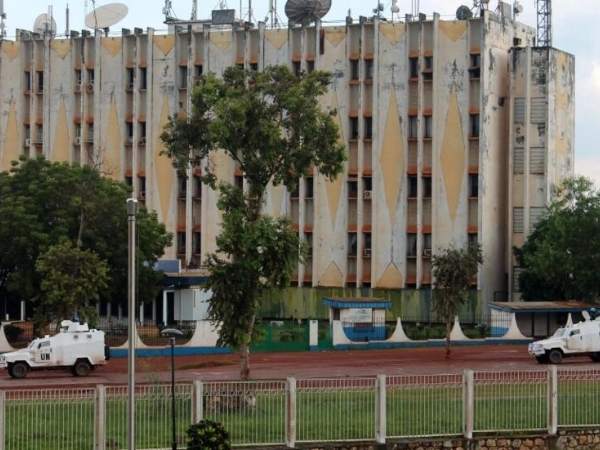
For optimal network operation, 11 relay stations were built in Bangui and strategic towns in the north of the country.
This network will allow citizens, government agencies and businesses to have access to reliable and inexpensive telecommunications services.
“The whole country must be connected […] We are a continental country. Work is needed, trenches to get here. Now that it's done, we must optimize to reduce the handicap of isolation”, confides Faustin Archange Touadéra, the president of the Republic.
Return to the Start of the Project
The CAB project was born in May 2007 during the meeting of heads of state of the Central African Economic and Monetary Community (CEMAC) in Ndjamena, Central African heads of state wishing to implement a high-speed telecommunications network in accordance with the regional integration strategy.
In January 2012, ECCAS chiefs and government leaders approved the CAB project.
This project aims to develop connectivity accessible to all, government electronic services and reduce access costs by connecting Central African countries to fast telecommunications infrastructure.
The project started in October 2019 with funding from 220 billions of African francs (environ 45 million euros) by the African Development Bank and the European Union.
It aims to install more 1 000 kilometers of optical cables connecting Cameroon, the Democratic Republic of Congo, Gabon, the Central African Republic, Equatorial Guinea and Chad, as well as the creation of national data centers in Central Africa, electronic management platforms, of 20 digital community centers and digital training centers.
During the fourth meeting of the CAB project steering committee in Yaoundé, the Minister of Minpostel of Cameroon made a speech inviting interested parties of the project to participate more in the implementation of activities in order to stimulate the development of the digital economy of CEMAC.
This project will ultimately allow Central African countries to access submarine cables from an access point on the Cameroonian coast.
Steady Progress on the Project
The fiber optic connection between Gabon and the Republic of Congo was launched in 2015 et, in April 2018, the Republic of Congo has completed its broadband connection with Gabon.
Gabon side, to interconnect with the Republic of Congo, 1100 km of optical fibers have been deployed across the country to the border, representing the phase 1 of the part 4 from Gabon.
Jointly financed by the World Bank with 33 million US dollars (176 billion CFA francs) and carried out by the China International Communications Service Company (CCSI).
Republic of Congo side, jointly financed by the World Bank, Huawei a installé 520 km of optical fibers across the country to the border, representing the party 3 from CAB Congo.
The Minister of Posts and the Digital Economy, Léon Juste Ibombo, announced this during the inauguration ceremony.:“we came to launch the construction work of the fiber optic network between Congo and the CAR, knowing that there is a large part of the border between the two countries which is under water.
This barge contains the necessary equipment to be able to carry out fiber optic interconnection work between our two States”.
This work will include the deployment of 285 km of optical fibers in the river bed., reinforced with steel to improve their efficiency and safety on the river bed. Furthermore, civil engineering and technology construction sites will also be added on the Pokola-Ouesso-Kabo-Bomassa-Bayanga-Salo axis.
For both countries, this telecommunications infrastructure will help reduce high telecommunications/ICT costs, to encourage access to broadband for citizens and improve the business environment.
The 8 august 2020, construction of the fiber optic link between the Democratic Republic of Congo and Cameroon has started.
The 2 June 2021, during a working meeting with the Minister of Posts and Digital Economy Léon Juste Ibombo in Brazzaville, the capital of the Democratic Republic of Congo, the head of the project steering committee revealed that the construction of optical fiber between Cameroon and the Democratic Republic of Congo was completed in 98%.
The completion of this project will reduce costs and open up digital technology in the border regions of the two countries, which will help reduce the digital divide.
The Minister of Posts and Telecommunications of Cameroon, Minette Bombs Like It, and the Minister of Posts and Telecommunications of the Central African Republic, Justin Gourna Zacko, signed a memorandum of understanding in Yaoundé on Wednesday 4 May to finalize the connection of the optical fiber communication network as part of the Central African-Cameroon High Band Cable project (CAB) avant 2023.
The State of Telecommunications Installations in Africa
L’Economic Community of Central African States (ECCAS) is a regional organization that brings together 10 central African countries, aimed at strengthening economic cooperation and solidarity between its members.
The issue of telecommunications infrastructure in this region is crucial for the economic development and connectivity of member countries.
Unfortunately, Most ECCAS countries face a deficit in modern and reliable telecommunications infrastructure, which limits their ability to integrate the latest information and communication technologies (TIC) in their economic development.
Existing telecommunications networks are often inefficient and face interconnection difficulties between member countries, which makes the circulation of information and economic cooperation difficult.
Fortunately, the region has taken steps to remedy this situation. In 2019, the African Development Bank and the European Union launched the African Backbone Cable System project (CAB).
The aim of this project is to install optical fibers on the connection axis between Cameroon and Congo, and build a national data center.
Besides the CAB, many other projects have also been implemented to develop telecommunications infrastructure in the region.
For example, digital technology training centers have been established in several countries to strengthen local workforce skills, while initiatives to improve digital governance have been put in place to increase transparency and accountability.
The issue of telecommunications infrastructure in ECCAS countries remains a significant challenge for the economic development of the region.
However, ongoing efforts to strengthen telecommunications infrastructure, such as the CAB project, is good news for member countries and can pave the way for a more connected and prosperous future for ECCAS.
Why Fiber Optic Cables Are So Important for Telecommunications
Fiber optic cables have become one of the key elements of our modern connected world. They play an important role in high-speed data transmission across the globe.
First of all, it is important to understand the composition of a fiber optic cable. It is made up of several optical fibers, which are actually thin rods of glass or plastic capable of carrying information at the speed of light. Light signals are transmitted through fibers through a process called total internal reflection.
Around these optical fibers, there are several layers of protection, such as the plastic outer sheath which protects the fibers from mechanical damage. There is also a layer of aramid covering which reinforces the outer sheath. Some cables also have steel or aluminum wire ropes to reinforce their structure.
The number of fibers in a cable depends on its applications. Cables for local networks (LAN) can have a single fiber, while long distance communications cables can have several dozen fibers.
Fiber optic cables must be designed to withstand harsh conditions such as temperature variations, bad weather, sea conditions and safety incidents.
They can be buried directly in the ground, laid on the seabed or attached to telecommunications poles to minimize mechanical damage.
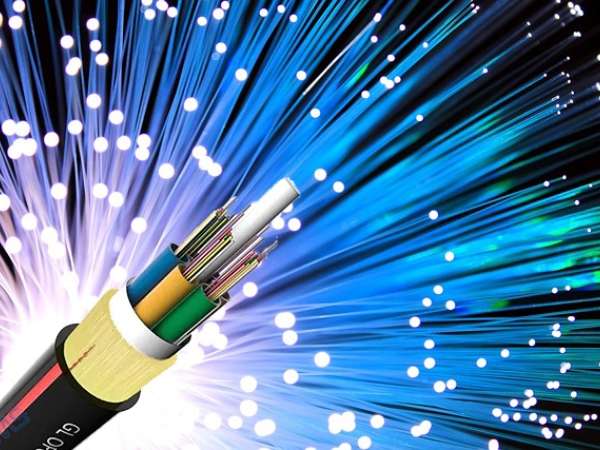
Secondly, Fiber optic cables have significant advantages over other data transmission methods such as copper cables or wireless networks.
They enable faster and more reliable data transmission, because light signals are not affected by electromagnetic interference.
Which makes them more reliable than copper cables, which may be affected by interference.
What's more, fiber optic cables are very insensitive to transmission errors, which ensures the quality of the data transmitted.
In addition to reliability, fiber optic cables also provide high data transmission capacity.
Fiber optic cables can carry huge amounts of data at high speeds, making them ideal for high speed applications, such as high definition television and data streaming.
What's more, fiber optic cables do not wear out over time, making them particularly suitable for long-term applications.
Finally, fiber optic cables play an important role in the development of countries' telecommunications infrastructure. Many governments are investing in the deployment of fiber optic cables to improve their telecommunications networks.
This allows their citizens to have access to superior quality communication services, such as high-speed Internet, quality mobile phone services and streaming services.
How to Lay Fiber Optic Cables
Optical fiber cables play a crucial role in modern telecommunications infrastructure. Laying fiber optic cables can be a complex process, but is necessary to enable reliable and rapid data transmission.
Globally, the most common method of laying fiber optic cables is underwater laying.
Laying submarine fiber optic cables is a complex and delicate process that involves many technical challenges, economic and environmental.
Submarine cables are the most common way to connect telecommunications networks around the world.
They play a crucial role in the rapid and reliable transmission of digital data over long distances. However, laying submarine cables is a significant logistical challenge that involves a large amount of preliminary study and planning.
To lay an underwater fiber optic cable, it is necessary to take into account many factors, such as weather conditions, water depths, the seabed, naval traffic zones and environmental regulations.
It is also important to take into account elements potentially harmful to the cable, such as wrecks, minefields, underwater storms and marine animals.
The process of laying the submarine fiber optic cable usually begins with a thorough survey of the area where the cable will be laid.
This involves collecting information about the seabed, weather conditions, naval traffic zones and environmental regulations.
Once this information has been collected, it is possible to determine the best paths for laying the cable and to identify elements potentially harmful to the cable.
The laying itself is carried out by specialized vessels which transport the necessary cable and laying equipment. These may include lifting equipment, underwater positioning devices, offshore support equipment and cable protection equipment.
Once the ship is in place, The cable is deployed using specialist equipment and is buried in the seabed to protect it from potentially harmful environmental elements.
Once placed, fiber optic cables must be tested to ensure optimal operation. Tests may include checking the quality of light transmission through the fibers, as well as cable insulation to avoid electromagnetic interference.
The process of laying underwater fiber optic cables is expensive and complex, but it is necessary to enable the global telecommunications infrastructure to operate reliably.
Submarine cables are the most common way to connect telecommunications networks around the world, and they play a crucial role in the rapid and reliable transmission of digital data
By following the development of the CAB project, we can see how laying fiber optic cables can help grow the digital economy in the region.
Cables enable rapid data transmission between countries, which can stimulate economic growth by facilitating trade and investment.
What's more, by providing quality connectivity, cables can also help expand online services, such as e-government, that can improve the lives of citizens.