
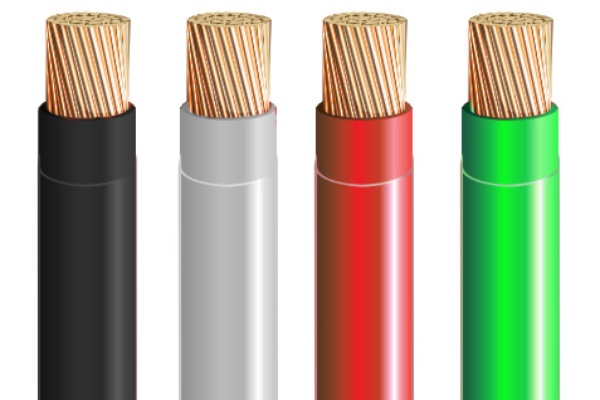
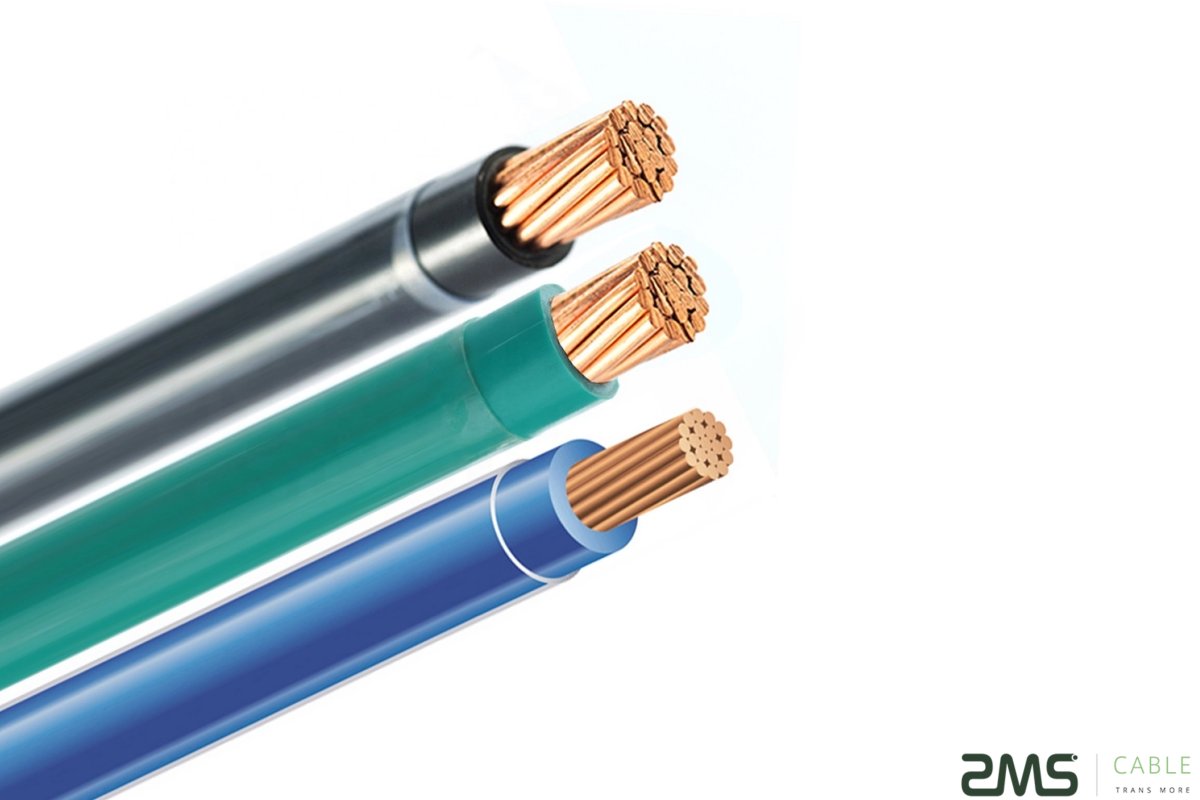
- Flashy cable | High temperature resistance 90 °C | Protection against rodents and termites | Lightness for conduit | Certification export | Low smoke and halogen free
- Double protection nylon + PVC, oil and chemical resistant, doubled lifespan compared to standard cables.
- Operating temperature : -40 °C to 90 °C, Suitable for dry and humid environments, ideal for photovoltaics, industry and housing.
Product description
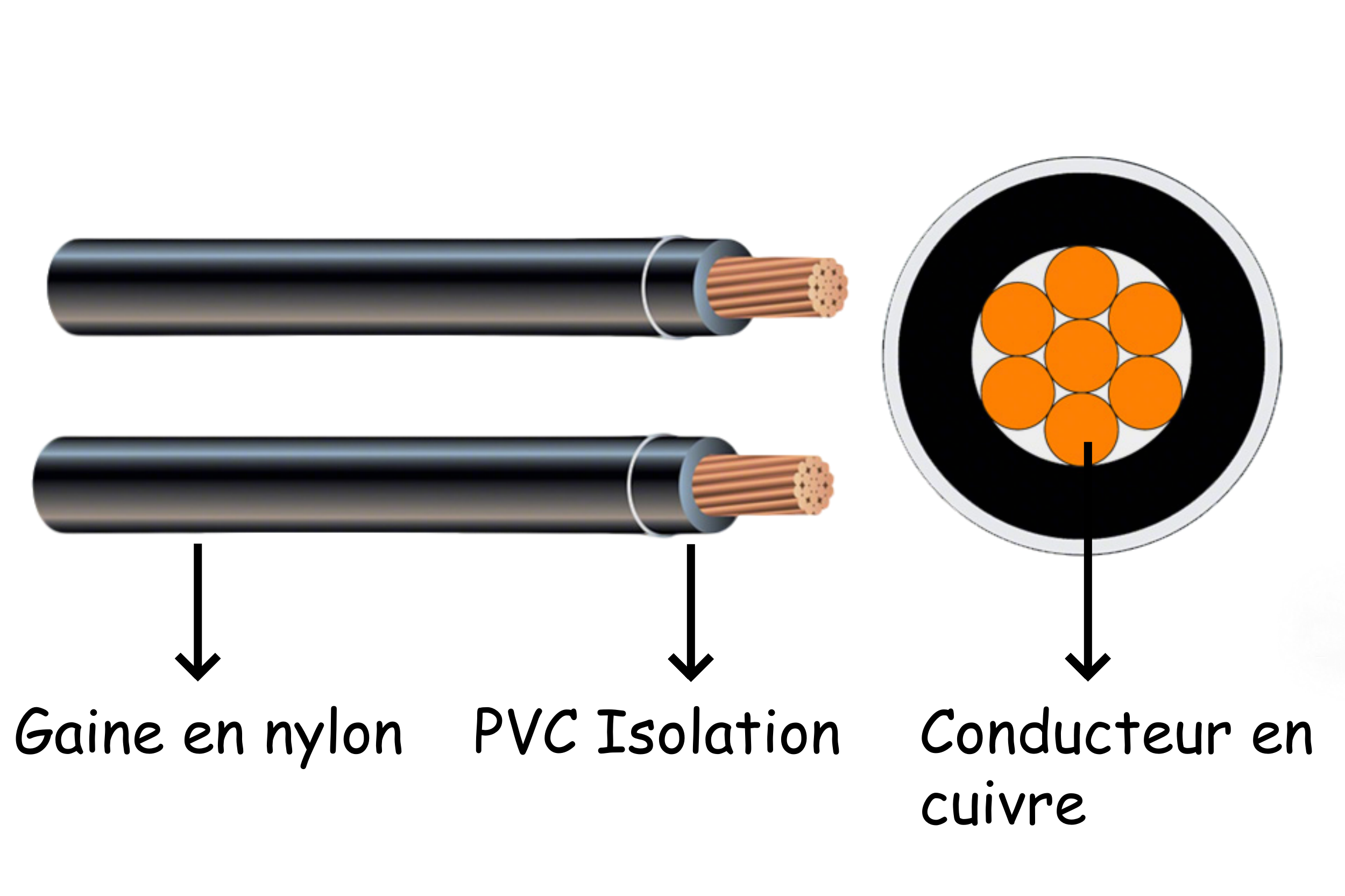
THHN/THWN-2 cable is a versatile American standard electrical cable, with a nominal voltage of 600V. The THHN has a nylon sheath, while the THWN-2 has a PVC jacket. Both types are insulated with flame retardant PVC and withstand temperatures up to 90°C in a dry environment / humid. Their double-layer structure (PVC Ignifuge + nylon) offers excellent resistance to wear and chemicals. They are widely used in the electrical distribution of buildings (air conditioning, elevators), power supply of industrial equipment (oil resistance and dynamic flexing) as well as in photovoltaic and energy storage systems.
Construction
Unshielded cable
| Component | THHN | Thwn-2 |
| Driver | Copper receipt (toronné classe B) | Copper receipt (compact class C stranded) |
| Stranding density : ≥90% | Stranding density : ≥95% | |
| Isolation | PVC (Vinyl polychloride) | PVC (Vinyl polychloride) |
| Rated temperature : 90°C (in a dry environment) | Rated temperature : 90°C (in a humid environment) / 75°C (in a dry environment) | |
| Sheath | Nylon | PVC |
| ZMS CABLE can Customize cables according to your material and specification requirements. | ||
Structure with shielding (additional components)
| Component | Settings |
| Screen | Structure : Aluminum foil (thickness 0,05 mm) + tinned copper braid (coverage rate 90%) |
| Shield resistance : ≤25 mΩ/m | |
| Outer sheath | Material : PVC (standard) or LSZH (low smoke and halogen free) |
| Thickness : 1,2 mm (12 AWG) | |
| Fire resistance : IEC 60332-1 |
Applications of THHN/THWN-2 cable
- Building sector : Power supply for home renovations, lighting wiring, particularly suitable for electrical systems in high-rise buildings and collective residences.
- Industrial environments : Electrical connections for factory equipment and machine tools, its heat and oil resistant characteristics are suitable for chemical and manufacturing environments.
- Public infrastructure : Fixed installation in commercial buildings, mining and energy storage systems, meeting the needs of high loads and complex environments.
- Renewable energies sector : Installation of outdoor cables in photovoltaic power plants and wind farms, with exceptional performance in weather and corrosion resistance.
- Household appliances : Connections for electrical devices in humid environments (refrigerators, making things, etc.), compliant with UL and CE safety standards.
Standard
UL 83 ( THHN ) 、UL 44 ( Thwn-2 ), NEC, NTC 1332
Settings
| Tension nominale | 600 V |
| Minimal curvature radius | 8 × outside diameter |
| Tensile strength | ≥20 MPa (nylon sheath) |
| Temperature range | -40 ℃ to 90 ℃ (temporarily until 105 ℃) |
| Features | Abrasion resistance, to UV rays, with acids and bases, as well as oils (test ASTM D471, 120 hours without degradation) |
Technical data
| Driver | Average insulation thickness | Minimum sheath thickness | Nominal external diameter | Approximate net weight | ||||||||
| Size | Nominal section | Number of strands | Driver diameter | |||||||||
| AWG-kcmil | mm² | mm | mils | mm | mils | mm | mils | mm | mils | mm | mils | |
| 14 | 2.08 | 1 | 1.63 | 64 | 0.38 | 15 | 0.10 | 4 | 2.6 | 102 | 22 | 15 |
| 12 | 3.31 | 1 | 2.05 | 81 | 0.38 | 15 | 0.10 | 4 | 3.0 | 118 | 34 | 23 |
| 10 | 5.26 | 1 | 2.59 | 102 | 0.51 | 20 | 0.10 | 4 | 3.8 | 150 | 54 | 36 |
| 14 | 2.08 | 7 | 1.80 | 71 | 0.38 | 15 | 0.10 | 4 | 2.8 | 110 | 24 | 16 |
| 12 | 3.31 | 7 | 2.26 | 89 | 0.38 | 15 | 0.10 | 4 | 3.2 | 126 | 37 | 25 |
| 10 | 5.26 | 7 | 2.87 | 113 | 0.51 | 20 | 0.10 | 4 | 4.1 | 161 | 58 | 39 |
| 8 | 8.37 | 7 | 3.61 | 142 | 0.76 | 30 | 0.13 | 5 | 5.5 | 217 | 96 | 65 |
| 6 | 13.3 | 7 | 4.52 | 178 | 0.76 | 30 | 0.13 | 5 | 6.3 | 248 | 143 | 96 |
| 14 | 2.08 | 19 | 1.80 | 71 | 0.38 | 15 | 0.10 | 4 | 2.8 | 110 | 24 | 16 |
| 12 | 3.31 | 19 | 2.29 | 90 | 0.38 | 15 | 0.10 | 4 | 3.4 | 134 | 37 | 25 |
| 10 | 5.26 | 19 | 2.87 | 113 | 0.51 | 20 | 0.10 | 4 | 4.2 | 165 | 58 | 39 |
| 8 | 8.37 | 19 | 3.63 | 143 | 0.76 | 30 | 0.13 | 5 | 5.8 | 228 | 98 | 66 |
| 6 | 13.3 | 19 | 4.55 | 179 | 0.76 | 30 | 0.13 | 5 | 6.6 | 260 | 147 | 99 |
| 4 | 21.2 | 19 | 5.74 | 226 | 1.02 | 40 | 0.15 | 6 | 8.4 | 331 | 230 | 155 |
| 3 | 26.7 | 19 | 6.45 | 254 | 1.02 | 40 | 0.15 | 6 | 9.0 | 354 | 287 | 193 |
| 2 | 33.6 | 19 | 7.26 | 286 | 1.02 | 40 | 0.15 | 6 | 9.7 | 382 | 350 | 235 |
| 1 | 42.4 | 19 | 8.15 | 321 | 1.27 | 50 | 0.18 | 7 | 10.9 | 429 | 445 | 299 |
| 1/0 | 53.5 | 19 | 9.14 | 360 | 1.27 | 50 | 0.18 | 7 | 12.3 | 484 | 560 | 376 |
| 2/0 | 67.4 | 19 | 10.26 | 404 | 1.27 | 50 | 0.18 | 7 | 13.3 | 524 | 694 | 466 |
| 3/0 | 85 | 19 | 11.53 | 454 | 1.27 | 50 | 0.18 | 7 | 14.5 | 571 | 868 | 583 |
| 4/0 | 107 | 19 | 12.95 | 510 | 1.27 | 50 | 0.18 | 7 | 15.9 | 626 | 1070 | 719 |
| 250 | 127 | 37 | 14.60 | 575 | 1.52 | 60 | 0.20 | 8 | 17.9 | 705 | 1267 | 851 |
| 300 | 152 | 37 | 16.00 | 630 | 1.52 | 60 | 0.20 | 8 | 19.6 | 772 | 1510 | 1015 |
| 350 | 177 | 37 | 17.30 | 681 | 1.52 | 60 | 0.20 | 8 | 20.9 | 823 | 1770 | 1189 |
| 400 | 203 | 37 | 18.49 | 728 | 1.52 | 60 | 0.20 | 8 | 22.2 | 874 | 2022 | 1359 |
| 500 | 253 | 37 | 20.65 | 813 | 1.52 | 60 | 0.20 | 8 | 24.2 | 953 | 2480 | 1667 |
| 600 | 304 | 61 | 22.68 | 893 | 1.78 | 70 | 0.23 | 9 | 26.8 | 1055 | 2999 | 2015 |
| Driver | Maximum direct current electrical resistance at 20°C | Maximum permitted current carrying capacity. Ambient temperature 30ºC | |||||
| Size | Nominal section | Number of strands | 60℃ | 75℃ | 90℃ | ||
| AWG-kcmil | mm² | Ω/km | Ω/ltd | A | A | A | |
| 14 | 2.08 | 1 | 8.45 | 2.57 | 15 | 15 | 15 |
| 12 | 3.31 | 1 | 5.31 | 1.62 | 20 | 20 | 20 |
| 10 | 5.26 | 1 | 3.34 | 1.02 | 30 | 30 | 30 |
| 14 | 2.08 | 7 | 8.62 | 2.62 | 15 | 15 | 15 |
| 12 | 3.31 | 7 | 5.43 | 1.65 | 20 | 20 | 20 |
| 10 | 5.26 | 7 | 3.41 | 1.04 | 30 | 30 | 30 |
| 8 | 8.37 | 7 | 2.14 | 0.653 | 40 | 50 | 55 |
| 6 | 13.3 | 7 | 1.35 | 0.411 | 55 | 65 | 75 |
| 14 | 2.08 | 19 | 8.62 | 2.62 | 15 | 15 | 15 |
| 12 | 3.31 | 19 | 5.43 | 1.65 | 20 | 20 | 20 |
| 10 | 5.26 | 19 | 3.41 | 1.04 | 30 | 30 | 30 |
| 8 | 8.37 | 19 | 2.14 | 0.654 | 40 | 50 | 55 |
| 6 | 13.3 | 19 | 1.35 | 0.412 | 55 | 65 | 75 |
| 4 | 21.2 | 19 | 0.848 | 0.259 | 70 | 85 | 95 |
| 3 | 26.7 | 19 | 0.673 | 0.205 | 85 | 100 | 115 |
| 2 | 33.6 | 19 | 0.534 | 0.163 | 95 | 115 | 130 |
| 1 | 42.4 | 19 | 0.423 | 0.129 | 110 | 130 | 145 |
| 1/0 | 53.5 | 19 | 0.335 | 0.102 | 125 | 150 | 170 |
| 2/0 | 67.4 | 19 | 0.266 | 0.0811 | 145 | 175 | 195 |
| 3/0 | 85 | 19 | 0.211 | 0.0643 | 165 | 200 | 225 |
| 4/0 | 107 | 19 | 0.167 | 0.051 | 195 | 230 | 260 |
| 250 | 127 | 37 | 0.142 | 0.0432 | 215 | 255 | 290 |
| 300 | 152 | 37 | 0.118 | 0.036 | 240 | 285 | 320 |
| 350 | 177 | 37 | 0.101 | 0.0308 | 260 | 310 | 350 |
| 400 | 203 | 37 | 0.0885 | 0.027 | 280 | 335 | 380 |
| 500 | 253 | 37 | 0.0709 | 0.0216 | 320 | 380 | 430 |
| 600 | 304 | 61 | 0.059 | 0.018 | 350 | 420 | 475 |
Advantages of THHN/THWN-2 cable
- Sustainability : Featuring a nylon sheath, it slows down the migration of PVC components, offering twice the lifespan of standard PVC cables, and having passed UL corrosion resistance and flexibility testing 2556.
- Ignifugation : Compliance with UL combustion tests 83, UL 1685, UL 2556 VW-1 and FT2, effectively reducing fire risks, suitable for high security environments.
- Respect for the environment : Low smoke and halogen free, no irritating gas during combustion, safe for the environment and health.
- Convenient installation : Self-lubricating nylon and smooth surface reduce the risk of damage when passing through conduit, facilitating installation.
- High temperature and corrosion resistance : Operating temperature up to 90°C, suitable for hot environments, wet or oily (like the THWN-2 which supports humid environments at 90°C).
- Personalization service (ZMS CABLE) : Customizing lengths, specifications and sheath materials based on project needs, to adapt to specific environments (such as photovoltaic or energy storage systems), improving safety and profitability.