
Introduction
Isolated cables play a fundamental role in modern electrical systems. Their main function is to ensure reliable electrical insulation to protect against short circuits and guarantee the safety of installations. The choice of insulation material has a direct impact on performance, sustainability and cable safety. Among the different materials used, rubber is distinguished by its unique characteristics.
This article explores the isolated rubber cables and compares them to other types of isolated cables, such as PVC those, Xlpe you lszh. Our goal is to provide a detailed guide to help professionals choose the cable most suited to their needs.
What is rubber insulated cable ?
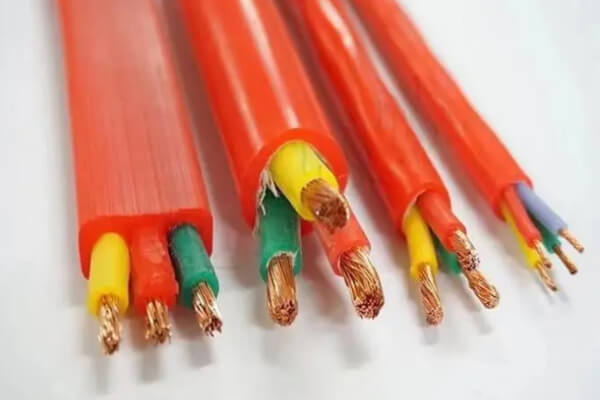
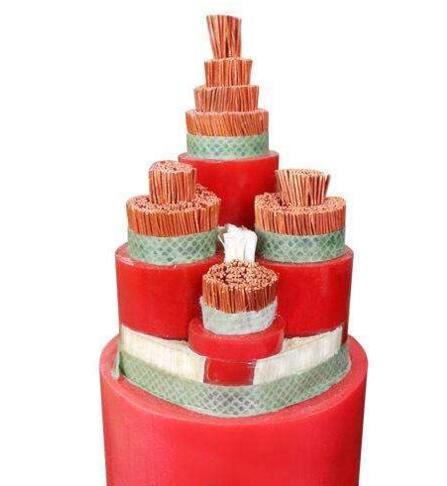
A rubber insulated cable consists of an electrical conductor covered with a layer of natural or synthetic rubber insulation. Here are some essential details :
Composition : Rubber insulated cables can use materials like EPR (Ethylene-Propylene rubber), silicone or natural rubber.
Key properties : They offer a exceptional flexibility, excellent resistance to extreme temperatures (-60 °C to +200 °C) and extended lifespan.
Typical applications : They are commonly used in industrial environments, outdoor installations and marine areas, thanks to their durability and resistance to the elements.
Overview of other types of insulated cables
Other insulation materials have different advantages and disadvantages
PVC isolated cables
Benefits : Low cost, good chemical resistance. These cables are particularly suitable for standard applications in undemanding environments.
Disadvantages : Sensitivity to low temperatures resulting in increased rigidity, and limited durability in extreme environmental conditions (UV exposure, high or low temperatures).
XLPE insulated cables (cross-linked polyethylene)
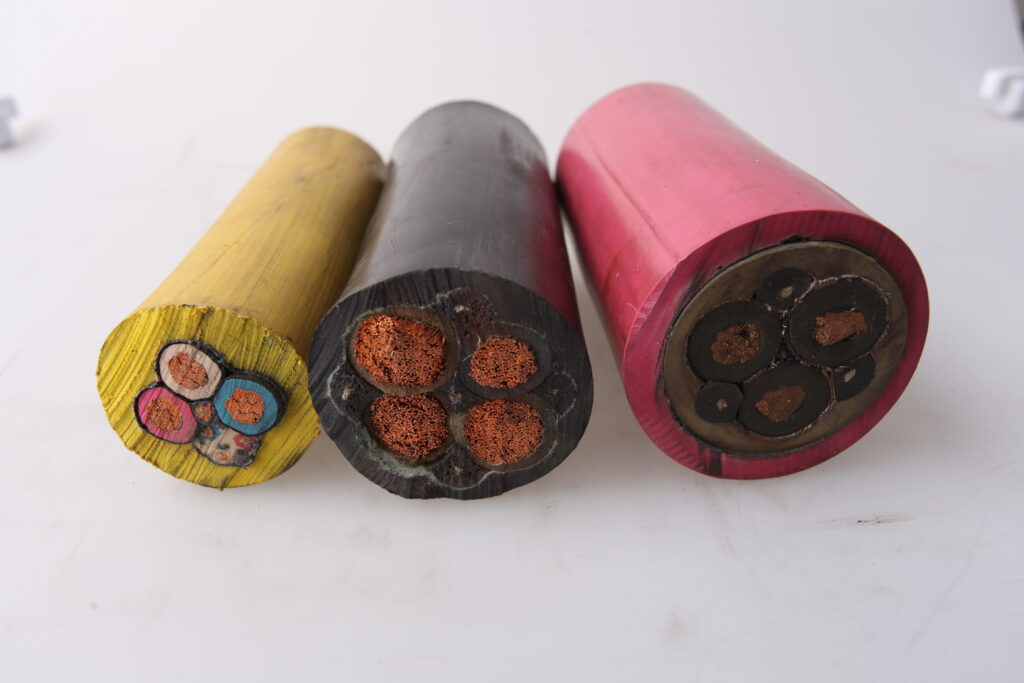
Benefits : Excellent thermal resistance (can withstand higher temperatures than PVC) and improved electrical properties. They are often used for high voltage applications and underground installations.
Disadvantages : Less flexible than rubber, which may limit their use in applications requiring frequent movements or tight angles.
LSZH insulated cables (low smoke, halogen-free)
Benefits : Increased safety in the event of fire, because they emit little toxic smoke. These cables are ideal for public spaces and enclosed environments.
Disadvantages : High initial cost and sometimes lower flexibility than PVC cables or rubber.
Comparison table
| Material | Flexibility | Thermal resistance | Cost |
| Rubber | High | -60 has +200 °C | Medium/high |
| PVC | Average | -15 has +70 °C | Weak |
| XLPE | Weak | -40 has +90 °C | AVERAGE |
| LSZH | Average | -30 has +80 °C | Pupil |
Advantages of rubber insulated cables over other types
Rubber insulated cables have several key advantages :
Superior flexibility : Suitable for applications where regular movements are required.
Resistance to extreme temperatures : Ideal for demanding environments.
Increased durability : Perfect for wet or abrasive conditions.
Natural resistance to UV and aging : Suitable for extended outdoor installations.
Disadvantages of rubber insulated cables
Despite their advantages, these cables have certain disadvantages :
High initial cost : The rubber is more expensive than PVC.
Higher weight : Less suitable for certain applications where weight is critical.
Specific limitations : For example, some high voltage applications may prefer XLPE.
Environmental impact of insulation materials
The choice of insulation materials has a significant impact on the environment :
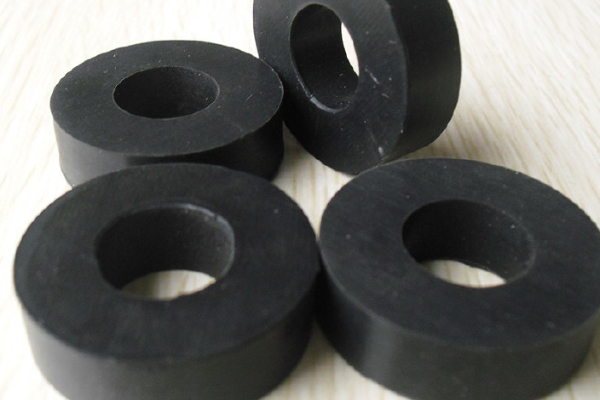
Rubber cables : Although they are less recyclable, their exceptional durability reduces frequent replacement needs, thus limiting waste in the long term.
PVC cables : Their production generates a high environmental footprint, and their recycling is limited due to the release of toxic substances.
XLPE and LSZH cables : Offer a better ecological alternative, although their recyclability is still limited. However, their modern production tends to reduce the overall environmental impact.
Initiatives ZMS Cable : ZMS Cable commits to environmentally friendly practices using recycled materials, by optimizing production processes to minimize carbon emissions and innovating in the development of eco-responsible cables.
Cable maintenance and lifespan
Interview
Rubber cables require little maintenance thanks to their robustness against bad weather and chemicals. However, regular inspection is recommended..
Lifetime
Rubber cables have a longer lifespan than PVC, because they are more resistant to extreme conditions. A well-maintained rubber cable can last several decades.
Practical advice
Protect cables from excessive mechanical and chemical stress to extend their lifespan.
Factors to consider when choosing the right insulated cable
Environmental conditions
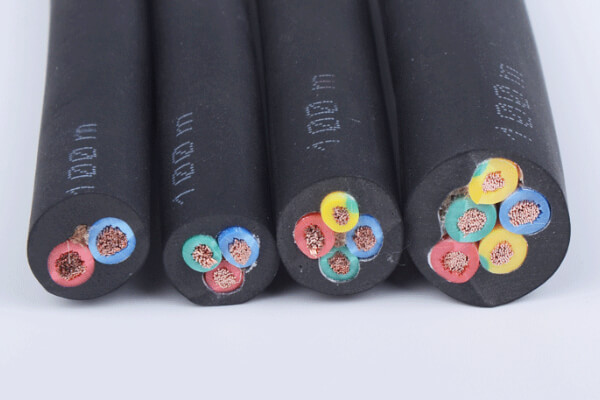
Opt for rubber in harsh environments (humidity, heat), et the PVC or LSZH in more moderate environments.
Flexibility needs
Choose rubber for frequent movement and PVC for more static installations.
Priority on safety
LSZH cables are ideal for sensitive environments, providing increased safety in the event of fire.
Budget
PVC is an economical option for simple installations, while rubber is more durable but more expensive.
Recommendations :
| Application | Recommended type |
| Industrial environments | Rubber |
| Standard interiors | PVC |
| Haute tension | XLPE |
| Public environments | LSZH |
FAQ or practical section
When to choose a rubber cable ?
A rubber cable is ideal for harsh environments, where it must withstand extreme conditions such as heat, humidity or exposure to chemicals. It is also recommended when frequent movements are necessary, because it offers great flexibility and resistance to wear. What's more, for installations in sensitive areas where safety is a priority, such as fire risk environments, a rubber cable is a safer option.
What tests to perform ?
To guarantee the quality of a rubber cable, multiple tests are essential. The flexibility test evaluates its ability to withstand repeated movements without deterioration. A moisture resistance test ensures it maintains its performance in humid environments. The chemical resistance test verifies its ability to resist chemicals and solvents. Finally, a temperature test ensures that the cable can withstand extreme temperatures without losing its properties.
How to assess quality ?
The quality of a rubber cable can be assessed by its compliance with international standards and certifications, such as those of IEC or UL, which guarantee its conformity and security. It is also important to check its durability, that is, its ability to withstand environmental conditions without prematurely deteriorating. Mechanical resistance, particularly wear and abrasion, is also a key criterion to ensure a long lifespan and optimal performance.
Why choose ZMS Cable ?
ZMS Cable offers insulated cables made of premium quality rubber, compliant with international standards. With a wide choice of materials and customization capability, ZMS meets the needs of the most demanding projects. What's more, ZMS’ commitment to sustainability ensures products with low environmental impact.
Conclusion
Rubber insulated cables stand out for their flexibility, their durability and resistance to harsh conditions. However, other options like PVC, XLPE and LSZH can be better adapted to specific needs. For personalized advice, check out ZMS Cable, a trusted partner in the choice of quality cables.