
Submarine Cable
THE submarine cables are electrical or communications cables specially designed to be installed on the seabed. Their structure includes a conductor or optical fibers, high performance insulation layers, anti-corrosion protection and metal armor to resist deep pressure and mechanical stress. They ensure reliable transmission of electricity and data between the mainland and offshore installations, islands or intercontinental connections.
As an experienced manufacturer, ZMS Cable recommends to select submarine cables according to depth, of the tension, of the type of current (AC/DC) and seafloor conditions. Our underwater solutions are certified, customizable according to needs of the project and offer a long life even in the most demanding environments.
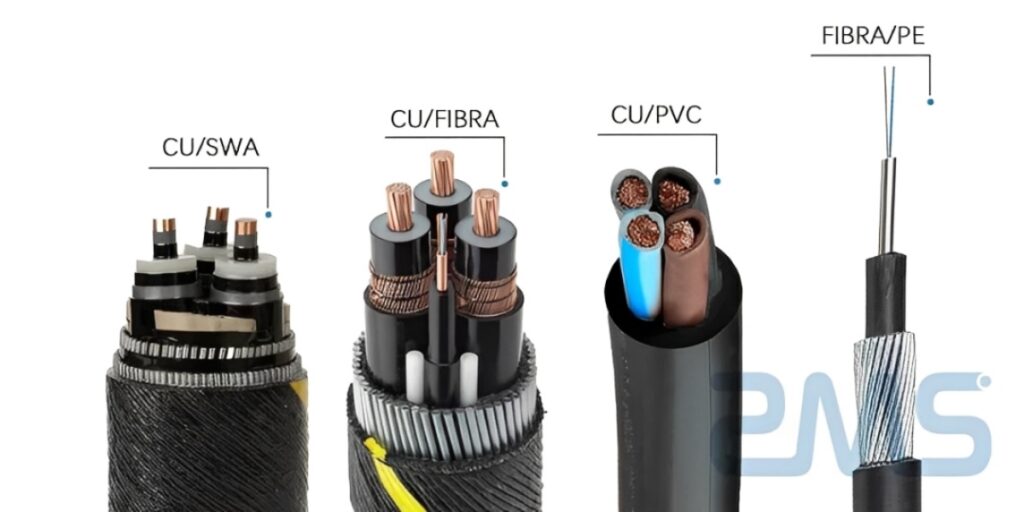
Classification of submarine cables
| Principale classification | Cable type | Short description | Main function | Main structures | Key Features |
| By application function | Submarine fiber optic cable | Also called submarine communications cable, used for data transmission and underwater Internet | Data transmission, High-speed Internet | Fiber optic core, surrounded by multiple layers of protection and a metal sheath | High transmission capacity, sea water resistance, lifetime |
| Electric submarine cable | Submarine cable for energy transmission in the oceans, rivers or lakes | AC or DC electricity transmission, connecting islands and continental networks, offshore wind farms and onshore networks, underwater transnational networks | Copper or aluminum drivers, isolation XLPE ou MI, metal sheath | Large electrical capacity, mechanical and chemical resistance, suitable for long-term underwater use | |
| By type of use | Submarine coastal cable | Submarine cable installed near the continental shelf, along the coasts or between the islands, relatively short distance | Can be communications cable or electrical cable, coastal power distribution or data transmission | Structure suitable for shallow water, light or reinforced sheath depending on use | Installation flexible, resistant to shock and wear, easy maintenance |
| transoceanic cable | Ultra-long distance submarine cable crossing vast oceans (ex. Peaceful, Atlantic) | Mainly communication cable, transmission of data or energy over very long distances | Optical fibers or high capacity conductors, multiples gaines, reinforced insulation | Extremely high reliability, resistance to pressure and sea currents, lifetime |
Types of submarine cables available at ZMS Cable
Par fonction d'application
Optical fiber submarine cable
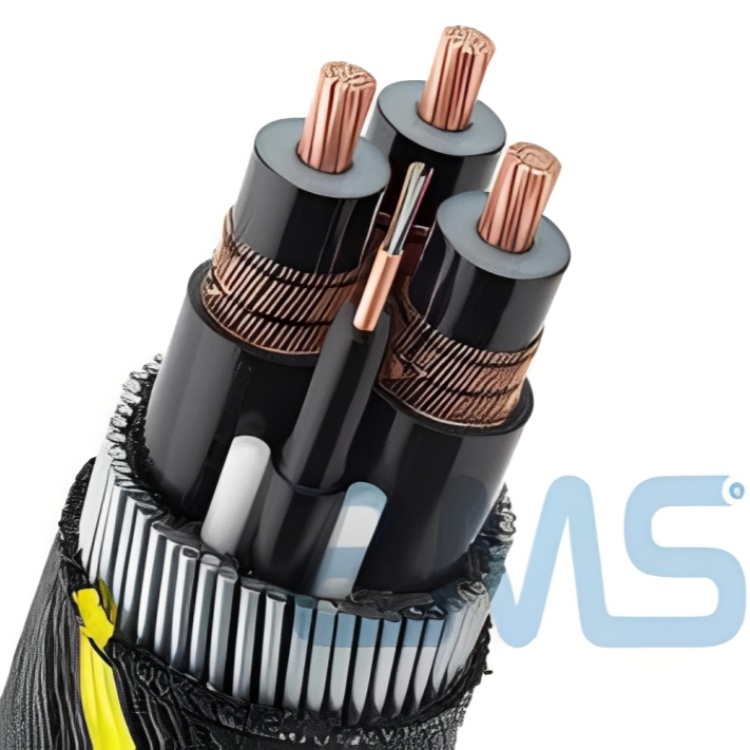
The fiber optic submarine cable is a communications cable installed in an underwater environment, allowing data to be transmitted via optical fibers. It differs from submarine power cables by carrying light signals, and not electrical energy.
Structure : fiber optic core, tubes/sealing gels, insulating sheaths and one or more layers of metal reinforcement depending on use.
Benefits : very high transmission capacity, low latency, high long-term reliability and resistance to marine corrosion.
Applications : high-speed intercontinental and coastal connections, island and offshore platform connections, Internet backbones and maritime telecommunications networks.
Expert council
Depending on the depth and mechanical risks of the installation area, the cable structure must be adapted : at great depth, a lighter structure is enough ; close to the coast, reinforced armor is needed to withstand ship anchors and fishing gear. ZMS Cable offers personalized solutions according to bathymetry, maritime traffic and bandwidth requirements of the project.
Underwater electrical cable
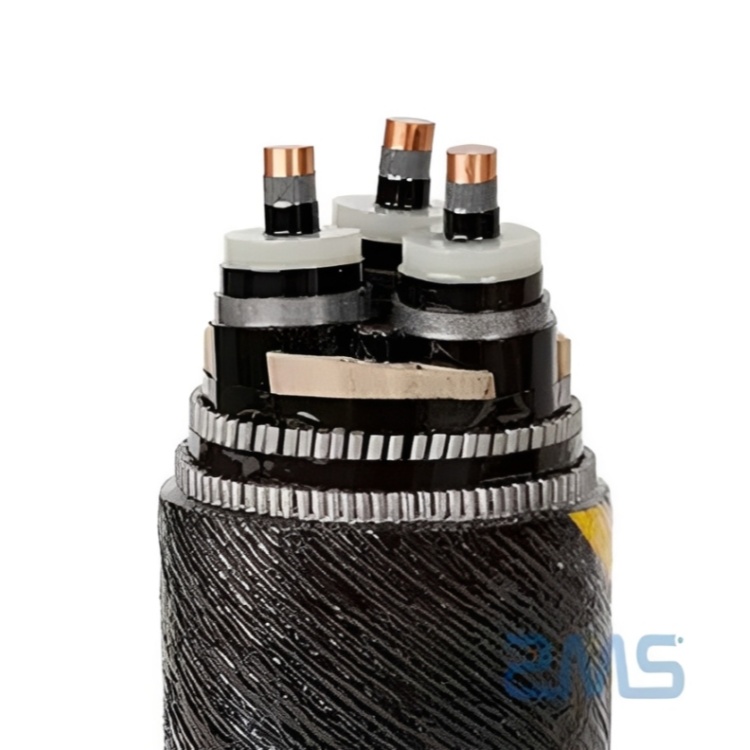
THE underwater power cables are used for transport electrical energy across the seas and oceans, especially between continents, offshore wind farms and onshore networks.
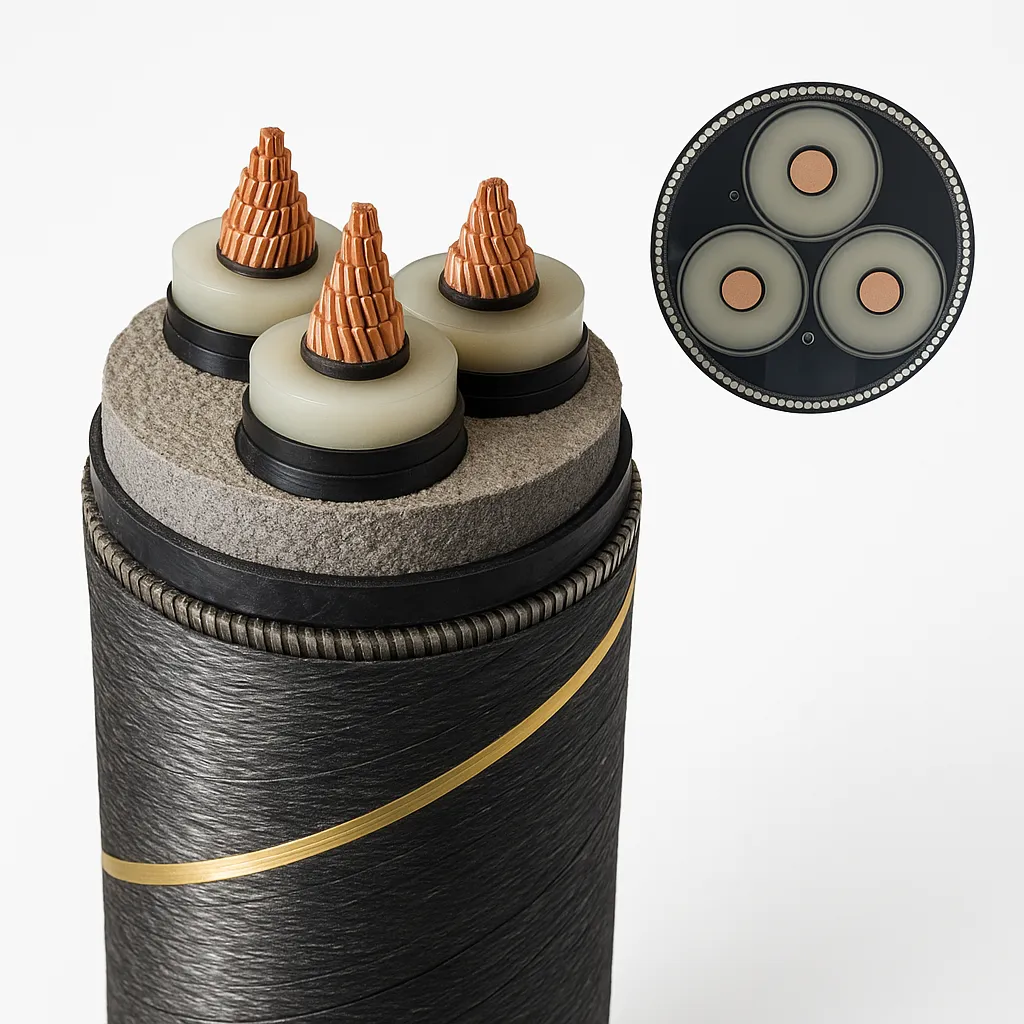
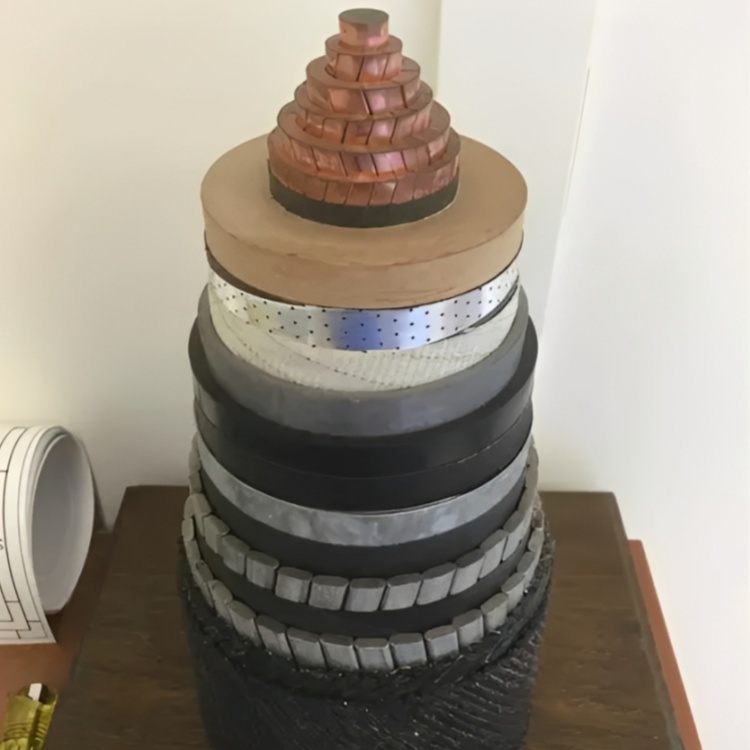
Structure : Copper or aluminum drivers, isolation XLPE ou MI, waterproof protections, and single or double metal armor depending on the risk level of the seabed.
Benefits : High power transmission, excellent resistance to corrosion and mechanical shock, sustainable reliability for offshore energy projects.
Applications : Electrical interconnections between countries, connection of offshore wind farms, supply of islands and platforms at sea, export of renewable energy to the terrestrial network.
Expert council
The choice of cable depends on the energy needs, transmission distance, depth and mechanical risks :
— AC for short distances (projects near the coast)
— DC for long distances and high powers
— Single-core / Three-pole depending on the installation method
— XLPE / MI according to voltage and underwater pressure
— Simple armor / double depending on exposure to anchors and fishing gear
ZMS Cable provides tailor-made solutions, optimized for bathymetry, the mechanical overload and power requirements of each project.
Underwater internet cables
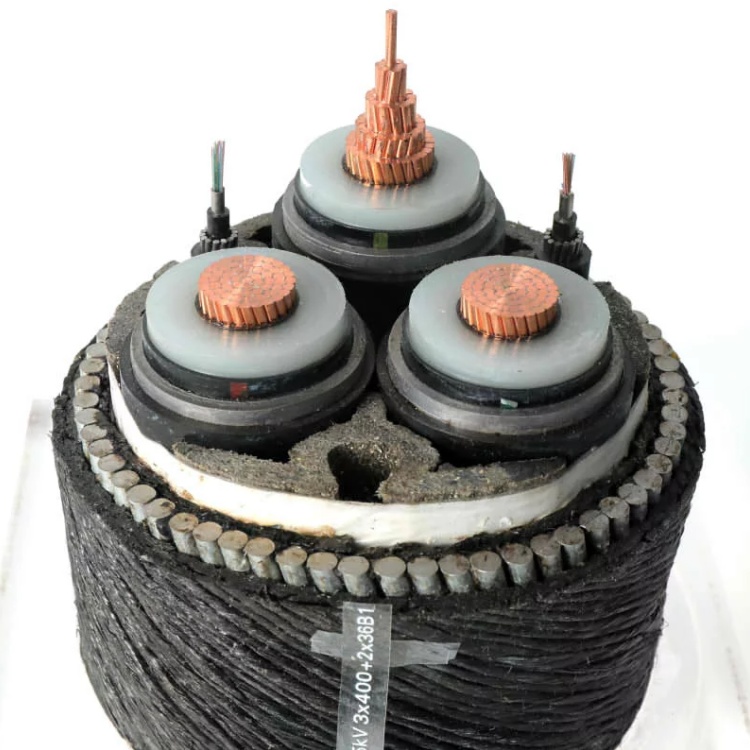
THE underwater internet cables are a category of fiber optic communications cables installed on the ocean floor to carry global internet traffic. They constitute the main infrastructure of international networks, ensuring more than 95 % of the data exchange between continents.
Structure : Fiber optic core in a central tube, hydro-blocking gels or materials, insulating polymer sheaths, and one or more layers of metal armor depending on depth and mechanical risk.
Benefits : Very high transmission capacity, low latency, excellent reliability in marine environment, and stability over several decades thanks to low-attenuation optical fibers. Submarine cables thus enable cloud networks, telecom operators and data centers to have scalable and secure bandwidth.
Applications
— Transoceanic Internet routes
— Essential intercontinental connections for operators
— High-speed coastal connections
— Cloud networks and data center interconnections
— Critical infrastructure for global digital services
These submarine internet cables play a strategic role in all international communications.
Expert council
Choosing the right submarine cable depends on several parameters :
— Great depth : lightweight structure without armor (low risk).
— Coastal areas : submarine armored cable (single or double) to withstand anchors and fishing gear.
— Very long distances : low loss fibers + optical repeaters.
- Security & reliability : choose an experienced submarine cable supplier to optimize installation and reduce the risk of cut or damaged submarine cable.
ZMS Cable offers complete solutions for submarine cable projects, from initial study to commissioning. Our teams provide technical advice, personalized design of the cable according to the bathymetry, distance and mechanical risks, as well as the installation of submarine cables in compliance with international standards. We also help clients optimize the overall project cost (submarine cable price) and select the most suitable structure — single or double weave, low attenuation fibers, or high-performance conductors — to ensure reliability, longevity and safety in the marine environment.
Par type d'utilisation
Submarine coastal cable
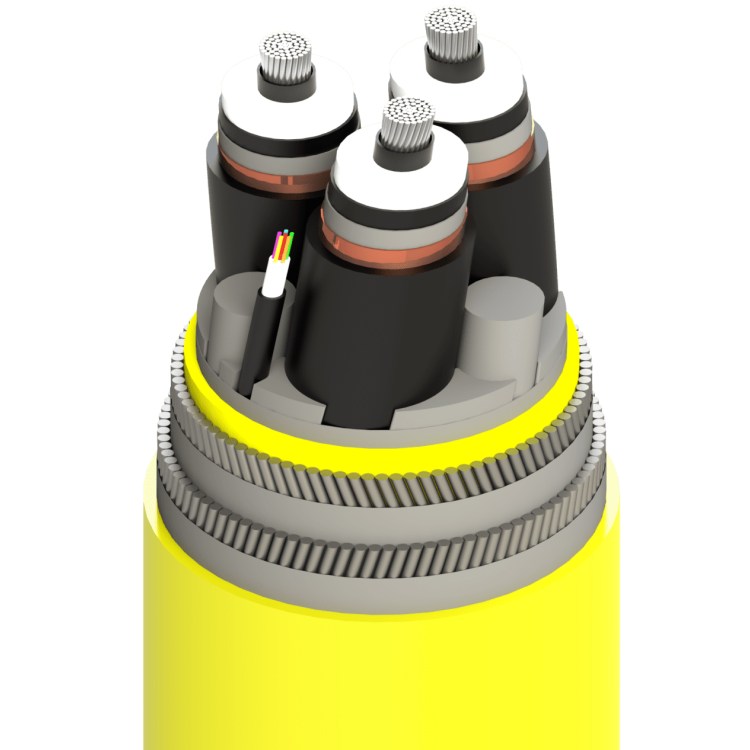
The submarine coastal cable is a cable laid in a shallow coastal area, designed to withstand a highly dynamic environment (waves, currents, sand abrasion). It can be electric or fiber optic, the “coastal” concept describing the installation environment rather than the function of the cable.
Structure : Conductive or optical core (C/To the or fibers), waterproofing systems (tubes/gels), polymer insulating sheath, et reinforced metal armor to resist abrasion, anchors and fishing gear in shallow areas.
Benefits : Coastal areas are subject to powerful waves, frequent movements of the seabed and increased risks from ship anchors and fishing gear. So, submarine coastal cables are designed with much greater mechanical robustness : better tensile strength, reinforced protection against abrasion and excellent resistance to shocks and tearing.
Applications : Connection of islands close to the mainland, power supply to ports and coastal installations, initial segments of submarine networks before transition to deep sea cables.
Expert council
In coastal area, the constraints do not come from the depth but from the constant movement of the coastline and maritime traffic. The choice of cable therefore depends on the level of abrasion, from exposure to anchors, the installation method and the tension required for the project.
— Single or double armor depending on the mechanical risk
— XLPE for modern electrical installations
— More robust structures than in deep water, where a lighter cable is enough
ZMS Cable offers designs optimized for coastal environments : reinforced armor, anti-abrasion protection and tailor-made solutions adapted to local constraints.
transoceanic cable
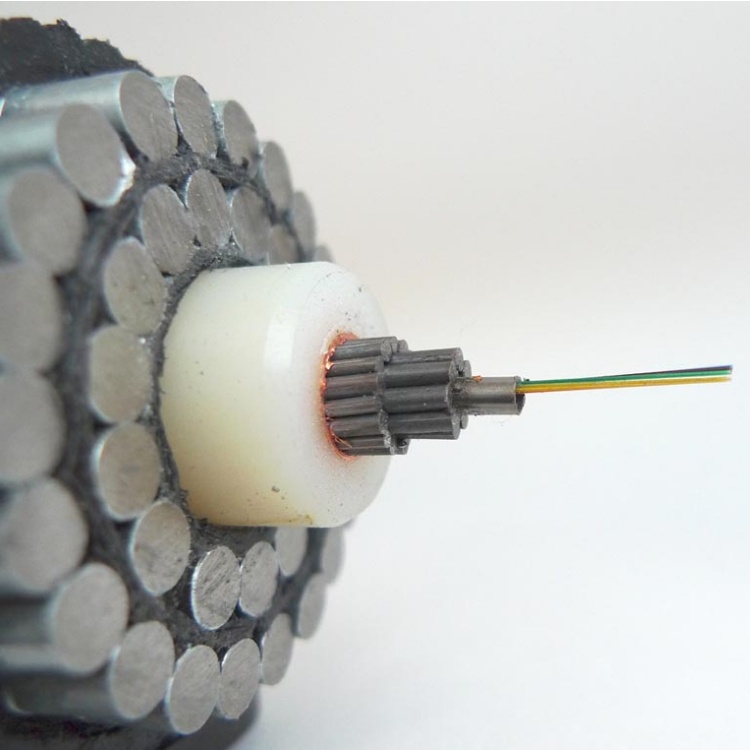
THE transoceanic submarine cables mainly designate fiber optic communications cables connecting different continents and crossing thousands of kilometers of ocean. They constitute the central infrastructure of the global Internet network. There are also transoceanic submarine power cables intended for the interconnection of national electricity networks — an emerging and strategic technology for future large-scale energy exchanges.
Structure (fiber optic cable) : Very low attenuation optical fibers housed in a central tube, hydro-blocking gels, protective polymer sheaths, integrated optical repeaters (every 50–100 km) and — depending on the areas — lightweight structure at great depth or metal armor in more exposed coastal sections.
Benefits : Massive capacity thanks to long distance optical technologies, stable performance over several thousand kilometers, minimal latency between continents and exceptional reliability due to a design optimized for the deep ocean environment.
Applications : Intercontinental Liaisons, transatlantic and transpacific internet routes, international cloud and data center interconnections, global backbone of Internet and telecom networks.
Expert council
Transoceanic projects require careful selection of components :
— Ultra-low attenuation fibers to maximize range between repeaters
— Lightweight architecture in great depth (very low mechanical risk)
— Single or double armor in coastal areas to prevent damage from anchors and fishermen
— Optimization of the route according to the geology of the ocean floor
ZMS Cable supports operators, data centers and international consortia with solutions designed to guarantee reliability, performance and longevity over extreme distances.
FAQ – Submarine cable
1. What is the difference between a coastal submarine cable, in deep and transoceanic waters ?
The main difference between these three types of cables is their structural design and engineering priority., and not simply in their installation area.
- The coastal submarine cable is designed to withstand high mechanical stress : seabed movements, abrasion, anchors and human activities. It generally incorporates thicker armor and reinforced mechanical protection.
- Deepwater cable evolves in a more stable environment. Its design favors resistance to hydrostatic pressure and weight optimization, with reduced or absent armor depending on depth.
- The transoceanic cable is optimized for very long distances and high capacity transmission. Its structure emphasizes long-term reliability, fiber protection and minimal signal attenuation, with reinforced armor only in areas near the coast.
In summary, it is not the places that define the cables, but mechanical constraints, environmental and functional conditions to which they are designed to respond.
2. Can deep water submarine cable be unarmored ?
Oui, under certain technical conditions.
At great depth, a deep-water submarine cable can be designed without metal armor, especially for submarine fiber optic cables, when external mechanical constraints are limited. This design is based on three essential conditions :
- the cable is laid on segments actually in deep water, far from coastal areas and human activities ;
- the marine environment is stable, with a very low risk of abrasion, anchoring or external traction ;
- the structure of the cable guarantees excellent resistance to hydrostatic pressure, as well as durable sealing against water penetration.
On the other hand, in coastal and transitional areas, single or double armor generally remains essential to ensure mechanical protection.
Expert recommendation : adapt the armor level to the depth — armored submarine cable in coastal areas, lightened or absent armor in medium depth, and cable without armor at great depth — in order to optimize security, system weight and costs.
3. How the submarine cable works?
A submarine cable works by ensuring the transmission of electricity or data between two points separated by a stretch of sea, while withstanding a demanding marine environment.
- For an underwater electrical cable, current is carried by metallic conductors, insulated and protected by several layers ensuring waterproofing, mechanical strength and long-term durability.
- For an underwater fiber optic cable, information is transmitted in the form of light signals through protected fibers, with repeaters installed over long distances to maintain signal quality.
In any case, the cable is laid or buried on the seabed depending on the depth and local constraints, and its design (armor, isolation, protection externe) is suitable to guarantee continued reliability for several decades.
4. Are submarine cables still buried ?
Non. Burial is mainly used in shallow water or in risk areas.
In deep water, the cable can simply be laid on the seabed, where the environment is more stable.
5. How to choose the right submarine cable for your project ?
The choice depends on several parameters : installation depth, seabed conditions, mechanical constraints and expected lifespan.
A suitable design, or even tailor-made, is essential to ensure long-term reliability.
6. Can submarine cables be customized according to the project ?
Oui. Manufacturers like ZMS Cable offer custom-designed submarine cable solutions, depending on the specific requirements of each project and its installation environment.
ZMS company service
Overproduction service
ZMS has a wide range of cables and conductors. We provide thoughtful services and professional project solutions to everyone who needs them.
Quality certification services
ZMS cables are made in accordance with GB standards, IEC, BS, NFC, ASTM, DIN and other international standards. Our technical team can customize cable products that meet your requirements based on your needs.
Professional customer service
ZMS provides free professional consultation services to provide you with one-stop project solution services and rapid product delivery solutions.
Delivery and shipping services
ZMS provides high quality cables, but also good delivery solutions. While ensuring the safety of product delivery, we provide the best packaging and transportation solutions, thereby significantly reducing customers' transportation costs.
ZMS packaging
ZMS cables are packaged in wooden spools, corrugated cardboard boxes and reels. Cable ends are sealed with BOPP self-adhesive tape and a non-hygroscopic sealing cap to protect cable ends from moisture. We can print the required markings on the exterior of the drum using a waterproof material, according to customer requirements.
Related underwater products and solutions
- All Posts
- News
- Blog
- Electric cable types
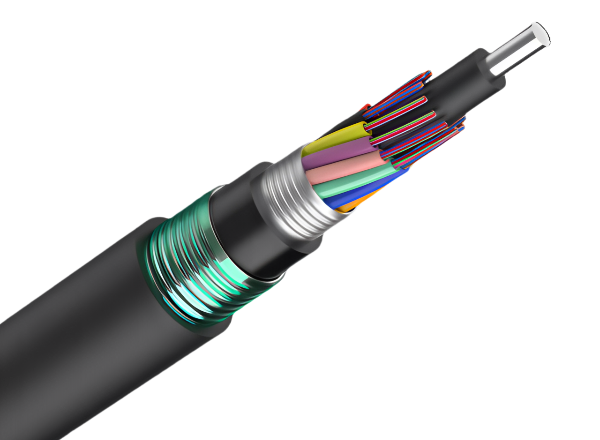
Armored fiber optic cable What is Armored Fiber Optic Cable ? Armored fiber optic cable is....
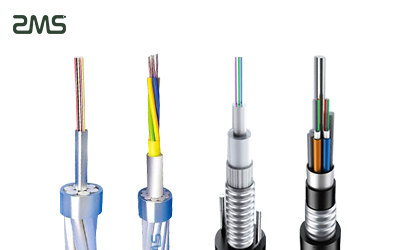
Fiber Optic Cable Fiber optic cable is a type of cable that uses glass fibers..
