
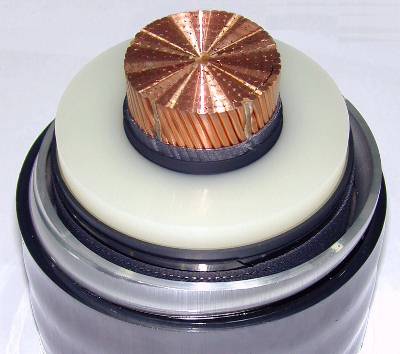
High Voltage Cable
The high voltage cable is a type of cable used to carry electricity at high voltages (generally greater than 35 kV) over long distances. The very high voltage cable for a voltage greater than 110KV.
They are usually made from insulating materials such as rubber, polyvinyl chloride or thermoplastic sheath, and can be buried underground or installed on electricity pylons.
High voltage cables are used to transport electricity from power plants to distribution power networks, where they are transferred at lower voltages to power buildings and electrical appliances.
ZMS is a professional cable supplier and can provide you with a full range of high voltage electrical cables.
Structure of a high voltage cable
| Layer | Description technique | Value for your project |
| Driver (Copper or Aluminum) | High conductivity solid or stranded conductor, sized according to the required current capacity. | Optimizes energy transport over long distances with minimized losses. |
| Internal semiconductor display | Extruded layer ensuring a homogeneous electrical surface. | Reduces electrical stress and improves reliability of high voltage cable. |
| Isolation principale (XLPE / EPR selon application) | Insulating material with high dielectric and thermal resistance. XLPE for standard HT transmission, EPR for specific environments. | Guarantees electrical stability and network lifespan, even under strong thermal stress. |
| External semiconductor display | Extruded layer surrounding the insulation. | Stabilizes the electric field and protects the integrity of the insulation. |
| Metal screen (banded copper or copper wires) | Provides grounding and protection against electrical faults. | Strengthens system security and facilitates fault detection. |
| Armor (optional) | Galvanized steel or aluminum wires or ribbons depending on installation (underground, industrial). | Reinforced mechanical protection for demanding projects and buried installations. |
| Outer sheath (PE / PVC / LSZH) | UV resistant sheath, to humidity and chemical agents. | Ensures cable durability in various international climate environments. |
The choice of components such as the driver, the insulation material, the screen system or outer sheath depends on voltage level, installation conditions as well as the normative requirements of the project.
ZMS CABLE can customize your high voltage cables in order to precisely meet your technical specifications.
Voltage levels available from ZMS Cable (66kV–400kV)
66kV high voltage cable
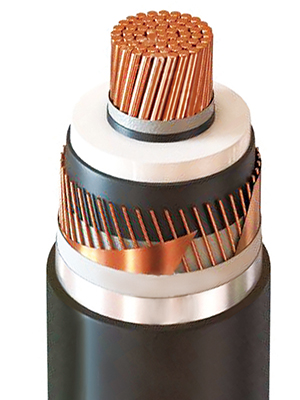
The 66kV high voltage cable belongs to the first level of HT transmission networks. Its structure includes a conductor, insulation, semiconductor layers and an external protection system. Compared to higher levels like 110kV high voltage cable, 220kV or 400kV, the thickness of insulation, conductor cross-section and electric field control requirements are lower. 66kV high voltage cables are designed according to international standards such as IEC 60840 and other applicable national standards.
Expert council
The 66kV cable is recommended when the transmission distance remains moderate and the required capacity does not justify a switch to higher voltage.
It offers a good compromise between technical performance and cost control.
For long distance networks or heavy loads, a level like high voltage cable 110kV or 220kV will generally be more suitable.
110kV high voltage cable
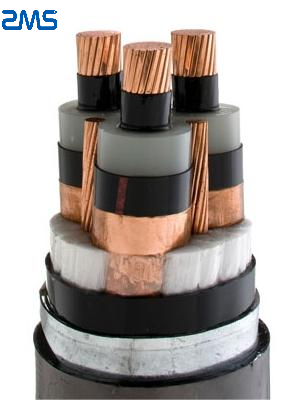
The 110kV high voltage cable constitutes a level widely used in electricity transmission networks on a national and regional scale.
on structure relies on the same fundamental elements as other high voltage cables — conductor, semiconductor layers, insulation and protection system — with insulation thickness and electrical performance superior to 66kV high voltage cable.
Compared to higher levels like 220kV or 400kV high voltage cable, it ensures increased transport capacity while maintaining controlled technical complexity. THE 110kV HV cables are generally manufactured in accordance with international standards such as IEC 60840 as well as applicable local regulations.
Expert council
The 110kV cable is recommended for regional interconnections, structuring networks and industrial infrastructures with high energy demand.
It often represents an intermediate solution between the 66kV high voltage cable intended for regional networks and the 220kV high voltage cable suitable for long distance transmissions.
For the strategic axes to very high capacity, 400kV high voltage cable will generally be more suitable.
132kV high voltage cable
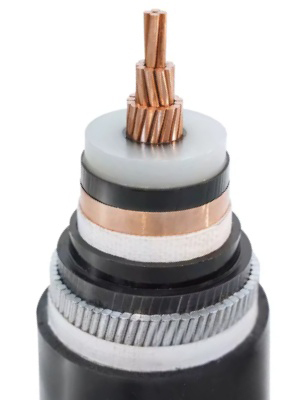
The 132kV high voltage cable represents an intermediate level widely used for regional and national electricity transmission.
Its structure is similar to that of other high voltage cables — conductor, semiconductor layers, insulation and protection system — but the insulation thickness and electrical requirements are higher than 110kV high voltage cable.
Compared to higher levels like 220kV or 400kV high voltage cable, it offers intermediate capacity adapted to extended regional networks and structuring interconnections.
132kV HV cables are designed according to international standards such as IEC 60840 and also comply with applicable local regulations.
Expert council
The 132kV cable is recommended for projects requiring more capacity than a 110kV high voltage cable, while remaining more economical and simple to install than a 220kV high voltage cable.
It is suitable for regional interconnections, extensions of existing networks and medium to high power industrial infrastructures.
For long distance transmissions or very high capacity strategic networks, 220kV or 400kV levels will generally be preferable.
220kV high voltage cable
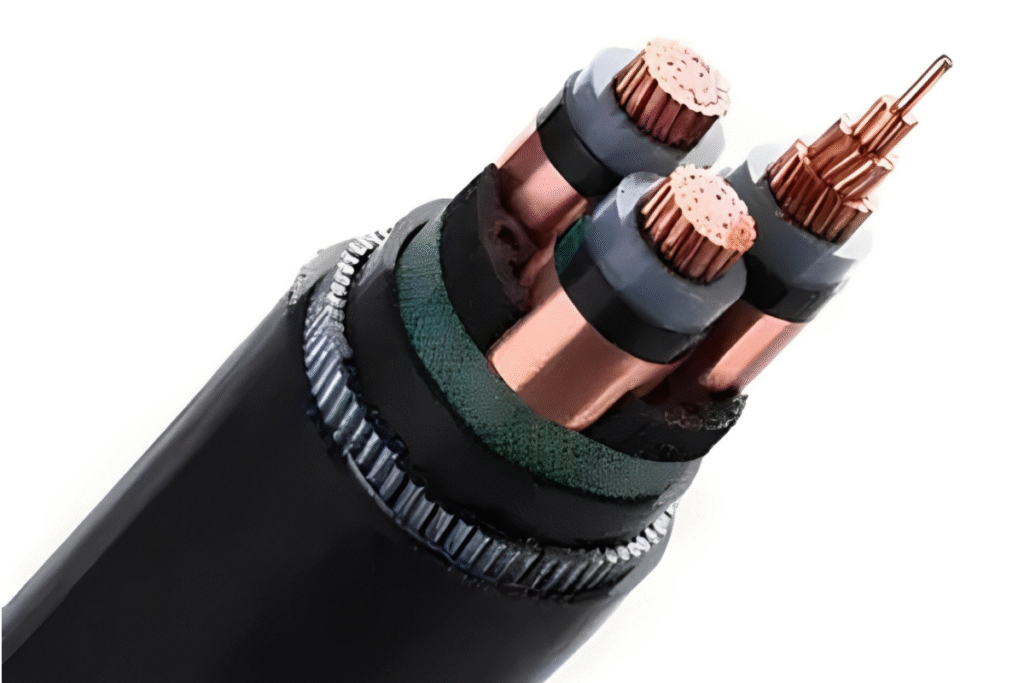
The 220kV high voltage cable is designed for main electricity transmission networks over long distances.
Its structure retains the fundamental elements of high voltage cables — conductor, semiconductor layers, insulation and protection — with thicker insulation and reinforced electrical requirements compared to 132kV high voltage cable.
This voltage level makes it possible to transport large powers while maintaining optimal network stability..
THE 220kV HV cables are manufactured in accordance with international standards such as IEC 60840 and comply with local regulations in the countries of installation.
Expert council
The 220kV cable is recommended for inter-regional connections and national networks requiring high energy transport capacity.
It is particularly suitable for strategic network projects and interconnections between main electrical substations.
For infrastructures requiring even higher capacities or very high voltage corridors, the 400kV high voltage cable remains the preferred solution.
The price of 220kV high voltage cable depends on conductor section, the type of insulation and project specifications.
400kV high voltage cable
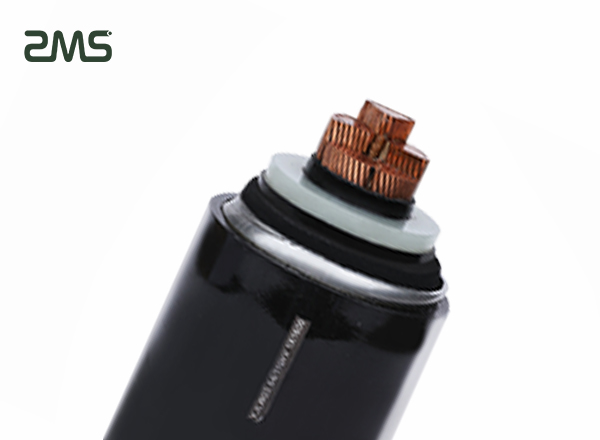
The 400kV high voltage cable is intended for very high capacity and long distance electricity transmission networks, forming the strategic backbone of electrical infrastructures.
Its structure retains the fundamental elements of high voltage cables — conductor, semiconductor layers, insulation and protection — but insulation is maximum and electrical requirements are very strict compared to 220kV levels and below.
This voltage level allows the transport of extremely high powers while ensuring optimal network stability.
Cables HT 400kV are designed according to the IEC international standards 60840 and comply with local regulations of the countries of installation.
Expert council
The 400kV cable is recommended for critical long distance connections, very high voltage corridors and interconnections between strategic main substations.
It is suitable for projects requiring massive energy transport with high technical and environmental constraints.
For regional needs or intermediate capacities, lower levels such as high voltage cable 220kV or 132kV may be more suitable.
Types of high voltage cables available at ZMS Cable
High voltage overhead cable
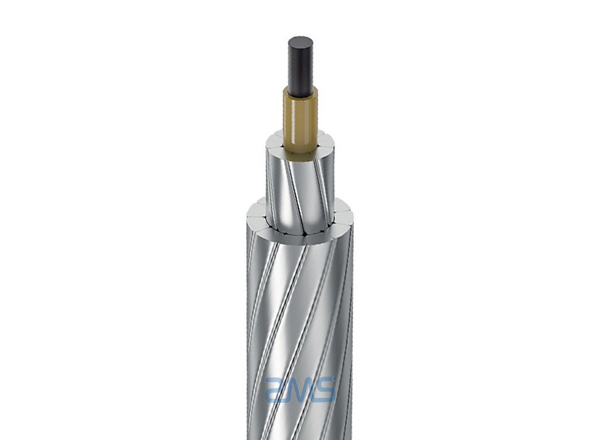
Structure : These cables are made of multi-stranded copper or aluminum conductors, XLPE insulation, a shielding layer and a weather-resistant outer jacket. They may also contain a steel core to increase mechanical resistance to weather conditions.
Product parameters :
Tension nominale : 35kV and more
Conductive material : Copper or aluminum
Insulating material : XLPE
Operating temperature : -40°C to +90°C
Tensile strength : ≥ 5000 N
Applications : Ideal for long distance transmission in open environments, such as rural networks, mountainous regions and outdoor power lines.
high voltage underground cable
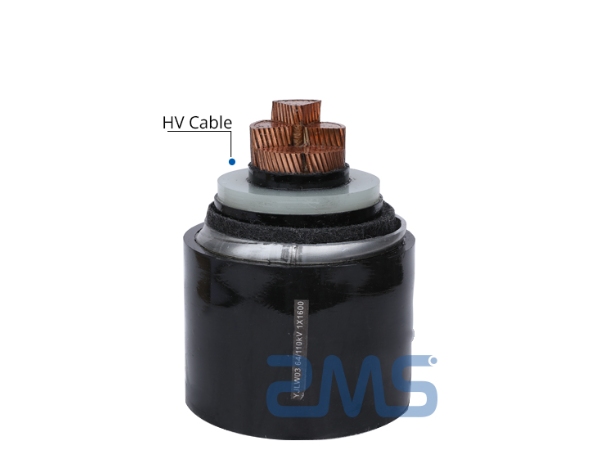
Features :
An underground high voltage cable is a type of cable used to transport electricity at high voltages in densely populated areas or where it is desired to minimize the visual impact on the environment. It is buried underground to protect drivers from outside weather conditions and avoid visual disruption.
Application :
High voltage cables buried are used to transport electricity over short distances in densely populated areas, such as cities and urban centers, where air cables are not desirable due to their visual impact.
They are also used to connect power plants to distribution networks to supply local buildings and electrical equipment. These cables can also be used to connect remote electrical systems to improve the reliability and safety of the electrical network.
submarine high voltage cable
Features :
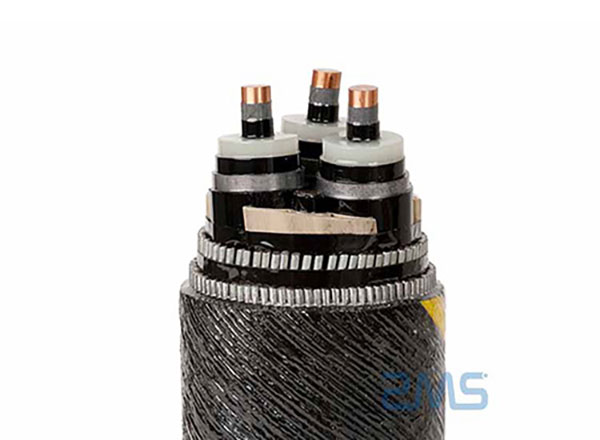
A submarine high voltage cable is a type of cable used to carry electricity at high voltages below the surface of the water, usually across seas, oceans or lakes. It is designed to withstand harsh underwater environmental conditions, such as storms, the currents, waves and rugged seabed.
Application :
Underwater high-voltage cables are used to transport electricity between continents, islands and remote areas to connect remote power systems. They can also be used to connect offshore wind platforms, offshore power plants and underwater electrical equipment at the coast.
These cables are a reliable and durable way to transport electricity over large distances and are important in improving the reliability and security of the power grid.
Characteristics of ZMS high voltage cables
ZMS high voltage cables are manufactured with quality materials to ensure maximum durability and optimal performance. Here are some of their main features :
Robust design : Our cables have an insulating sheath made of materials such as cross-linked polyethylene (XLPE), guaranteeing excellent insulation and resistance to high voltages.
Quality conductive materials : Our cables use high purity copper or aluminum, offering superior conductivity.
Reinforced protection : Thanks to layers of protection against water and a resistant outer sheath, our cables can be used in underground environments, aerial or underwater.
Long-term reliability : Our cables are designed to provide exceptional lifespan, often exceeding 30 years with minimal maintenance.
What Are the Applications of High Voltage Cables ?
High voltage cables are critical elements for the transmission and distribution of electricity. They play a fundamental role in our daily lives by powering households, businesses and industries.
The most common application of high voltage cables is the transmission of electricity over long distances, often from power plants to consumption areas.
High voltage cables can be buried or overhead and are characterized by their ability to transport large quantities of electricity with minimal energy loss.
Besides the transmission, high voltage cables can also be used for energy storage.
For example, Wind energy storage systems use high-voltage cables to store energy produced by wind turbines during periods of excess production, in order to provide it when demand is high.
Finally, high voltage cables are also used for the interconnection of electrical networks in different countries.
This allows the energy produced by power plants to be shared with other countries and ensures a reliable electricity supply when needed.. In conclusion, high voltage cables are a key part of our electrical infrastructure.
How to Recognize High Voltage Lines ?
High voltage lines are an essential part of our electricity system, transporting electrical energy from a source to consumption areas. Although they are often hidden in rural or underground areas, it is important to know how to recognize them to avoid potential dangers.
Here are some characteristics that can help recognize high voltage lines :
Tall and spaced pylons : High-voltage line pylons are generally tall and spaced apart to allow the cables to extend between them without touching each other.. The pylons can be made of steel, made of wood or concrete and can be recognized by their height and the distance between them.
Thick cables : High voltage cables are often thicker than common electrical cables, which makes them more easily visible. Cables can be made of steel, copper or aluminum, and can be covered with an insulating sheath to minimize the risk of electric arc or energy leak.
Distinctive markings : High voltage line pylons can be marked with specific colors to distinguish them from other power lines. Colors may vary by region, but they may include red and white to indicate high voltage lines.
Danger signs : Areas around high voltage lines can be marked with warning signs indicating the potential dangers of touching the cables or pylons. Signs can also be installed to prohibit climbing or the installation of objects such as television antennas.
It is important to respect high voltage lines and never touch them, even when they are turned off. High voltages can cause serious injury or death, and arcing can cause fires or other damage.
Services & Delivery at ZMS Cable
- Personalized manufacturing service (OEM / ODM) : Custom cable design and production according to your technical specifications, with customization of the marking, Colors and packaging.
- Rapid global logistics : Shipping shipping, terrestrial or air to more than 130 pays ; Flexible delivery according to your deadlines.
- Certified quality : All products are tested before shipping ; conformity this / IEC / ISO ; test reports provided on request.
- Neat and customizable packaging : ZMS cables are packaged on wooden coils, wavy boxes or drums, with hermetically sealed ends for moisture protection. Outdoor marking can be printed on request with waterproof materials.
- Dedicated technical support : Our engineers and advisers accompany you in the choice of the electric cable most suited to your installations, in accordance with local standards.
