
Fiber optic cable is a communications cable used to transmit optical signals. The fiber optic cable is made up of a number of optical fibers which form the core of the cable, The exterior sheath, and some are also covered with an outer sheath, in order to carry out the transmission of optical signals from a communication line. In other words, a fiber optic cable is a cable formed from optical fibers according to a certain process.
The basic structure of fiber optic cable is usually composed of several parts such as the core, reinforcing steel wire, filling and sheath, etc. Furthermore, there is a waterproof layer, a buffer layer, insulated metallic conductors and other components as required.
Optical fibers are light transmission media. It is a thin, elongated material, glass or plastic, which allows light signals to be transmitted over long distances thanks to internal refraction. A protective layer on the outside of the fiber prevents physical damage to the fiber and protects the optical signal from interference.
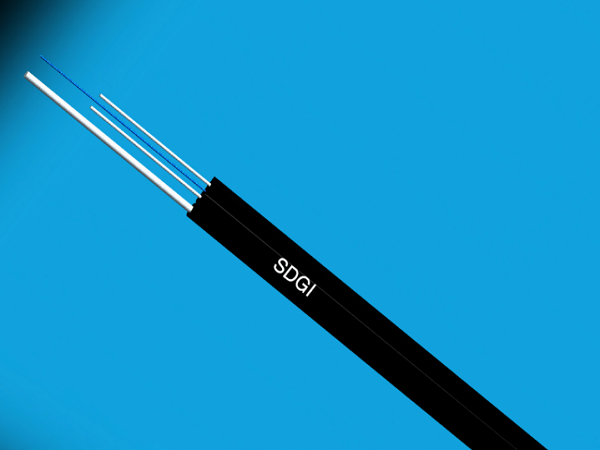
How fiber optic cables work
The working principle of fiber optic cables mainly depends on the properties of light and the structure of the fiber.
Light is an electromagnetic wave with wave-particle duality, capable of propagating in vacuum and transparent media.
The structure of optical fibers, on the other hand, takes advantage of the total reflection property of light, which allows optical signals to propagate through the fiber.
First of all, we need to know what the total reflection of light is.
Total light reflection, that is, when light from the higher refractive index of the medium enters the lower refractive index of the medium, if the angle of incidence is greater than a certain critical angle (light moving away from normal), refracted light disappears, and all incident light is reflected without entering the lower refractive index of the medium.
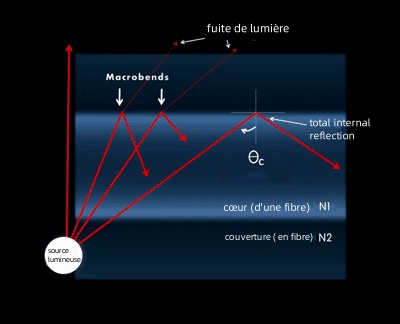
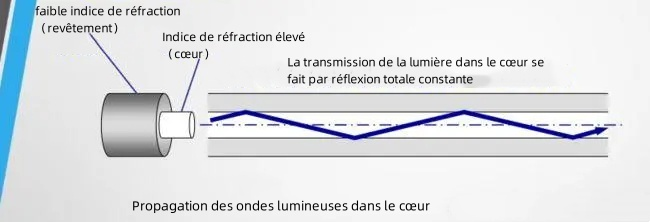
The particular structure of an optical fiber takes advantage of this property of light, which allows the optical signal to be permanently reflected in the fiber, which allows the transmission of the optical signal.
At the transmission end, the electrical signal first passes through an optical transmitter, which converts the electrical signal into an optical signal. Due to the total reflection property of light, the optical signal is continuously reflected along the interior of the core of optical fiber, which allows the transmission of the optical signal. Outside the fiber optic core, the sheath plays the role of protection and support to guarantee the stability of optical signal transmission.
However, light propagation from the medium causes losses, due to absorption and scattering caused by attenuation of light signals, so that the signal transmission generally does not exceed 100 kilometers, and it is necessary to pass through the signal amplifier for a certain distance to strengthen the signal to achieve long distance transmission.
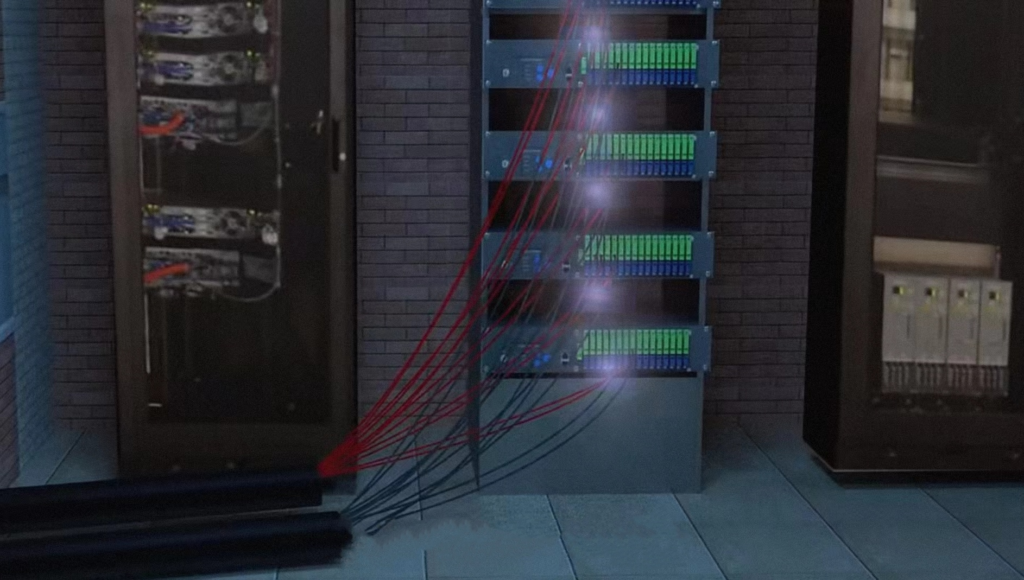
When the optical signal is transmitted to the receiving end, the optical receiver detects and demodulates the optical signal, converts the optical signal into the original electrical signal and completes the information transmission process.
Optical fiber cable classification
Depending on the number of optical fiber cores in the optical cable, optical cables can be divided into single-core optical cables, bipolar optical cables, etc.
Unipolar optical cable is an optical cable that contains only one optical fiber. It is an important element used for data transmission, telephone and other signals. It is capable of carrying high-speed signals and is used in the construction of networks and communication systems.
Common models of single-core fiber optic cables
1.TOGETHER
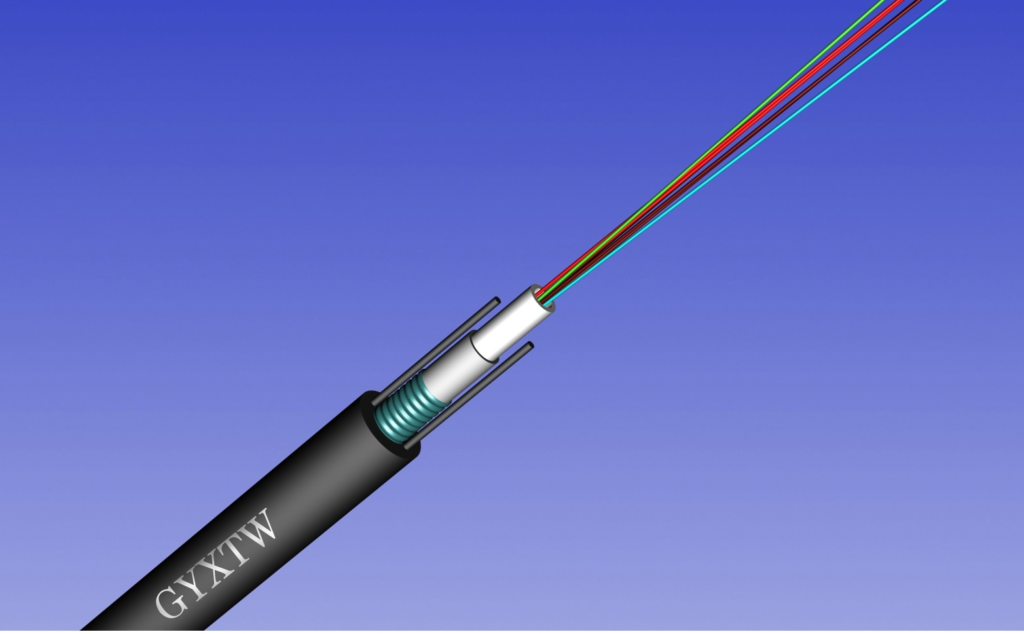
The GYXTW is an optical cable for general purposes with non-metallic resistance elements, composed of two layers of tightly wound fiber-reinforced plastic and inner and outer jackets. It is characterized by good stability of the optical cable, convenient operation and long signal transmission distance.
2.WITH
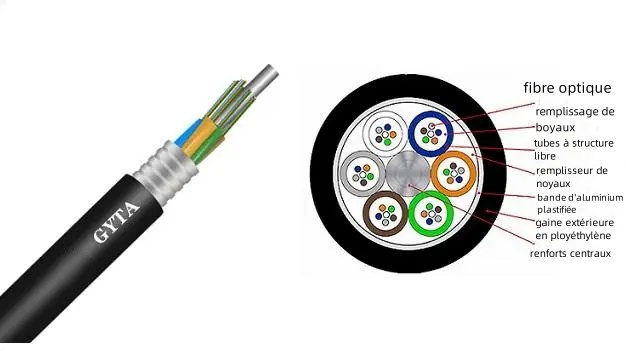
GYTA is a metal armored fiber optic cable with high tensile and compressive strength, suitable for applications requiring burial in the ground and improved blocking capacity. It is characterized by great solidity, good resistance to torsion and bad weather.
3.Consonant
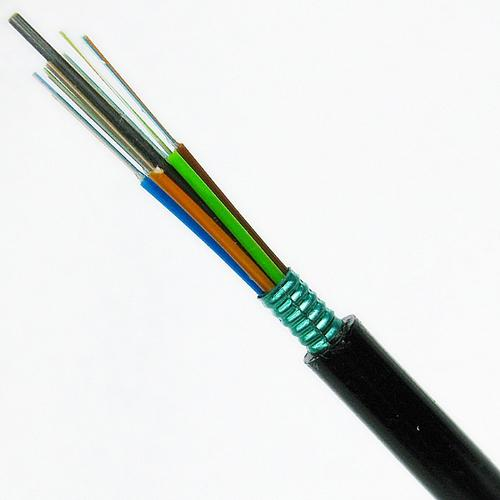
GYTS is a tensioned layer fiber optic cable with a highly durable material structure that can withstand extremely high tensile forces. It is characterized by long signal transmission, high stability and high resistance to pressure.
4.GYTA53
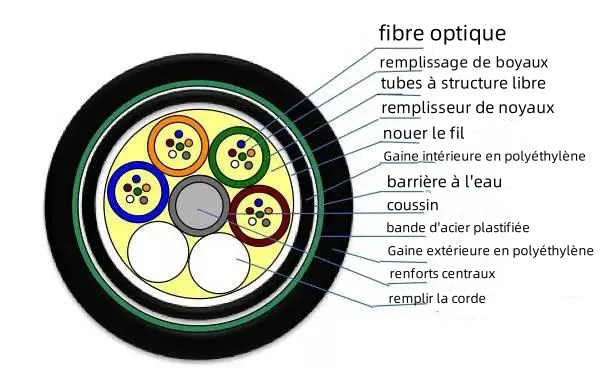
GYTA53 is a steel armored optical communications cable with reinforced fiber core and outer jacket, widely used in underground and underwater communication lines, with very high tensile and compressive strength. It is characterized by great solidity, good torsion resistance and good electromagnetic compatibility.
Single core fiber optic cable is an indispensable part of network and communication system, and different models of single core fiber optic cables are suitable for different occasions. When selecting and using fiber optic cables, their characteristics and applicability should be taken into account according to real needs.
Common models of dual-core fiber optic cables
Double-core, tight-jacketed fiber optic cable
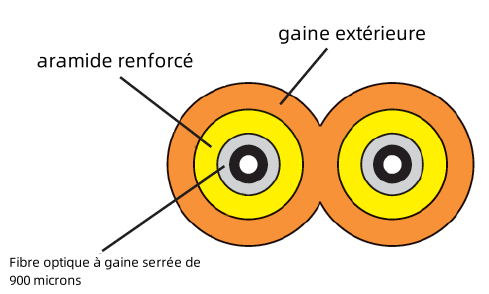
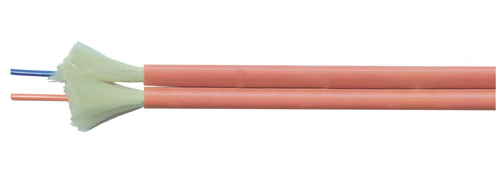
Five sizes are available : OM1 62,5/125, OM2 50/125, OM3 10 gigabit 50/125, OM4 100 gigabit 50/125 et 9/125 monomode. Ideal for manufacturing fiber optic patch cords, compatible with all standard fiber optic connectors, waterproof buffer coating provides environmental and mechanical protection.
Depending on the transmission distance, bandwidth and other requirements, it is possible to select different types of fiber optic cables in different application scenarios, in order to obtain maximum efficiency.
Advantages of fiber optic cables over ordinary cables
Advantages of fiber optic cables
Long transmission distance : the transmission distance of optical fiber can reach tens of kilometers, even hundreds of kilometers, which is greater than the transmission distance of the cable.
High transmission speeds : fiber optic transmissions have high bandwidths that can reach tens of Gbps or more, which is faster than cable transmissions.
Strong anti-interference ability : the signal transmitted by the optical fiber will not be subject to electromagnetic interference, and the anti-interference ability is stronger than that of cable.
High security : signals transmitted by optical fiber are not easy to listen and interfere, and have high security.
Environmental protection : optical fiber is a non-metallic material that does not pollute the environment.
Advantages of cables
Ease of installation : cable installation and maintenance is relatively simple and does not require special equipment or techniques.
Reduced cost : the relatively low cost of cables makes them suitable for transmission over short distances and low bandwidth applications.
High reliability : the cable is very reliable and can work in harsh environments.
Ease of maintenance : rapid location and repair in the event of a cable failure.
In a word, optical fiber is suitable for application scenarios with high long-distance requirements, high speed, high safety and environmental protection, such as communications networks, radio and television broadcasting, Medical equipment, etc., while the cable is suitable for application scenarios with short distance requirements, low speed, low cost and low reliability, such as home networks and office networks.
Résumé
The main function of fiber optic cables is to transmit optical signals, which can carry a large amount of data and information with high transmission speed, a long distance, large capacity and high quality. Thanks to its high speed, to its high capacity and low interference, fiber optic cable is used in many fields such as telecommunications, the internet, radio and television broadcasting, and it has become an important infrastructure for modern communication. If you want to know more about fiber optic cables, you can contact us. ZMS is committed to providing high quality fiber optic cable products, where you can find a reliable partner.